What are the spring lodging prevention measures for wheat? Explained clearly in one article
Lodging is one of the main factors affecting high and stable yields and good quality in wheat. Wheat lodging mainly occurs in high-yield wheat fields with ample fertilizer and water, excessive wheat growth, overly large populations, and dense, shaded field conditions. Early spring is the key period for preventing wheat lodging, and its comprehensive lodging prevention technical measures are: scientifically manage fertilizer and water. For high-yield wheat fields with a population of more than 650,000 plants per mu at the green-up stage, wait until the first internode of wheat has reached its final length (that is, late jointing stage), then apply topdressing and irrigation, applying 7.5-10 kg of urea per mu. This can reduce ineffective tillers, lower the length of basal internodes, promote thick and strong stems, and prevent lodging later, while also increasing grain number per spike and improving quality.
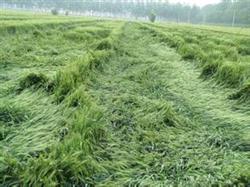
Lodging is one of the main factors affecting high and stable yields and good quality in wheat. Wheat lodging mainly occurs in high-yield wheat fields with ample fertilizer and water, excessive wheat growth, overly large populations, and dense, shaded field conditions. Early spring is the key period for preventing wheat lodging, and its comprehensive lodging prevention technical measures are: scientifically manage fertilizer and water. For high-yield wheat fields with a population of more than 650,000 plants per mu at the green-up stage, wait until the first internode of wheat has reached its final length (that is, late jointing stage), then apply topdressing and irrigation, applying 7.5-10 kg of urea per mu. This can reduce ineffective tillers, lower the length of basal internodes, promote thick and strong stems, and prevent lodging later, while also increasing grain number per spike and improving quality.
Deep hoeing to cut roots and deep intertillage is an important measure for controlling population and preventing lodging. For fields with large populations (high-yield wheat fields with more than 900,000 plants per mu at the standing-up stage) and fields with a tendency toward excessive growth, carry out deep intertillage of 8-10 cm before and after the standing-up stage to cut off superficial roots, suppress small tillers, promote the growth of main stems and large tillers, accelerate polarization, delay the canopy closure period, and promote robust plant growth.
Appropriate compaction: for wheat fields with relatively large populations and taller plants, in addition to controlling green-up fertilizer and water and deep intertillage, compaction should also be carried out after standing-up and before jointing to promote deeper root growth, thicken the basal internodes, and reduce plant height. Compaction should be carried out 2-3 times depending on the degree of excessive growth, with an interval of about 4 days each time. When compacting, the principle of "three no-compaction conditions" should also be followed: wet soil, morning, and cloudy days.
Chemical control is one of the effective measures to prevent wheat lodging. For wheat fields with large populations and vigorous growth or varieties with taller plants, at the wheat standing-up stage apply 30-50 g of 15% paclobutrazol or 30-40 mL of 20% Zhuangfeng'an emulsifiable concentrate per mu, add 30 kg of water, and spray to control excessive plant growth, shorten basal internodes, reduce plant height, improve root activity, and enhance lodging resistance.