Key Techniques for Spring Control of Wheat Sharp Eyespot
Wheat sharp eyespot is a fungal disease mainly spread through the soil. With the improvement of yield levels, the promotion of high-yielding varieties, and wheat field management with heavy irrigation and fertilization, its damage has become increasingly serious. After wheat sowing, if the germ is infected by the pathogen during germination, the coleoptile turns brown, and in severe cases rots and dies; after the standing and jointing stages, the diseased plant rate rises significantly...
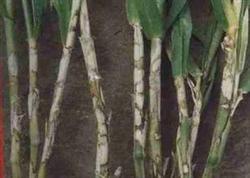
Wheat sharp eyespot is a fungal disease mainly spread through the soil. With the improvement of yield levels, the promotion of high-yielding varieties, and wheat field management with heavy irrigation and fertilization, its damage has become increasingly serious.
After wheat sowing, if the germ is infected by the pathogen during germination, the coleoptile turns brown, and in severe cases rots and dies; after the standing and jointing stages, the diseased plant rate rises significantly. During the booting and heading stages of wheat, the disease develops rapidly, and at the flowering and grain-filling stages the diseased plant rate reaches its peak. The lesions expand and connect with each other to form typical cloud-patterned blotches. In the later stage, the pathogen invades the stem, causing stem rot and even the formation of blighted white heads, with few grains set and shriveled, thin kernels.
Agricultural control Timely weed removal can reduce field humidity and improve ventilation and light penetration conditions in the field; implement formula fertilization, apply topdressing at the jointing stage, and apply nitrogen and potassium fertilizers together as topdressing, which can effectively improve plant disease resistance. Never apply nitrogen fertilizer alone, so as to avoid causing wheat seedlings to stay green and mature late, which induces the disease and aggravates the damage.
Chemical control Chemical control of wheat sharp eyespot should focus on seed treatment, and heavily diseased fields should be supplemented with relay spraying in the field in early spring.
1. Spring control: Based on the disease situation investigated, spray pesticide early for prevention. At the wheat standing stage, if the diseased plant rate in the field is 15%-20%, use 20-30 grams of 12.5% hexaconazole wettable powder per mu, or 50-100 grams of 15% triadimefon wettable powder, or 150-200 milliliters of 5% jinggangmycin aqueous solution. Choose any one of these and add 50-75 kg of water to spray the middle and lower parts of the wheat plants. Spray again after 7-10 days, for a total of 2-3 consecutive sprays. At the booting stage, use 50-100 grams of 15% triadimefon wettable powder per mu, diluted with 60 kg of water for spraying. If diseases and pests occur at the same time, these can be mixed with pesticides for controlling wheat aphids, wheat spiders, and others, thereby achieving the purpose of simultaneous control.
2. If sharp eyespot occurs early and severely during the autumn seedling stage, and there is relatively more rain in spring, and the disease may break out on a large scale, the control threshold should be applied strictly and the control timing should be appropriately advanced.