-
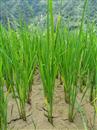
What is the correct method and purpose of draining paddy fields for rice?
How do you drain a paddy field for rice? What does it do? Please explain the field-draining method. Draining paddy fields is one of the main technical measures for increasing rice yields and promoting early ripening. 1. Main purposes of field draining. 1) Control ineffective tillering and consolidate effective tillering. When rice tillering has reached a certain number, that is, once there are enough seedlings, in our province, in terms of time, the effective tillering termination period is around the end of June. Early tillers can form panicles, while tillers after the termination period cannot form panicles or only form small panicles. In production, by draining the field, the young tiller buds at higher positions cannot get water and fertilizer and stop growing, reducing nutrient consumption, so that the main stem and large tillers receive more nutrient supply, laying a foundation for strong stems and large panicles.
-
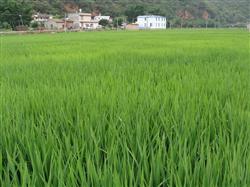
Key Technical Points for Late-Stage Rice Growth Management
How should rice be managed in the late growth stage? What should be noted? In the late growth stage of rice, premature senescence must especially be prevented. If premature senescence occurs from the heading to maturity stage, it will lead to poor grain filling and an increase in blighted grains, causing reduced yield. There are many factors causing premature senescence in the late growth stage of rice. First, improper cultivation management. Planting...
-
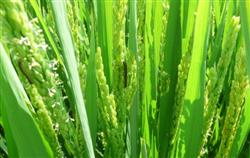
Causes of Open Rice Glumes Without Grain Filling and Control Methods
What should be done when rice glumes open without grain filling? What solutions are available? Please advise. The phenomenon of rice glumes opening without grain filling after heading occurs in many places, mainly on hybrid indica rice; it basically does not occur on japonica rice. Since this phenomenon occurs in different years, and occurs in fields both with and without pesticide application...
-
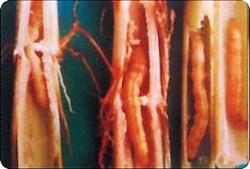
What are the pollution-free control methods for rice stem borers?
How are rice stem borers controlled in a pollution-free way? Please explain the control methods. Stem borers are the common name for the rice striped stem borer and the rice yellow stem borer. The rice striped stem borer is distributed throughout the country. Besides damaging rice, the rice striped stem borer also damages wild rice stem, corn, sugarcane, reeds and other grass weeds. After overwintering, some larvae can invade broad...
-
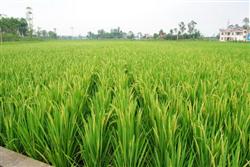
What are the key management points for rice at the heading and flowering stage?
How should rice be managed at the heading and flowering stage? Please explain the methods. When rice encounters continuous low temperature and rainy weather at the heading stage, fungicides should generally be applied to control rice blast. For susceptible varieties, two applications should be made: at the breaking stage (10%-50% of rice in the field breaking) and at the full heading stage (80% of rice panicles in the field emerged). Suitable fungicides include isoprothiolane...
-
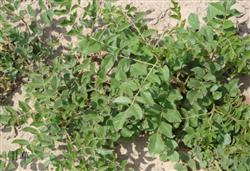
Detailed Guide to Harvest Time and Processing Methods of Licorice
Key technical measures for high-yield cultivation: choose fertile, loose-textured, well-drained sandy loam soil for planting. Treat seeds before sowing to improve germination rate, water during the seedling stage to keep seedlings alive, and apply sufficient phosphorus and potassium fertilizer every early spring. Harvest and processing 1. Harvest: Licorice propagated by seed generally grows for 4...
-
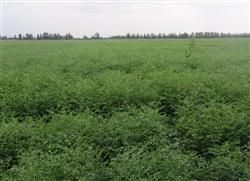
What Does Licorice Look Like? A Detailed Guide to Its Morphological Characteristics and Suitable Growing Environment
[Morphological Characteristics]Licorice (Glycyrrhiza) is a perennial herb, 30-100 cm tall. The entire plant is covered with short white pubescence and glandular hairs. The above-ground stem is upright, woody at the lower part, and the branchlets are angular and green. The leaves are alternate and odd-pinnately compound. There are 3-8 pairs of leaflets, ovate or ovate-elliptic, with entire margins, and the terminal leaflet is larger. The raceme...
-
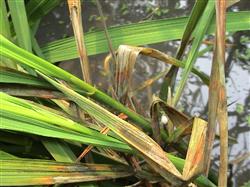
What are the common types of rice pests and diseases?
What pests and diseases affect rice? Please introduce control methods. Rice pests and diseases include rice blast, sheath blight, rice stem borers, rice planthoppers, and the rice red-spotted black spittlebug. They cause serious damage to rice, so control should be taken seriously. For control methods, refer to the following: Rice blast: long-term deep flooding or excessive drought, and excessive application of nitrogen fertilizer, lead to severe rice blast. Rice has three susceptible periods in its life, namely the seedling stage, the active tillering stage, and the full heading stage. Neck blast has the greatest impact on rice yield, so early prevention should be carried out at the booting stage and full heading stage. Rice blast is divided into: seedling blast, leaf blast, node blast, neck blast and grain blast. Rice blast control should adopt comprehensive control measures centered on planting disease-resistant high-quality varieties, based on healthy cultivation, and supplemented by chemical protection.
-
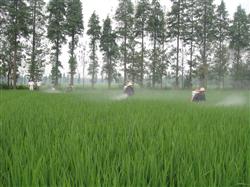
How to apply pesticides around rice heading? Detailed explanation of timing and method key points
How to apply pesticides around rice heading? Please give guidance and introduction. Whether early rice or late rice, around heading is generally the period when multiple diseases and pests occur and cause damage, requiring chemical pesticide control, but applying pesticides during this growth stage can easily cause phytotoxicity and undue losses, which deserves attention....
-
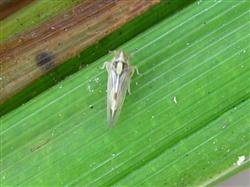
How to control rice planthoppers? A detailed guide to practical methods
How do you control rice planthoppers? Please provide an introduction to control methods. To control rice planthoppers, you can refer to the following methods: 1. Plant at a reasonable density, improve the field microclimate, and increase the rice plant's disease resistance. 2. Fertilize reasonably, control nitrogen fertilizer, increase phosphorus and potassium fertilizer, and apply topdressing skillfully, so that the rice grows and develops early and quickly,...
条件筛选