How to apply pesticides around rice heading? Detailed explanation of timing and method key points
How to apply pesticides around rice heading? Please give guidance and introduction. Whether early rice or late rice, around heading is generally the period when multiple diseases and pests occur and cause damage, requiring chemical pesticide control, but applying pesticides during this growth stage can easily cause phytotoxicity and undue losses, which deserves attention....
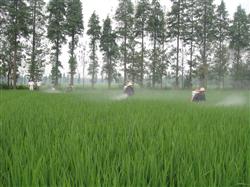
How to apply pesticides around rice heading? Please give guidance and introduction
Whether early rice or late rice, around heading is generally the period when multiple diseases and pests occur and cause damage, requiring chemical pesticide control, but applying pesticides during this growth stage can easily cause phytotoxicity and undue losses, which deserves attention.
Triadimefon Before rice heading, rice blast and bacterial leaf blight often occur, and triadimefon (Bayleton) is commonly used for control, but improper use can cause rice leaves to become short and small, and in severe cases prevent heading. The mechanism by which triadimefon fungicides control diseases is by inhibiting the activity of monooxygenase in fungi, disrupting ergosterol biosynthesis, leading to cell membrane damage and death. It can also inhibit gibberellin biosynthesis in plants, preventing the synthesis of gibberellin that promotes cell elongation, thereby dwarfing plants and making leaves and fruits short and small.
Diniconazole In the early heading stage of late rice, pesticides such as diniconazole, for example 12% jinggangmycin-diniconazole wettable powder, are commonly used to control rice false smut. Excessive dosage can easily cause difficulty in heading of late rice, or the panicle stopping halfway after emerging. After using diniconazole-containing pesticides such as Quwenxing and Heguoli at the rice breaking stage or early breaking-heading stage, large areas of rice showed varying degrees of pesticide reaction, the internode growth at the panicle neck was affected, and a "neck-enclosed" phenomenon appeared, preventing normal heading. After phytotoxicity occurs, spraying gibberellin as early as possible has a certain detoxifying effect; generally use 2 grams of 920 per mu, add 50 kg of water and spray.
Arsenic preparations Improper use of arsenic preparations on rice can cause phytotoxicity to rice, resulting in no seed setting or reduced seed setting rate. At present, tricyclazole, isoprothiolane, prochloraz and other agents are generally used in production to control rice blast; when applying multiple times, it is best to use these agents alternately.
Azole fungicides Use imidazole fungicides with caution around rice heading. If used well, disease control increases; if used poorly, it will affect heading and grain filling. Mixtures of hexaconazole and jinggangmycin such as Wensu, and single agents of propiconazole, diniconazole, and thifluzamide such as Dilite, Heguoli, and Mansui, generally have a duration of effectiveness reaching more than 15 days and have good effect on controlling rice sheath blight. It should be noted that azole fungicides such as tebuconazole, diniconazole, hexaconazole, and propiconazole can inhibit the formation of gibberellin in rice. When used during the elongation period of the upper internodes, especially when the dosage is increased, they may inhibit internode elongation, causing difficulty in heading and affecting grain filling and seed setting in rice.
Glyphosate Mis-spraying glyphosate at the rice booting stage is very harmful. Misapplying glyphosate into hybrid rice fields can cause large-area damage to rice, with patches of rice fields unable to head normally, and yield losses of 80%-100%. Glyphosate is a systemic conductive non-selective herbicide. The young panicle differentiation site is prone to phytotoxicity, causing symptoms such as dead heart leaves and deformed young panicles. After phytotoxicity occurs from mistakenly spraying glyphosate in rice fields, timely spraying of an appropriate amount of gibberellin and potassium dihydrogen phosphate can promote the growth and development of young panicles to a certain extent, and after 7 days an appropriate amount of urea can be sprayed again. Generally, the remedial effect is better at the peak tillering stage and early young panicle differentiation stage; at the booting stage, especially when phytotoxicity occurs at the late booting stage, the base of the panicle axis becomes brown and necrotic, and the remedial effect is poor.
Click to get more rice cultivation techniques
Click to get more grain crop cultivation techniques