-
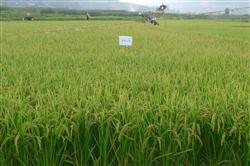
What are the key points for late-stage rice management?
What should be noted in late-stage rice management? Please give an introduction. Late-stage rice management requires attention to the following points: Do not arbitrarily increase the amount of pesticide. Blindly increasing the dosage of chemicals raises the cost of disease and pest control and easily causes crop phytotoxicity. In addition, pesticides must be mixed and used immediately to prevent chemical reactions between pesticides...
-
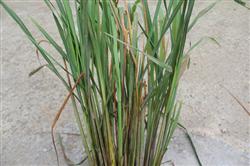
What are the control methods for bacterial leaf streak of rice?
How do you control bacterial leaf streak of rice? Please provide guidance methods. Symptoms of bacterial leaf streak of rice damage: it can occur from the seedling stage to the ear stage of rice. The lesions are yellow, initially yellow, then turning yellow-brown, until completely rotted. If the disease occurs before the heart leaf emerges, it cannot continue to grow upward and dies within the heart, forming a false dead heart, hence it is also called heart rot disease....
-
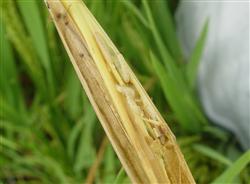
What are the control methods for the rice stem borer (Chilo suppressalis)?
How do you control the rice stem borer? Here are the control methods. The rice stem borer, also known as the stem maggot, can damage rice from the tillering stage to the milk-ripening stage, posing a threat to rice production and affecting both yield and quality. Doing a good job of controlling the rice stem borer is of great significance for promoting high rice yields and increasing farmers' income. The control methods are as follows:...
-
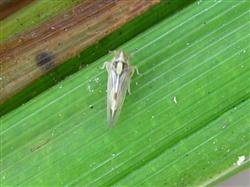
How to control rice planthoppers? A detailed guide to practical methods
How do you control rice planthoppers? Please provide an introduction to control methods. To control rice planthoppers, you can refer to the following methods: 1. Plant at a reasonable density, improve the field microclimate, and increase the rice plant's disease resistance. 2. Fertilize reasonably, control nitrogen fertilizer, increase phosphorus and potassium fertilizer, and apply topdressing skillfully, so that the rice grows and develops early and quickly,...
-
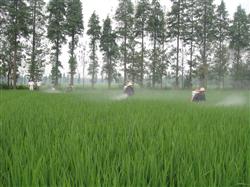
How to apply pesticides around rice heading? Detailed explanation of timing and method key points
How to apply pesticides around rice heading? Please give guidance and introduction. Whether early rice or late rice, around heading is generally the period when multiple diseases and pests occur and cause damage, requiring chemical pesticide control, but applying pesticides during this growth stage can easily cause phytotoxicity and undue losses, which deserves attention....
-
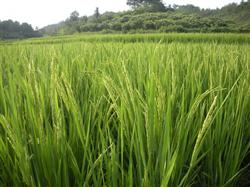
What are the key management techniques for rice during the heading and grain-filling stage?
How to manage rice well during the heading and grain-filling stage? Please provide an introduction to the management methods. The heading and grain-filling stage of rice refers to the period from heading to yellow ripeness. This period is critical for determining grain number and grain weight. The goals of field management are: maintaining roots, protecting leaves, and improving the seed-setting rate and 1000-grain weight. The main field management measures...
-
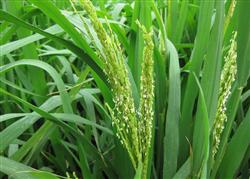
How should water be managed during the heading and grain-filling stage of rice?
How should water be managed during the heading and grain-filling stage of rice? Please explain. Mid-to-late July is when rice enters the heading and grain-filling stage, and scientific water management is quite critical for increasing rice yield and achieving high yields. For reference, see below: 1. The heading and flowering stage is a period when rice is relatively sensitive to water, second only to the late booting stage in sensitivity...
-
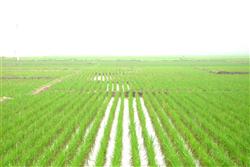
What are the key points of rice planting management techniques?
How should rice be managed during cultivation? Please provide an introduction to the management methods. For rice cultivation management, you can refer to the following methods: 1. Water-saving irrigation techniques. Irrigation during the rice growth period should adopt water-saving techniques, carrying out irrigation and drainage according to the water requirements and characteristics of rice at each growth stage, mainly divided into deep-water greening, shallow-water tillering...
-
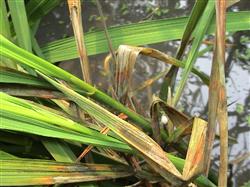
What are the common types of rice pests and diseases?
What pests and diseases affect rice? Please introduce control methods. Rice pests and diseases include rice blast, sheath blight, rice stem borers, rice planthoppers, and the rice red-spotted black spittlebug. They cause serious damage to rice, so control should be taken seriously. For control methods, refer to the following: Rice blast: long-term deep flooding or excessive drought, and excessive application of nitrogen fertilizer, lead to severe rice blast. Rice has three susceptible periods in its life, namely the seedling stage, the active tillering stage, and the full heading stage. Neck blast has the greatest impact on rice yield, so early prevention should be carried out at the booting stage and full heading stage. Rice blast is divided into: seedling blast, leaf blast, node blast, neck blast and grain blast. Rice blast control should adopt comprehensive control measures centered on planting disease-resistant high-quality varieties, based on healthy cultivation, and supplemented by chemical protection.
-
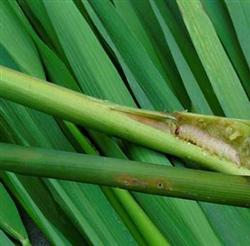
What are the prevention methods for the rice stem borer (Chilo suppressalis)?
How to prevent the rice stem borer (Chilo suppressalis)? Please provide an introduction to the methods. The following methods can be used for preventing the rice stem borer (Chilo suppressalis): 1. Agronomic measures. When damaged plants with dead leaf sheaths, dead hearts, or dead panicles are found, they should be pulled out promptly, which not only reduces the number of insects but also prevents larvae from moving to other plants to cause damage. 2. Chemical control. When the control threshold is re...
条件筛选