-
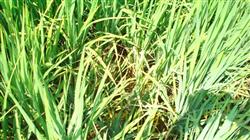
What are the control methods for rice viral diseases?
How do you control rice viral diseases? Please explain the methods. Rice viral diseases occur in explosive, intermittent and migratory patterns. The severity of rice viral diseases is closely related to the cropping system, the population size and migration patterns of transmission vectors, climatic conditions and cultivation management measures. Control should implement the plant protection policy of "prevention first, integrated control"...
-
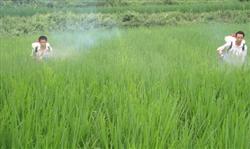
When is the best time to spray foliar fertilizer on rice?
When is the best time to apply foliar fertilizer to rice? Here is a detailed introduction: Applying foliar fertilizer during the middle and late stages of rice growth can increase grain number and grain weight, generally increasing yield by 5%-10%, and improve quality. Therefore, the following foliar fertilizers can be selected according to conditions. For Guli Bao (Grain-Filling Fertilizer), during the heading stage and milk-ripening stage of rice, use 1 packet (50 grams) per mu dissolved in 50...
-
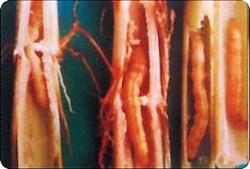
What are the pollution-free control methods for rice stem borers?
How are rice stem borers controlled in a pollution-free way? Please explain the control methods. Stem borers are the common name for the rice striped stem borer and the rice yellow stem borer. The rice striped stem borer is distributed throughout the country. Besides damaging rice, the rice striped stem borer also damages wild rice stem, corn, sugarcane, reeds and other grass weeds. After overwintering, some larvae can invade broad...
-
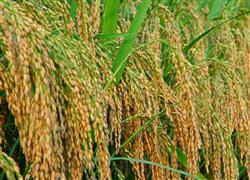
What are some practical methods to increase rice yield?
What methods can increase rice yield? Is there any effective method? To increase rice yield, you can refer to the following methods for management: 1. Increase the number of panicles. ① Cultivate strong seedlings. This provides a good foundation for early greening and early tillering after transplanting. ② Reasonable close planting. According to the planned number of panicles to be harvested and an estimate of the tillering situation of the seedlings after transplanting...
-
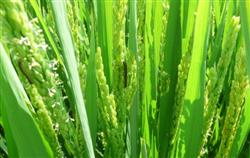
Causes of Open Rice Glumes Without Grain Filling and Control Methods
What should be done when rice glumes open without grain filling? What solutions are available? Please advise. The phenomenon of rice glumes opening without grain filling after heading occurs in many places, mainly on hybrid indica rice; it basically does not occur on japonica rice. Since this phenomenon occurs in different years, and occurs in fields both with and without pesticide application...
-
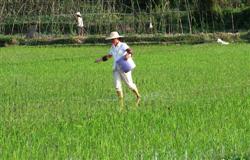
When is the best time to fertilize rice?
When is the best time to fertilize rice? Please explain. Because the natural conditions, farming systems, production levels and fertilization levels vary greatly across the rice-growing regions of southern China, different fertilization methods also exist. The front-stable, mid-boost, late-supplement fertilization method: this method involves applying a certain amount of fertilizer in the early stage as a base, increasing the amount of topdressing in the mid stage to promote large panicles, and applying grain fertilizer in the late stage depending on the crop's condition. Generally, the base fertilizer accounts for 40%-60%; among the mid-stage topdressings, tillering fertilizer accounts for 30%, panicle fertilizer accounts for 50%, and grain fertilizer accounts for 20%. This method is mainly used for large-panicle, large-grain varieties of single-season hybrid mid-season and late rice with a longer growth period, and for fields with poor soil fertilizer retention capacity and insufficient fertilizer.
-
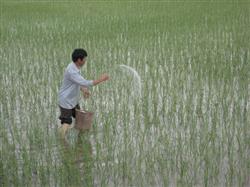
What are the precautions for fertilizing rice?
What should be noted when fertilizing rice? Please give an introduction. The principle of rice fertilization should be to use organic fertilizer and phosphate fertilizer as base fertilizer, potassium fertilizer mainly as tillering fertilizer, and nitrogen fertilizer applied evenly in multiple applications, with special attention to fertilizer for plump panicles and plump grains, so as to achieve large panicles and large grains while ensuring sufficient panicles. (1) Base fertilizer should be mainly organic fertilizer...
-
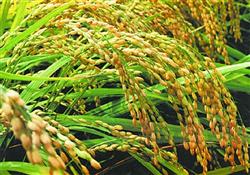
How can rice avoid the impact of high temperatures on grain filling?
How can high temperatures be avoided so they do not affect rice grain filling? Please provide methods to avoid the impact of high temperatures on rice grain filling. Sow at the right time to avoid hot, high temperatures. Schedule the optimal heading and flowering period of single-season middle rice for mid-August, effectively avoiding the frequently occurring high-temperature summer drought weather from late July to early August. Reasonably select...
-
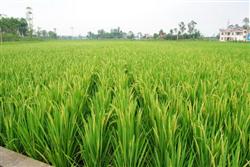
What are the key management points for rice at the heading and flowering stage?
How should rice be managed at the heading and flowering stage? Please explain the methods. When rice encounters continuous low temperature and rainy weather at the heading stage, fungicides should generally be applied to control rice blast. For susceptible varieties, two applications should be made: at the breaking stage (10%-50% of rice in the field breaking) and at the full heading stage (80% of rice panicles in the field emerged). Suitable fungicides include isoprothiolane...
-
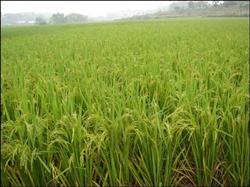
How should pests and diseases be controlled in the late growth stage of rice?
How should pests and diseases in the late stage of rice be controlled? Please provide guidance methods. Pests and diseases cause serious damage in the late stage of rice. The control methods can refer to the following: 1. Sheath blight: The disease has recently been rising faster. In a general survey of each town on September 10, the average rate of diseased hills was 13.7%, and the rate of diseased plants was 3.3%. The disease situation has clearly accelerated compared with the previous period...
条件筛选