What are the control methods for the rice stem borer (Chilo suppressalis)?
How do you control the rice stem borer? Here are the control methods. The rice stem borer, also known as the stem maggot, can damage rice from the tillering stage to the milk-ripening stage, posing a threat to rice production and affecting both yield and quality. Doing a good job of controlling the rice stem borer is of great significance for promoting high rice yields and increasing farmers' income. The control methods are as follows:...
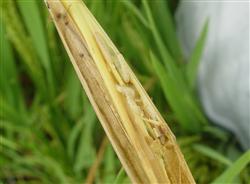
How do you control the rice stem borer? Here are the control methods
The rice stem borer, also known as the stem maggot, can damage rice from the tillering stage to the milk-ripening stage, posing a threat to rice production and affecting both yield and quality. Doing a good job of controlling the rice stem borer is of great significance for promoting high rice yields and increasing farmers' income. The control methods are as follows:
I. Damage symptoms. Damage by first-generation larvae during the tillering stage causes dead heart seedlings and dead shoots; damage during the booting and heading stages causes dead panicles and white heads; damage during the grain-filling and milk-ripening stages causes half-dead panicles and insect-damaged plants, with many blighted grains and easy lodging and breakage.
II. Occurrence characteristics. In northern Liaoning there are two generations a year. Larvae overwinter in rice stubble and rice straw, pupate in early May, and emerge in late May. Adults are active at night and are phototactic, preferring to lay eggs on rice plants with wide leaves, thick stems, and dark green growth. Before the tillering stage, eggs are mostly laid on the tip of the upper surface of the leaf blade; after jointing, they are mostly laid on the leaf sheath 2 to 3 cun above the water surface. In mid-June, first-generation larvae are seen boring into and feeding on leaf sheaths, and dead shoots appear; in early July, dead hearts appear. Larvae can move to other plants to cause damage, and after maturing they pupate inside the stem or leaf sheath. Second-generation larvae damage the stems in early August, and white heads appear.
III. Integrated control. Adopt the principle of "prevention first, with prevention more important than cure," base control on planting insect-resistant varieties, make rational and timely pesticide application the key, and persist in combining cultivation measures with chemical control.
1. Control through cultivation measures. In severely infested fields, rice stubble after the autumn harvest should be destroyed in a centralized manner, insect-infested rice straw in the field should be removed, weeds along field edges should be eradicated, intermediate hosts should be reduced, overwintering larvae should be eliminated, and the sources of insects should be reduced. Do a good job of autumn land preparation, plowing to a depth of 25 cm to create a good soil environment. Strengthen water and fertilizer management in rice fields, apply more farmyard manure, and heavily apply silicon fertilizer, applying 20 to 25 kg of silicon-calcium fertilizer per mu; before transplanting, soak the field with a large amount of water for 3 to 4 days, and during the peak period of first-generation pupation (late June), irrigate with deep water for one week to reduce the sources of second-generation insects.
2. Physical control. Taking advantage of the phototaxis of adults, when the rice stem borer moths enter the peak occurrence stage, using black light traps for trapping and killing gives better results.
3. Artificial removal of insect-damaged plants. Rice stem borer larvae have the habit of first concentrating and then dispersing and moving. When the borer eggs are at the peak hatching stage and before the larvae move to other plants, pull out the insect-damaged plants and carry them out of the field for composting, which can eliminate large numbers of larvae and prevent damage from moving to other plants.
4. Chemical control. According to forecasting, apply pesticide about one week after the peak hatching period of first-generation larvae (late June), when the rate of dead shoots is found to be above 3%. Use 100 to 150 ml of 20% triazophos emulsifiable concentrate per mu, dilute with water and spray according to the instructions; in early August, when dead shoots and white heads are seen, use 200 g of 18% bisultap aqueous solution or 50 g of 90% monosultap per mu, dilute with 50 kg of water and spray, or dilute with 100 kg of water and splash-apply. After application, maintain a shallow water layer of 3 to 5 cm for more than 5 to 7 days.
Click to get more rice cultivation techniques
Click to get more grain crop cultivation techniques