What are the key management techniques for rice during the heading and grain-filling stage?
How to manage rice well during the heading and grain-filling stage? Please provide an introduction to the management methods. The heading and grain-filling stage of rice refers to the period from heading to yellow ripeness. This period is critical for determining grain number and grain weight. The goals of field management are: maintaining roots, protecting leaves, and improving the seed-setting rate and 1000-grain weight. The main field management measures...
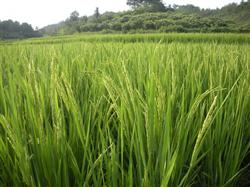
How to manage rice well during the heading and grain-filling stage? Please provide an introduction to the management methods
The heading and grain-filling stage of rice refers to the period from heading to yellow ripeness. This period is critical for determining grain number and grain weight. The goals of field management are: maintaining roots, protecting leaves, and improving the seed-setting rate and 1000-grain weight.
The main field management measures are:
1. Scientific irrigation
The heading and flowering stage of rice is a period when rice is relatively sensitive to water, second only to the late booting stage in sensitivity. Since rice heading occurs in the high-temperature season, plant transpiration and evaporation are high. To meet the water supply, a shallow water layer should be maintained. Water should not be cut off during the grain-filling stage either, as insufficient water will affect photosynthesis and the transport of carbohydrates. However, long-term deep-water irrigation is also not suitable, as it is detrimental to root growth. Therefore, an intermittent irrigation method should be adopted: irrigate once, allow it to dry naturally for 3-4 days, keep it moist for 2-3 days, then irrigate again with fresh water, repeating this cycle until yellow ripeness. This is especially important for large-panicle varieties, which have a longer grain-filling period and should not have water cut off too early, so as not to affect yield. After the rice reaches yellow ripeness, its physiological water demand decreases. Generally, about 7 days before harvest, drainage should be carried out to dry the field, so as to facilitate timely harvest.
2. Scientific fertilization
Fertilization at the full heading stage of rice can increase leaf nitrogen content, which helps improve photosynthetic capacity, extend leaf function, maintain root vitality, and prevent premature senescence. Whether to apply nitrogen fertilizer at the full heading stage depends on the soil, climate, seedling condition, and fertilizer. Generally, fields with high soil fertility should not be fertilized; fields with low temperatures and many cloudy and rainy days should not be fertilized; fields where the seedlings are not yellowing should not be fertilized; and fields with severe disease should not be fertilized. Fertilization at the full heading stage is usually done by foliar spraying. For each mu, 0.5 kg of urea plus 0.2 kg of monopotassium phosphate can be used, diluted with 60 kg of water, and sprayed onto the leaves in the afternoon after the rice flowers. For high-fertility fields, such as those where the previous crop was garlic, urea can be omitted and only monopotassium phosphate solution sprayed.
3. Timely control of diseases, pests, weeds, and rodents
The main diseases during the heading and grain-filling stage of rice include rice blast (such as node blast, panicle blast, and branch blast), bacterial leaf blight, and so on. The main pests include stem borers (white heads), rice planthoppers, and so on. These diseases and pests are usually discovered and controlled during the early and middle stages of rice growth, but if the above diseases and pests still exist, timely control should be carried out with the "right medicine for the right disease" to minimize the damage. For intertillage and weeding, manual pulling is mainly adopted to thoroughly remove all kinds of weeds and prevent weed seeds from scattering in the field, which would increase the difficulty of intertillage and weeding in the next year's rice crop. For rodent control, the main method is manual placement of rodenticide "poison bait" to prevent yield losses caused by rodent damage.
Click to get more rice cultivation techniques
Click to get more grain crop cultivation techniques