What are the key points for late-stage rice management?
What should be noted in late-stage rice management? Please give an introduction. Late-stage rice management requires attention to the following points: Do not arbitrarily increase the amount of pesticide. Blindly increasing the dosage of chemicals raises the cost of disease and pest control and easily causes crop phytotoxicity. In addition, pesticides must be mixed and used immediately to prevent chemical reactions between pesticides...
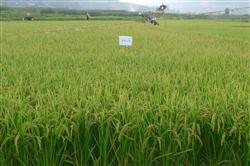
What should be noted in late-stage rice management? Please give an introduction.
Late-stage rice management requires attention to the following points:
Do not arbitrarily increase the amount of pesticide. Blindly increasing the dosage of chemicals raises the cost of disease and pest control and easily causes crop phytotoxicity. In addition, pesticides must be mixed and used immediately to prevent chemical reactions between pesticides that reduce efficacy. In summer and autumn there are many thunderstorms; adding adjuvants to pesticides can both enhance the effect of the spray solution and delay washing off by rain, better ensuring control efficacy.
Spray evenly and uniformly. When using a pour-irrigation pump to control diseases and pests, be sure to mix the pesticide in sections and buckets according to the length of the field, or mark the spray level on the mixing container, and at the same time keep the nozzle that draws pesticide and water from being clogged by debris. When using a 1.6-horsepower mist blower, staffing must be sufficient, generally spraying in a north-south direction with 6 to 7 people, and each bucket of water should cover 1 to 1.3 mu. When starting to spray, the nozzle opening can be turned down to first spray out the settled pesticide liquid into the air or put it into the bucket in advance; when each bucket of water has been sprayed to the end, the nozzle opening should be closed immediately, and repeated spraying is not advisable, so as to prevent high-concentration liquid from burning the seedlings.
There is particularity in the timing of application. Try to avoid the rice flowering period (apply before 9 a.m. or after 3 p.m.) to avoid causing pollen sterility; applying pesticide when the morning dew is too heavy is also inadvisable, as it reduces the content of the spray liquid; for pesticides such as phoxim that decompose easily in light, it is advisable to apply them on cloudy days or after 3 p.m.; if dichlorvos is used in the late growth stage of rice to clean up residual rice planthoppers, it is advisable to apply it at noon on clear days to improve control efficacy.
The spray target must be clear. When controlling neck blast and rice leaf roller, the nozzle should be directed upward to spray, letting the fine liquid fall slowly or drift onto the panicles or leaves of the plants; for these diseases and pests, a 1.6-horsepower mist blower gives better control efficacy. When controlling rice planthoppers or rice sheath blight, the nozzle should be aimed at the middle and lower parts of the plants, so that as much liquid as possible is sprayed toward the base of the rice, strengthening control of diseases and pests and protection of the leaves. For these diseases and pests, a pour-irrigation pump with a large water volume is better.
There is knowledge in field water depth. When controlling rice planthoppers and larvae of the rice leaf roller beyond the 2nd instar, a water depth of 3 to 5 days should be properly established in the field, so that the liquid covers the field surface and forms a layer of liquid that the plants can climb through, increasing control efficacy; if controlling sheath blight, rice blast, rice false smut, or eggs and young rice leaf roller nymphs, then the water depth does not matter; but when fumigating the field in the later stage to control rice planthoppers, the field must be kept dry and free of water to achieve better control efficacy.
Pesticide use must be appropriate. It is strictly forbidden to use pesticides explicitly prohibited by the state, such as methamidophos and 1605, as well as pyrethroid pesticides. For fields with rice quality traceability, the designated formula should be strictly applied, and pesticides with long residual times such as buprofezin, pymetrozine, and profenofos are prohibited. No pesticide should be applied within one month before harvest.
Pay attention to checking disease and pest control efficacy. Contracted workers and farmland management personnel should, within a certain period after disease and pest control, strengthen inspection of pesticide control efficacy. For fields or sections with poor control efficacy, identify the cause promptly and immediately carry out follow-up treatment, so as to eliminate the occurrence of diseases and pests in the bud.
Maintain field environmental sanitation. After field fertilization and pesticide application are completed, pollutants should be cleaned up promptly to keep the field environment tidy and sanitary. For pesticides to which fish, shrimp, and other aquatic products are relatively sensitive, protective measures should be taken.
Strengthen labor protection. Seize the periods in the morning and evening when the weather is not hot to apply pesticides. Do not drink alcohol before or after application. Wear raincoats, rain trousers, protective hats, and other labor protection supplies before entering the field to spray. During application, do not eat melons, fruit, or drinks, and do not smoke, and apply pesticides with the wind as much as possible.
Click to get more rice cultivation techniques
Click to get more food crop cultivation techniques