What are the control methods for bacterial leaf streak of rice?
How do you control bacterial leaf streak of rice? Please provide guidance methods. Symptoms of bacterial leaf streak of rice damage: it can occur from the seedling stage to the ear stage of rice. The lesions are yellow, initially yellow, then turning yellow-brown, until completely rotted. If the disease occurs before the heart leaf emerges, it cannot continue to grow upward and dies within the heart, forming a false dead heart, hence it is also called heart rot disease....
How do you control bacterial leaf streak of rice? Please provide guidance methods.
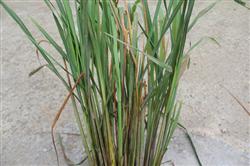
Symptoms of bacterial leaf streak of rice damage: it can occur from the seedling stage to the ear stage of rice. The lesions are yellow, initially yellow, then turning yellow-brown, until completely rotted. If the disease occurs before the heart leaf emerges, it cannot continue to grow upward and dies within the heart, forming a false dead heart, hence it is also called heart rot disease. Diseased plants have a foul odor, and when squeezed by hand, a milky white to pale yellow turbid bacterial fluid flows out. Under natural conditions, yellow-brown bacterial pus is also often secreted on the surface of the lesions, sometimes mistaken for bacterial leaf blight. The flag leaf is also sometimes affected, accompanied by premature heading, elongated panicle neck, pale brown small branch stalks, curved and deformed, brown grains, and mostly sterile. Diseased plants are generally taller than healthy plants, and have many ineffective tillers.
Comprehensive control techniques 1. Do a good job in basic farmland construction, establish irrigation and drainage systems, and avoid flooding of rice fields. Usually, deep irrigation and water accumulation should be prevented to avoid infection of rice plants. At the same time, enhance the resistance of rice plants through reasonable fertilizer and water management. 2. Strengthen field management to prevent the epidemic of bacterial diseases. For submerged rice fields, promptly wash the mud and sand off the leaves, drain and dry the field, try to prevent water from flowing between fields and through irrigation, and prevent the pathogen from spreading with the water flow. To increase plant nutrition and improve disease resistance, potassium dihydrogen phosphate can be appropriately sprayed on the leaves. Lime or plant ash can also be broadcast at 30~40 jin per mu to control the spread of the disease and promote the regrowth of rice roots. At the same time, spray with agricultural streptomycin at 500~600 times dilution for prevention. 3. For fields with initial disease or already diseased, immediately spray with agricultural streptomycin at 500~600 times dilution for control.
Click to get more rice cultivation techniques
Click to get more grain crop cultivation techniques