What are the practical measures for increasing rice yields?
Apply "no-deep-tillage" soil conditioner to increase soil permeability, promote rice root growth and development, and improve the rice plant's fertilizer use efficiency, thereby increasing rice yield. On this basis, firmly grasping the following measures also has a huge effect on increasing rice yield. 1. Increase the number of panicles. ① Cultivate strong seedlings. To...
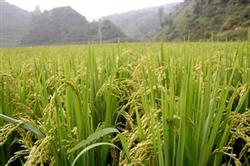
Apply "no-deep-tillage" soil conditioner to increase soil permeability, promote rice root growth and development, and improve the rice plant's fertilizer use efficiency, thereby increasing rice yield. On this basis, firmly grasping the following measures also has a huge effect on increasing rice yield.
1. Increase the number of panicles.
① Cultivate strong seedlings. This provides a good foundation for early greening-up and early tillering after planting.
② Rational close planting. According to the planned number of panicles to be harvested and an estimate of the tillering situation of the seedlings after planting, transplant (or broadcast) enough basic seedlings.
③ Promote early development of low-position tillers, and control the development of high-position tillers. Promote early development of low-position tillers; after transplanting enough seedlings, expose the field and sun-dry the field in time to control ineffective tillers at high nodes, so that nutrients are concentrated in the early-developed effective tillers and the rate of tillers forming panicles is increased.
2. Increase the number of grains per panicle.
① Promote thick and strong stems before young panicle differentiation. On the basis of strong seedlings, ensure the supply of nutrients necessary for steady growth of the rice plants during the tillering stage in the field, so that the rice stems are thick and strong and the panicle branches are relatively strong, laying a good foundation for forming large panicles.
② Supply enough nutrients for young panicle differentiation. Usually at the beginning of young panicle differentiation, if the leaf color is relatively pale, "flower-promoting fertilizer" needs to be applied to promote the formation of more spikelets. In the middle stage of young panicle differentiation and development (about 20 days before heading), if the leaf color is relatively pale, "flower-preserving fertilizer" should also be applied to reduce spikelet degeneration and increase the fertility rate of spikelets.
③ Regulate temperature with water to increase the seed-setting rate. If dry and cold weather (such as cold dew wind) is encountered during the heading and flowering stage, water can be kept in the field to preserve moisture and increase temperature, reducing damage to rice from low temperature and dryness and increasing the seed-setting rate.
④ Increase dry matter accumulation before heading. Before heading, pay attention to supplying the nutrients needed for growth, but do not let growth be excessive, so that photosynthetic products are accumulated and more substances can be transferred to the grains after heading, increasing the seed-setting rate.
3. Increase grain weight.
① Ensure good nutritional conditions in the later stage of young panicle development, so that the glumes grow larger and can hold more filling substances.
② Use moist irrigation during the grain-filling and maturation stage to nourish roots and preserve leaves, forming more photosynthetic products and giving the grains good plumpness.
③ During the rice growth period, spraying the plant growth regulator "Shuofeng 481" is beneficial for promoting leaf formation and growth, increasing photosynthetic capacity, promoting the grain-filling rate, increasing grain number and grain weight, increasing the content of grain protein and amino acids, improving quality, shortening the growth period, promoting grain maturation, and winning valuable time for planting double-cropping rice.