Timely early transplanting of rice helps increase yield
As a supporting seedling-raising method for manual transplanting, the wet seedling-raising technique for rice is suitable for seedling raising across different regions, rice-growing seasons and different types of rice varieties, and is widely adopted in China. This technique is easy to operate, widely applied and highly adaptable; when mastered properly, it produces seedlings of good quality and high yield. 1. Seedbed preparation...
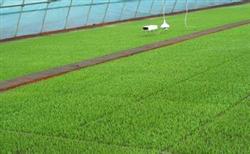 Timely early transplanting is an important step in rice cultivation, especially in multi-cropping areas where the season is tight, so this step must be seized without missing the opportunity, so as to make full use of the suitable growing season of the year. Timely early transplanting favors early tillering and more tillers. At the same time, early transplanting can extend the vegetative growth period in the main field after transplanting, increase the accumulation of nutrients, and help form large panicles. According to experiments, the timing of transplanting is closely related to yield, and its multiple regression equation is: y=593+4.22x(1)-4.48x(2). y represents the theoretical yield per unit area, x(1) is the percentage of area transplanted early between Start of Summer and Grain Full; x(2) is the percentage of the total rice area transplanted late at Summer Solstice. The area transplanted early between Start of Summer and Grain Full showed a highly significant positive correlation with yield per unit area (r=0.8622, t=4.82, 1% t=3.355); for every 1% increase in the county's transplanted area as the season advanced, the average rice yield per unit area increased by 2.11 kg. The area transplanted late at Summer Solstice showed a negative correlation with rice yield per unit area (r=-0.8799, t=7.11, 1% t=3.555), that is, for every 1% increase in the area transplanted late at Summer Solstice, the average rice yield per unit area decreased by 2.24 kg. This shows the importance of timely early transplanting. In addition, early transplanting can also lead to early maturity, which favors timely sowing of the following crop and achieves high yield in both seasons.
Timely early transplanting should be determined according to temperature, preceding crop, variety (combination) and characteristics. Temperature is the most important factor determining whether early transplanting is possible. According to research, at a daily average temperature of 20°C, it takes 4-6 days to turn green; at 15°C, it takes 7-10 days; below 15°C, the green-turning period can be as long as more than 10 days. When the temperature is below 15°C, early transplanting does not lead to early maturity, and sometimes even causes seedling death, failing to achieve the goal of increasing yield. If transplanting is too late, low temperatures in the later period (autumn wind) will affect grain filling, and in two-cropping areas it will also affect sowing of the following crop; all these need attention. Of course, to achieve early transplanting, factors such as whether the crop rotation and variety arrangement are reasonable must also be considered; one must take the overall situation as the basis, with preceding and following crops accommodating each other, so as to favor high yield in every season.
At transplanting, strict requirements should be applied, achieving evenness, straightness, shallowness and stability, trying not to injure the seedlings, reducing the transplanting injury rate to the minimum, and improving transplanting quality.
"Shallow" means transplanting should be shallow, generally not exceeding 3.3 cm. The advantages of shallow transplanting are: it places the rooting nodes in the shallow soil layer where ground temperature is higher, favoring early and abundant root development and the absorption of large amounts of nutrients; it places the stem in the cultivated surface layer with a large temperature difference, promoting early and abundant tillering and the formation of more panicles; and it allows the plants to spread out in a fan shape, improving light energy utilization, rapidly expanding leaf area, increasing photosynthetic products, and laying the foundation for large panicles.
"Even" means the row and hill spacing should be neat and uniform, with the same number of seedlings per hill, facilitating ventilation and light penetration, balancing the nutritional area of each individual plant, and making the whole field grow uniformly.
"Straight" means the seedlings should be upright, not planted as "leaning seedlings", which favors turning green.
"Stable" requires that after shallow transplanting, the seedlings do not float.
Reducing transplanting injury means minimizing damage to roots and leaves during seedling pulling, transport and transplanting. To achieve the above requirements, attention should be paid to: (1) Irrigate with deep water 1-2 days before pulling seedlings to reduce root injury, and preferably transplant with soil attached; (2) When bundling seedlings, pat the roots even; (3) When transplanting, try to avoid "five-claw seedlings", "broken-head seedlings", "root-flipped seedlings" and "deeply planted seedlings"; (4) Generally, transplanting "muddy-water seedlings" in the field can use settling soil particles to make good contact with the roots, favoring root development and turning green, hence the farming proverb "Better to transplant overnight seedlings than to transplant in an overnight field." Sandy fields should be transplanted immediately after harrowing. For highly muddy fields prone to puddling, "clear-water seedlings" are required; otherwise, as the soil settles, the seedlings sink too deep, causing slow rooting, delayed turning green and few tillers, and in severe cases causing "stunted clumps".