Detailed Explanation of Key Cultivation Techniques for Spring Maize and Late Rice
1. Deep planting of milk-stage seedlings, dry management to promote root growth and preserve seedlings. The techniques of raising seedlings in fertilizer balls and soft trays must be implemented, and the technique of deep planting of milk-stage seedlings must be carried out well. According to research, transplanting milk-stage seedlings has the advantages of early vigor and strong seedlings, strong dry matter accumulation capacity, sturdy plants, well-developed root systems, large and numerous ears with heavy grains, and low empty-stalk rate; its early-maturing and high-yielding growth advantage is 6 days earlier than production cultivation, and the seedling recovery period...
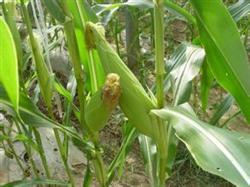 The spring maize + late rice cultivation model refers to a cultivation model in which, because spring drought makes it impossible to plant early rice, spring maize is planted instead and rice is planted in the late season.
Advantages of the spring maize + late rice cultivation model: First, this model can be adopted in most dry fields lacking irrigation conditions, thereby reducing the amount of early-season land left fallow and ensuring the grain planting area. Second, the price of maize is slightly higher than that of paddy rice; under current market conditions, it is about 5-10% higher. Third, maize yield is slightly higher than early rice yield; in the same field and at the same input level, planting maize yields about 10% more than planting rice. Fourth, spring maize management requirements are relatively extensive, and the input costs for labor and agricultural materials are relatively low, so it can be promoted and applied over a large area. Fifth, spring maize is generally sown at the end of January and the beginning of February and harvested from the end of May to June, about 20 days earlier than the early rice harvest period, which can both avoid the harm of "Dragon Boat water" and gain the initiative for late rice variety selection and production season arrangement, and can also create more favorable conditions for winter planting production.
I. Main cultivation techniques for spring maize
Maize planting can adopt conventional tillage planting or no-tillage planting.
(I) Select good varieties. To increase yield and benefits, hybrid maize is generally chosen, and waxy maize or sweet maize for fresh market sales can also be planted. For spring maize, medium-maturing varieties are suitable; the main varieties suitable for planting in our city include: Dika 007, Zhengda 619, Guidan No. 22, Guidan No. 30, the Jindan series, Nongda 108, Yuyu 30, etc.; the main waxy maize varieties include: Suyunuo No. 1, Guinun 2006, etc.; the main sweet maize varieties include: Huazhen, Jinzhen, Taizhen, Xiantian No. 6, etc.
(II) Land preparation and weed control. For conventional tillage planting, the suitable tillage period should be well grasped, and the field should be plowed and harrowed with deep plowing of more than 30 cm, then leveled and bedded at 1-1.1 m. No-tillage planting does not require plowing and harrowing of the field, but pre-sowing weed control is needed; it is sufficient to plow furrows and form beds at 1-1.1 m. The specific method for pre-sowing weed control is: 7-9 days before sowing, apply per mu 250-300 ml of 20% "Gramoxone", or 250-300 ml of 20% "Paraquat", or 1500-2000 ml of 10% "Glyphosate", or 300-500 g of "Miangengle", or 80-160 g of 50% "Acetochlor", diluted with 50-60 kg of water and sprayed evenly over the whole field.
(III) Apply sufficient base fertilizer. Applying sufficient base fertilizer is one of the keys to increasing maize yield. Before fertilizing, first mix phosphate fertilizer with organic fertilizer and compost for one month to improve fertilizer efficiency. General base fertilizer application rates: per mu 50 kg phosphate fertilizer + 1000 kg farmyard manure, or 50 kg compound fertilizer containing 15% each of nitrogen, phosphorus, and potassium.
(IV) Sow at the right time. In our city, sowing should begin in late January and be completed by early February. The seeding rate is generally about 1.5-2 kg per mu; the two-row single-plant planting method is more favorable for obtaining high yield, with row spacing of 33-40 cm, plant spacing of 25-33 cm, and 2 seeds per hole.
(V) Field management
1. Seedling stage management. ① Field thinning and final spacing: thin and finalize seedlings at the 4-5 leaf stage, generally leaving one seedling per hole, with 4500-5000 plants per mu. ② Fertilization: seedling fertilizer should mainly be quick-acting fertilizer. After finalizing seedlings, apply per mu 5-6 kg urea, diluted with water and poured on, then earth up after application. ③ Pest and disease control: there are many pests and diseases at the seedling stage. Pests include cutworms, armyworms, white grubs, and mole crickets, etc., which often damage young seedlings and bite them off; checks should be made at any time, and poisoned bait should be applied to trap and kill them. The main disease is downy mildew; when diseased plants are found, they should be pulled out promptly and burned in a centralized manner.
2. Management during the jointing and heading stage. ① Apply stalk-promoting fertilizer at the right time; the time for applying stalk-promoting fertilizer is generally at the beginning of jointing, about 30 days after emergence for spring maize, when the seedlings already have 7-8 leaves. Generally apply per mu 8-10 kg each of urea and potassium fertilizer, diluted with water and poured on. ② Apply ear-promoting fertilizer heavily, applied when maize shows the "large trumpet mouth" stage; generally apply per mu 10 kg each of urea and potassium fertilizer, applied 7-10 cm from the base of the maize, and after topdressing, earth up heavily to prevent lodging. ③ Pest and disease control: the main pests at this stage include corn borer, armyworm, aphids, etc. The main diseases include northern and southern leaf blight, sheath blight, smut, and stalk rot, etc. It is necessary to frequently go into the field to inspect and promptly spray pesticides to control pests and diseases when found.
(VI) Harvest at the right time
Fresh-eating sweet and waxy maize are suitable for picking at the milk-ripe stage, that is, generally 20-24 days after pollination at silking for sweet maize and 25-30 days for waxy maize.
Maize harvested for dry grain is generally harvested at the full-ripening stage, when the grain surface has a distinct luster, the whole plant appears yellow, and the ear husks are loose and turning white.
II. Late rice production
Late rice is sown in late June, transplanted or broadcast in mid-to-late July, striving to head from the end of September to early October and be harvested from the end of October to early November; in this way, autumn drought and cold dew wind can be effectively avoided.
The cultivation techniques for late rice are the same as those for normal late rice cultivation.