Detailed Explanation and Key Operation Points of Dry Rice Seedling Cultivation
According to surveys in recent years, most rice seedlings are raised in paddy fields; under year-round waterlogged conditions, paddy fields have poor aeration and cold, poorly aerated soil, which is not conducive to raising strong seedlings, and after transplanting the seedlings become stunted and develop late. Dry seedling cultivation is the raising of rice seedlings under dryland conditions; dryland soil is rich in oxygen, and water, air, and nutrients are easily coordinated, which...
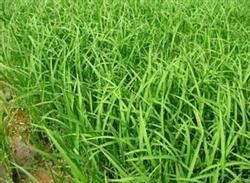
According to surveys in recent years, most rice seedlings are raised in paddy fields; under year-round waterlogged conditions, paddy fields have poor aeration and cold, poorly aerated soil, which is not conducive to raising strong seedlings, and after transplanting the seedlings become stunted and develop late.
Dry seedling cultivation is the raising of rice seedlings under dryland conditions; dryland soil is rich in oxygen, and water, air, and nutrients are easily coordinated, which is conducive to raising strong seedlings. By leveraging the advantages of strong seedlings, the transplanting density in the paddy field can be appropriately reduced, and more tillers can be used to form panicles, achieving large panicles with many grains and stable, high yields.
The main advantages of this technique: the seedlings are short and sturdy, with strong root vigor and good cold tolerance; after transplanting they root quickly, tiller vigorously, and have a high rate of panicle formation, with large panicles and many grains, good grain filling, and the ability to be pulled and transplanted early, ripening early; generally 3-5 days earlier than conventional transplanting.
1. Pre-sowing preparation
(1) Seedbed selection and preparation: Choose dryland that is convenient for irrigation and faces the sun (generally in one's own garden), prepare beds of the same size and specification, compact the bed base, and then spread the prepared bed soil on top. To raise soil temperature, cover with plastic film 5-7 days in advance.
(2) Bed soil preparation: According to the fertility status of the garden soil, apply well-rotted farmyard manure; mountain humus soil can also be used. During seedling raising, acid adjustment is generally required, but the prepared seedling culture soil generally does not need acid adjustment or fertilization. The bed soil is generally 5-6 cm thick.
(3) Seed preparation:
① Sunning seeds: First sun the seeds for 3-5 days to improve the germination rate and germination vigor.
② Seed selection: After winnowing, carry out salt-water seed selection.
③ Disinfection and seed soaking: First disinfect with a fungicide for 4 days, then soak in acid water at a water temperature of 15°C (pH=3.5-4) for 3-4 days, remove and rinse with clean water, and then germinate. Acid water seed soaking technique: According to authoritative records, soaking seeds in acid water with a pH value of 3.5-4.0 can significantly improve the germination rate and germination vigor of rice seeds, shorten the number of germination days and the number of hours to break the hull, make the seedling stem base thick and strong with well-developed roots, and greatly reduce the incidence of rice seedling blight. At the same time, it can increase the rice water amount within a certain range, with a yield increase of 6%-9%.
④ Germination: Once the seeds are soaked, they can be germinated. The temperature is generally around 30°C. If the seeds are soaked in acidified water, they will break the hull in 20-22 hours. When 80% have broken the hull and shown white, they can be placed in a cool place until sowing.
2. Sowing: Generally sow from April 10-15, with a sowing rate of 4-5 liang/sq m of wet seeds.
One day before sowing, water the seedbed thoroughly once, and water again on the day of sowing. Spread the seeds evenly on the bed, then water again with a fine-rose watering can so the seeds adhere to the bed surface. After covering with sieved fine soil (with herbicide for closed treatment), lay a layer of film to keep warm and moist and facilitate seedling emergence.
3. Seedling field management: After the seedlings emerge uniformly, remove the flat-laid film, and keep the shed temperature at around 30°C. After the complete leaves of the seedlings unfold, increase the ventilation openings and lower the temperature to around 25°C. Note: start ventilation with a small draft and side draft, then gradually increase to a strong draft, and gradually shift to natural hardening. Fertilizer and water management: After the seedlings emerge, observe whether there is guttation at the leaf tips in the morning; if there is, it means there is no water shortage. If there is no guttation, replenish water immediately, and water thoroughly each time. Dry seedling cultivation mainly relies on base fertilizer and generally does not require topdressing.