Common Problems in Rice Seedling Raising and Countermeasures
Cultivating robust seedlings is the key to high rice yields. By analyzing common problems that arise during seedling raising, corresponding solutions are proposed to provide technical reference for cultivating high-yield robust seedlings. (I) Common problems in machine-transplanted seedling raising and countermeasure techniques 1. Poor seed emergence. Machine-transplanted seedling raising often suffers from poor seed emergence, uneven emergence, and...
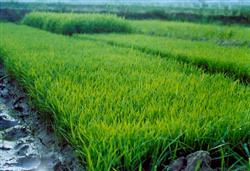
Cultivating robust seedlings is the key to high rice yields. By analyzing common problems that arise during seedling raising, corresponding solutions are proposed to provide technical reference for cultivating high-yield robust seedlings.
(I) Common problems in machine-transplanted seedling raising and countermeasure techniques 1. Poor seed emergence. Machine-transplanted seedling raising often suffers from poor seed emergence, uneven emergence, and uneven distribution of seedlings within the seedling trays, which affects the quality of machine transplanting and, in severe cases, even makes machine transplanting impossible. This is mainly caused by poor seed quality, low germination rate, and improper treatment of tray soil. Countermeasures: First, before raising seedlings, conduct a germination test and select seeds that meet the standards for seedling raising. During the treatment of seedling bed soil, select appropriate fertilizer types, and the amounts of fertilizer and seedling-strengthening agent must be appropriate. For dryland soil seedling raising, a small-scale seedling raising trial is required before taking soil, to determine whether it can be used as seedling-raising nutrient soil. Compound fertilizer should be selected as the seedling-raising fertilizer, and the application rate of the seedling-strengthening agent should be appropriate. It is prohibited to use undecomposed manure, urea, ammonium bicarbonate, etc. directly as base fertilizer, and after sowing, no fertilizer or seedling-strengthening agent may be applied to the covering soil.
2. "Hat-wearing" seedlings. In machine-transplanted rice seedling raising, many trays often produce "hat-wearing" seedlings (the covering soil is lifted up by the seedlings), and some slower-growing seedlings have their bud tips stuck to the lifted soil clods and are pulled up, causing the white roots to hang in mid-air; seedlings that are not pulled up have their roots exposed because there is no covering soil. This phenomenon is mainly caused by hardening of the covering soil in dryland soil seedling raising, being too dry and too fine, uneven thickness, and excessive bed water. Corresponding countermeasures: For dryland soil seedling raising, select suitable covering soil, cover evenly, and with appropriate thickness. For seedlings that already show the "hat-wearing" condition, gently pat the bed soil with fine twigs so that the lifted soil clods are shattered and fall down, then uncover the covering film, appropriately sprinkle some fine soil to completely cover the seedling roots, then lightly spray some water to keep the seedling roots moist, and at the same time wash off the mud sticking to the seedling leaves, and finally restore the covering film.
3. Seedling damping-off disease. Damping-off is a disease that requires key prevention and control during machine-transplanted rice seedling raising. When affected by damping-off, the base of the seedling stem first turns yellow to yellowish-brown, and in severe cases rots and softens, with the whole plant becoming green-wilted or turning yellow to brown and dying. Once machine-transplanted rice is harmed by rice damping-off, it often results in an insufficient number of machine-transplanted seedlings, and when missed planting is severe, manual replanting is required. For damping-off prevention and control, first do a good job in bed soil preparation and acid adjustment, adjusting the pH value to below 6.0; second, disinfect the soil. A 600-800 times dilution of 70% Dexon can be used before sowing to spray and moisten the bottom soil of the seedling bed, and after sowing to spray and moisten the seed-covering soil, spraying the bottom soil and seed-covering soil once each, not repeatedly, to avoid phytotoxicity; during the 1-leaf-1-heart to 2-leaf-1-heart stage of the seedlings, use a 600 times dilution of 70% Dexon for foliar spraying 1-2 times.
(II) Common problems in dry-raised seedling raising and countermeasure techniques 1. Yellowing and dead seedlings or damping-off dead seedlings. The main cause is that the soil is not acid-adjusted or is improperly adjusted, resulting in excessively high soil pH, which easily leads to yellowing and dead seedlings or damping-off dead seedlings. Countermeasures: First, when the pH value of the seedling bed site is greater than 8, dry-raised seedling raising cannot be carried out; when the pH value of the seedling bed site is around 7.5, sulfur powder should be used for acid adjustment 2-3 months in advance, at 200 grams per square meter, so that the pH value of the dry-raised seedling bed reaches 4.5-5.5, which is suitable; second, use "dry-raising nanny" for seed dressing; third, once green-wilted or damping-off dead seedlings are found, immediately use a 500 times dilution of Dexon solution for prevention and control.
2. Uneven emergence. Insufficient bottom water at sowing during dry-raised seedling raising directly leads to uneven emergence, and later large and small seedlings appear. Countermeasures: Require that the bottom water reach a saturated state at sowing. If the bed soil turns white or cracks during the emergence period, replenish water in time to avoid affecting emergence.
3. Improper selection of herbicide. If no herbicide is applied after sowing in dry-raised seedling raising, seedlings and weeds grow together after emergence, affecting robust seedling growth and resulting in poor seedling quality. Countermeasures: First, after sowing, a dedicated herbicide must be used for weed control, such as dry seedling cleaner, Xinye, etc.; second, after emergence, use the seedling hardening time to manually pull out weeds in time, avoiding the phenomenon of weeds growing faster than seedlings.
(III) Common problems in wet seedling raising and countermeasure techniques 1. Sowing rice seeds without soaking and pregermination. In production, some farmers sow without soaking and pregermination, that is, sowing dry rice seeds. If the temperature is relatively low after sowing, it is very easy to cause seed rot. Countermeasures: First, publicize the benefits of soaking and pregermination before sowing. Second, if farmers are found sowing dry rice seeds, require that the water in the seedling furrows must not rise onto the beds. Third, guide farmers to strictly cover with plastic film for insulation, and they may also cover another layer of film on the bed surface, that is, double-film covering.
2. Sprout burning during pregermination. Sprout burning is when the sprouts turn yellow or even rot due to excessively high temperature during pregermination. Countermeasures: First, frequently check the pregermination temperature and turn the seeds about every 3 hours to cool them down. Second, after breaking the hull, control the temperature at 25-28°C. If the temperature is found to exceed 30°C, turn the pile and rinse once with clean water, and continue pregermination after the temperature drops.
3. Seed rot and dead seedling phenomena. During rice production, seed rot and dead seedlings occur from time to time during the seedling raising period. Countermeasures: First, select seeds that are not moldy or insect-damaged; second, change the water frequently when soaking seeds; third, the pregermination temperature should be appropriate; fourth, after sowing and emergence, uncover the film to cool down when encountering high temperatures, and cover with film for insulation when a cold wave arrives; fifth, strengthen fertilizer and water management to cultivate robust seedlings; sixth, pay attention to preventing and controlling rice blast at the 1-leaf-1-heart stage.