-
How to Treat Stunted Growth in Rapeseed with Targeted Control
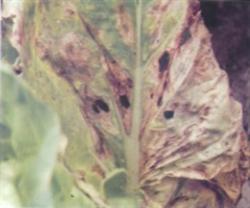
[Distribution and Damage] It occurs in all rapeseed-producing areas, with more frequent occurrence in the Yangtze River Basin and South China. This disease is caused by Alternaria brassicae (Berk.) Sacc., A. brassicicola (Sehw.) Wiltshire, and A. raphani Gr. et S...
-
Control Methods and Key Technical Points for Sclerotinia Rot of Rapeseed
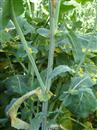
Sclerotinia rot of rapeseed, also called stem rot, is a fungal disease. It has a long period of harm, occurring from emergence to maturity, and is most prevalent after flowering. 1. After infection at the seedling stage, reddish-brown spots appear on the stem base and leaf stalks, then expand and turn white, with white cottony mycelium on the rotting tissue, and finally...
-
What are the methods for controlling rapeseed aphids?
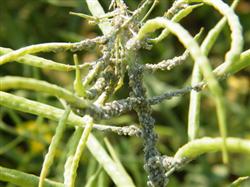
[Distribution and damage] The aphids that damage rapeseed are mainly three species: the turnip aphid (Lipaphis erysimi), the green peach aphid (Myzus persicae) and the cabbage aphid (Brevicoryne brassicae). The turnip aphid and the green peach aphid occur commonly in all provinces (regions) of China. These three aphids often occur together on rapeseed, using their needle-like mouthparts to...
-
There are taboos in rapeseed cultivation; pay attention to these few things
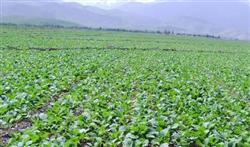
Traditional rapeseed cultivation first requires raising seedlings in a seedbed, then plowing the main field, making beds, transplanting, and so on. The many steps, high labor demand, heavy labor intensity, and high cost restrict the expansion of rapeseed planting area and the improvement of economic returns. In recent years, other places and local areas are demonstrating and gradually promoting a new rapeseed cultivation technique...
-
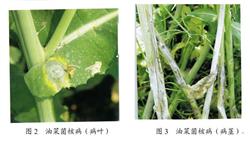
Key Technical Points for Integrated Control of Rapeseed Sclerotinia Stem Rot
Rapeseed sclerotinia stem rot is a major disease of rapeseed, widely distributed in China, especially common in the Yangtze River basin and the south. In ordinary years, incidence ranges from 10% to 30%, and in severe cases reaches 80%, causing very serious losses. Rapeseed sclerotinia stem rot is caused by a fungus, and it can occur at all stages of rapeseed growth, but it is most severe after flowering...
-
What should be noted when applying boron to rapeseed? Master the correct application method
How to fertilize rapeseed scientifically? Please advise. In rapeseed production in the Yangtze River Basin, the application rates of nitrogen, phosphorus and potassium fertilizers are generally low, the nutrient ratios are unbalanced, organic fertilizer application is insufficient, the straw return rate is low, and deficiencies of trace elements such as boron occur from time to time. Fertilization principles: increase organic fertilizer application and advocate straw return; supplement according to the soil...
-
What are the key technical points for fertilizing rapeseed during the bud emergence and bolting stage?
How should rapeseed be fertilized during the bud emergence and bolting stage? Please advise. When rapeseed enters the bud emergence and bolting stage, the period from bud emergence and bolting to flowering is when both vegetative growth and reproductive growth are vigorous. This period is called the double-vigorous stage. The main objective at this stage is steady spring growth, promoting thick stems, and maintaining a relatively high number of green leaves, to lay a foundation for high yield...
-

Qiyin Plant Gene Activator for Controlling Flowering Without Fruiting in Rapeseed
Qiyin Plant Gene Activator for Controlling Flowering Without Fruiting in Rapeseed ⟦3 (Agricultural Wealth Network) In recent years, the phenomenon of rapeseed flowering without fruiting has become increasingly common in rapeseed-growing areas, and spraying borax during the flowering period has also proven ineffective. Here we introduce Qiyin Plant Gene Activator, a plant gene activator that can effectively change this situation. It does not change the original gene types of plants, but can activate excellent genes to fully play their role, strengthen defense and stress-resistance mechanisms, allowing plants to thrive even under adverse conditions, greatly increasing yield and improving quality. It is non-toxic and pollution-free, in line with the trend of green food, and has become a brand-new-concept agricultural product deeply welcomed by farmers. It contains special organic substances and certain nutrient elements essential to plants. It can activate the activity of multiple enzymes in seeds and plant bodies, promote metabolism, promote germination and well-developed root systems, increase the absorption capacity of the underground part and the photosynthetic efficiency of the aboveground part, and can greatly increase the yield and income of plants such as grain crops, cotton, oil crops, vegetables, fruits, mulberry, tea, tobacco, medicinal herbs, flowers, trees and forage grass. It can enhance crops' resistance to high temperature (heat damage, dry hot wind), low temperature (frost), drought, waterlogging, salinity and alkalinity, and relieve (herbicide and other) phytotoxicity and other stress resistance capabilities. It can also promote the fertilized ovary to turn green faster and reduce the shedding of buds, bolls and young fruits. It will promote regular fruit shape and bright color; plump seeds and increased nutritional content, improving commodity value and enhancing market competitiveness. When Qiyin Plant Gene Activator was widely promoted and used on rapeseed, not only did the rapeseed not show the phenomenon of flowering without fruiting, but the yield increased by about 30%. The specific operation methods are introduced as follows: Qiyin activator seed dressing: seedbed area 63 sq m. Rapeseed seeds 45 grams, mixed with urea 1 kg plus Qiyin special seed soaking agent 2 grams for seed dressing, mix well and sow, after sowing irrigate the land with 350 kg of farmyard manure water. This can significantly improve the disease resistance of rapeseed. Rapeseed treated with Qiyin seed dressing has strong seedlings and thick roots, and after transplanting, common diseases such as sclerotinia, white spot disease, viral disease and downy mildew rarely occur. Early bolting stage. Choose a sunny noon with a temperature above 10°C, spray Qiyin Plant Gene Activator 10 grams + potassium dihydrogen phosphate 20 grams mixed with water 15-30 kg. This can promote robust stem development of rapeseed, wide and thick leaves, well-developed root systems, and increase effective branches. It improves rapeseed's disease prevention and resistance ability and resistance to early spring cold and freezing damage. Early flowering stage of rapeseed. Spray Qiyin Plant Gene Activator 10 grams + potassium dihydrogen phosphate 20 grams + borax 30 grams + 50% procymidone wettable powder 1000-1500 times solution (or add 40% dimethachlon wettable powder 100-150 g per mu). This can promote rapeseed flowering, improve pollen fertilization and pod setting, and control rapeseed sclerotinia and viral disease. Early pod-setting stage of rapeseed. Choose a sunny noon, spray Qiyin Plant Gene Activator 10 grams mixed with water 15 kg to promote pod development and plump seeds. Dry rapeseed yield and oil extraction rate are significantly increased.
-
How to balance fertilization for winter rapeseed during the Start of Winter?
Balanced fertilization for winter rapeseed during the Start of Winter season
-
What effects does phosphorus deficiency have on the growth of rapeseed?
Effects of phosphorus deficiency on rapeseed
条件筛选