-

Non-GMO Herbicide-Tolerant Rapeseed Officially Launched
Non-GMO Herbicide-Tolerant Rapeseed Launched
-

What causes red leaves in rapeseed? Causes and solutions
Causes of and solutions for red leaves in rapeseed
-
High-yield cultivation techniques for no-till direct seeding in rapeseed-rice double cropping
Zhejiang Province is relatively economically developed, with high labor costs. At the same time, as diesel prices rise, the cost of mechanical plowing of farmland increases, and the production cost of grain and oil crops increases year by year. For this reason, Zhejiang Province carried out trials, demonstrations and extension of high-yield cultivation techniques for no-till direct seeding in rapeseed-rice double cropping, which reduced the production cost of grain and oil crops and improved planting efficiency. According to surveys, each mu of no-till direct-seeded rapeseed saves 62.5 yuan in costs and increases efficiency compared with transplanted rapeseed, and each mu of no-till direct-seeded late rice saves 70.24 yuan in costs and increases efficiency compared with plowed and transplanted late rice. The annual cumulative cost saving and efficiency increase of no-till direct seeding cultivation in rapeseed-rice double cropping is 132.74 yuan.
-
Detailed Explanation of the Five Major Characteristics of the Rice-Rapeseed Combined Planting Model
Rapeseed is an important oil crop in the Yangtze River Basin. Traditional rapeseed cultivation involves raising seedlings and transplanting them. Because raising seedlings and transplanting rapeseed in paddy fields requires large inputs of labor and materials, with low yields and low returns, and crops are easily lost when unsuitable weather occurs, this affects farmers' enthusiasm for planting rapeseed. Changing traditional seedling transplanting to no-till broadcast direct seeding with rice straw mulching simplifies the production process and achieves the goal of cost saving and efficiency improvement. Compared with traditional seedling transplanting, the rice-rapeseed combined model has the following characteristics: First, no-till broadcast direct-seeded rapeseed, per
-

Key points of high-yield fertilization techniques for rapeseed: fertilize this way for high yields
High-yield fertilization techniques for rapeseed
-

How to identify nutrient deficiency symptoms in rapeseed cultivation?
How to identify nutrient deficiency symptoms in rapeseed cultivation
-
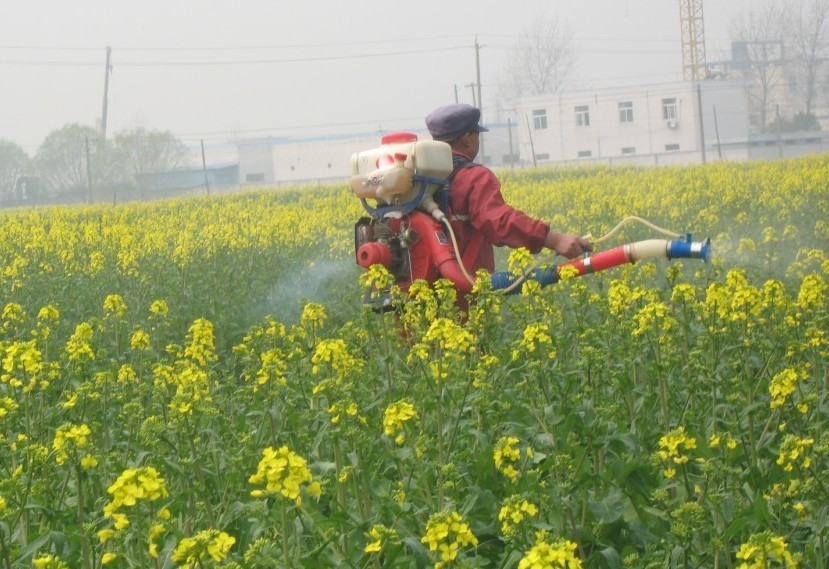
Occurrence Conditions and Control Techniques of Sclerotinia Rot of Rapeseed
Occurrence Conditions and Control Techniques of "Sclerotinia Rot" in Rapeseed
-

How much does rapeseed cost per jin? With planting methods
Rapeseed seed prices and planting methods
-
What are the control methods for striped flea beetles on rapeseed?
In recent years, the striped flea beetle has become another major insect pest during the seedling stage of rapeseed in Hongta District. The striped flea beetle is commonly known as the cabbage flea and the soil flea, and its larva is called the white maggot. This insect not only flies but also jumps well, making it difficult to catch on the leaves. When disturbed, it jumps to the ground or to the field-edge ditch, and then quickly flies back onto the leaves to feed. It often gathers in groups on the undersides of leaves to feed,...
-
Broadleaf weeds during the rapeseed growing season can be controlled with herbicides
Rapeseed sclerotinia stem rot is one of the important diseases in rapeseed production. It can occur from the seedling stage to maturity, with damage to the stem being the most severe. Control methods: First, increase the application of phosphorus and potassium fertilizers and apply only a small amount of nitrogen fertilizer. At the same time, open drainage furrows to facilitate drainage, thin the seedlings properly, and maintain a reasonable density. Spray paclobutrazol to improve lodging resistance. A reasonable density...
条件筛选