There are taboos in rapeseed cultivation; pay attention to these few things
Traditional rapeseed cultivation first requires raising seedlings in a seedbed, then plowing the main field, making beds, transplanting, and so on. The many steps, high labor demand, heavy labor intensity, and high cost restrict the expansion of rapeseed planting area and the improvement of economic returns. In recent years, other places and local areas are demonstrating and gradually promoting a new rapeseed cultivation technique...
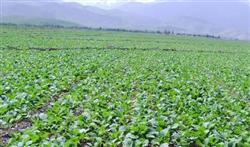 Although farmers are generally highly motivated to grow rapeseed, some people plant many varieties that are mixed and miscellaneous; others plant rapeseed continuously on the same land, so the rapeseed cannot grow and develop normally; in addition, there are also problems of sowing untreated seed or applying excessive nitrogen fertilizer. These are all taboos in growing rapeseed. For this reason, attention should be paid to the following points:
Choose good-quality main rapeseed varieties. That is, choose those with high oil yield, low erucic acid content, and low glucosinolate content in the rapeseed cake. Among the newly introduced "double-low" varieties are Zhongyouza No. 2, Zhongyouza No. 4, Zhongshuang No. 6, Zhongshuang No. 7, as well as new varieties in the Huaza, Ningza, Xiangza, Wanaza, Youyan and other series. Each place should, according to its local ecological environment and planting habits, accurately select 1-2 main varieties to grow.
Rapeseed should be grown in rotation with a change of crop. Continuous cropping reduces the soil's overall fertilizer supply capacity, causes shortages of certain elements, and intensifies disease, resulting in a yield reduction of 10-15%. Therefore, fields that grew rapeseed in the previous year must be planted with a rotated crop during autumn sowing.
Apply heavy base fertilizer and fertilizer before the year ends. For high rapeseed yield, it is essential to promote autumn growth and winter vigor. To produce 100 kg of rapeseed, it is necessary to absorb 8.8-11.3 kg of pure nitrogen, 3.0-3.9 kg of phosphorus pentoxide, 8.5-10.1 kg of potassium oxide, and 0.5 kg of boron; 70% should be applied as base fertilizer and as topdressing before the year ends.