What should be noted when applying boron to rapeseed? Master the correct application method
How to fertilize rapeseed scientifically? Please advise. In rapeseed production in the Yangtze River Basin, the application rates of nitrogen, phosphorus and potassium fertilizers are generally low, the nutrient ratios are unbalanced, organic fertilizer application is insufficient, the straw return rate is low, and deficiencies of trace elements such as boron occur from time to time. Fertilization principles: increase organic fertilizer application and advocate straw return; supplement according to the soil...
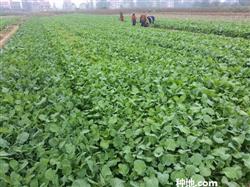 What should be noted when applying boron to rapeseed? Please advise
Boron fertilizer has an obvious effect on increasing rapeseed yield. However, farmers often make some mistakes in the application process:
First, applying boron fertilizer only in the base fertilizer and neglecting topdressing with boron fertilizer;
Second, using spraying fertilizer at the flowering stage to replace fertilizer application throughout the whole growth period;
Third, believing that applying boron at the seedling stage has little effect;
Fourth, applying an insufficient amount of boron;
Fifth, using only low-content (effective content below 5%) and low-priced boron fertilizer. Therefore, boron deficiency symptoms often appear to varying degrees at various stages of rapeseed growth and development.
Rapeseed is very sensitive to boron deficiency, and boron deficiency symptoms appear at all growth stages. When boron is deficient at the seedling stage, the roots are few and fine, the root crown swells, and the leaves turn brown and gradually die. When boron is deficient at the bud and bolting stage, the leaves shrink, the veins and surrounding areas turn yellow, and purple patches appear. When boron is deficient at the flowering stage, the petals shrink, the flower buds wither or even dry up, the pods do not expand or become deformed, and empty pods appear, commonly known as flowers but no seeds.
In order to apply rapeseed boron fertilizer correctly and better, three points should currently be noted:
First, comprehensively raise awareness of rapeseed's boron needs. First, after boron fertilizer is applied to rapeseed, boron can combine with the polysaccharide components of the cell wall, improve the stability of the cell wall, promote the synthesis of ribonucleic acid and the germination of pollen tubes, as well as the rapid growth of meristematic tissue, and prevent rapeseed from flowering without setting seed; second, it promotes the transformation of carbohydrates in the rapeseed plant and accelerates the synthesis of sucrose and the hydrolysis of starch; third, it can enhance the cell wall's control of water and strengthen rapeseed's cold resistance and disease resistance; fourth, it can improve the quality of rapeseed seeds, and the oil content can be increased by more than 6 percentage points.
Second, apply boron fertilizer flexibly by multiple methods. Rapeseed must be given boron throughout the whole growth period. First, apply base fertilizer before sowing, with 0.2-0.5 kg of Chilibor per mu or about 1 kg of borax; second, when using seedling raising and transplanting, 2-3 days before transplanting, spray 50 kg of 0.1-0.2% borax solution per mu of seedbed, or dip the roots with 0.2% borax at transplanting; third, during the overwintering period after transplanting, spray 0.2% Sulubor solution, 60 kg per mu; fourth, at the bud and bolting stage, spray 0.2% Sulubor solution, 60-70 kg per mu; fifth, at the early flowering stage, spray Sulubor solution, about 80 kg per mu.
Third, pay attention to the quality of boron fertilizer and the application method. Advocate the use of high-content boron fertilizer. When used as base fertilizer, it is best to apply it mixed with biological organic compound fertilizer or farmyard manure, or mixed with inorganic compound fertilizer. When used as topdressing, first, it must be fully dissolved; second, the amount used must be controlled; third, do not spray repeatedly or miss any area.
Click to get more rapeseed planting techniques
Click to get more grain crop planting techniques