What are the methods for controlling rapeseed aphids?
[Distribution and damage] The aphids that damage rapeseed are mainly three species: the turnip aphid (Lipaphis erysimi), the green peach aphid (Myzus persicae) and the cabbage aphid (Brevicoryne brassicae). The turnip aphid and the green peach aphid occur commonly in all provinces (regions) of China. These three aphids often occur together on rapeseed, using their needle-like mouthparts to...
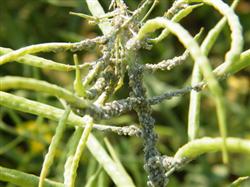
[Distribution and damage] The aphids that damage rapeseed are mainly three species: the turnip aphid (Lipaphis erysimi), the green peach aphid (Myzus persicae) and the cabbage aphid (Brevicoryne
brassicae). The turnip aphid and the green peach aphid occur commonly in all provinces (regions) of China. These three aphids often occur together on rapeseed, using their needle-like mouthparts to pierce and suck sap on the undersides of leaves or on the growing heart of the plant, causing leaves to curl, growth to stagnate, and in severe cases the whole plant to turn yellow and die. When aphids cause damage they also transmit viral diseases, resulting in even greater losses.
[Morphological characteristics] The wingless viviparous female of the turnip aphid is 1.8 mm long and yellow-green. Each segment on the dorsal side of the abdomen has dark green transverse bands, each side has 1 longitudinal row of small black spots, and each side of the cauda bears 3 hairs.
The wingless viviparous female of the green peach aphid is 1.4-1.9 mm long, oval, yellow-green, reddish-brown, orange-yellow and other colors, with black, slender, cylindrical cornicles.
The wingless viviparous female of the cabbage aphid is 2.5 mm long, dark green, covered with white powder, and each segment on the dorsal side of the abdomen has broken transverse bands. The cornicles are black, short and thick, with a markedly swollen middle part.
[Occurrence pattern] From north to south, 10-40-plus generations occur in 1 year. In North China, the turnip aphid overwinters as eggs on stored vegetables, the green peach aphid overwinters as eggs on peach branches, and the habits of the cabbage aphid are basically similar to those of the turnip aphid. When rapeseed is sown in autumn, it is exactly the peak period of migration and dispersal for the turnip aphid and the green peach aphid. Generally the turnip aphid migrates in first and the green peach aphid later; the turnip aphid occurs in greater numbers than the green peach aphid, but in rainy autumns the green peach aphid may exceed the turnip aphid. In winter the turnip aphid gathers in the heart leaves of rapeseed, while the green peach aphid disperses on the undersides of rapeseed leaves near the ground. In the following spring, after rapeseed bolts, these two aphids gather in the flower buds of the main stem to cause damage, and afterward disperse to the pedicels and pods of the various branches to cause damage; in late spring and early summer their numbers increase sharply, decrease in summer, and density rises again in autumn. In dry years the occurrence is severe, and early-sown rapeseed suffers severe damage; natural enemies such as ladybirds, hoverflies, lacewings and aphid parasitoid wasps have a considerable controlling effect on aphids.
[Control methods]
1. Agricultural measures Select and plant excellent insect-resistant varieties; before aphids migrate and fly in autumn, clear weeds and residual plant stems and fallen leaves from the field to reduce the base population of the pest.
2. Chemical control When 10% of rapeseed seedlings have aphids, or when 10% of buds have aphids at the bolting stage, spray with a 2000-3000 times dilution of 50% pirimicarb, which can effectively kill aphids without harming natural enemies. You can also use a 1500 times dilution of 80% dichlorvos, or a 2000 times dilution of 5% beta-cypermethrin, or a 1000 times dilution of 40% dimethoate for uniform spraying.