Control Methods and Key Technical Points for Sclerotinia Rot of Rapeseed
Sclerotinia rot of rapeseed, also called stem rot, is a fungal disease. It has a long period of harm, occurring from emergence to maturity, and is most prevalent after flowering. 1. After infection at the seedling stage, reddish-brown spots appear on the stem base and leaf stalks, then expand and turn white, with white cottony mycelium on the rotting tissue, and finally...
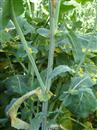
Sclerotinia rot of rapeseed, also called stem rot, is a fungal disease. It has a long period of harm, occurring from emergence to maturity, and is most prevalent after flowering.
1. After infection at the seedling stage, reddish-brown spots appear on the stem base and leaf stalks, then expand and turn white, with white cottony mycelium on the rotting tissue; eventually the infected plant dies, and many black sclerotia form on the outside of the diseased tissue.
2. From the bud stage to maturity, the main symptoms are: circular or irregular lesions on the leaves, with a grayish-brown center, a dark bluish-green middle layer, and a black halo around the edge.
3. In the late stage of the disease: the stems become hollow, the cortex splits, and the vascular bundles are exposed like hemp; the stems of diseased plants crack and break easily, with greenish droppings-like black sclerotia inside. After the petals are infected, they turn pale, lose their luster, and fall off easily.
After the siliques are damaged, irregular white spots appear, with sclerotia inside, and the seeds become shriveled.
Control methods:
1. Crop rotation: Because sclerotinia rot is a soil-borne disease and the pathogen mainly exists in the soil, it is best to rotate with rice. This is because sclerotia rot after being soaked in water for 1 to 2 months. If rotating on dry land, more than three years are needed to eliminate the sclerotinia rot pathogen.
2. Choose disease-resistant varieties: High-yielding, disease-resistant varieties should be selected.
3. Seed treatment: A 10% saltwater solution can be used for rinsing to remove the floating shriveled grains and sclerotia; wash the sunken seeds clean with water, dry them, and sow.
4. Clear ditches and drain water
5. Chemical control: Spray mainly at the early flowering stage. 40% dimethachlon or carbendazim can be used for spraying, and when spraying, try to apply it to the middle and lower parts of the plants.