-
What are the methods for preventing and controlling edible mushroom pests and diseases?
What methods are there for preventing and controlling edible mushroom pests and diseases?
-

What are the methods for preventing and controlling pests and diseases in edible fungi?
Multiple methods to prevent the occurrence of pests and diseases in edible fungi
-
Methods for Preserving Edible Fungi and Techniques for Preventing and Treating Strain Aging
Prevention and Treatment of Edible Mushroom Strain Aging
-
Master the fertilization methods for edible fungi, preventing green mold is key
Preventing green mold is key in edible fungus cultivation
-
Tips for Preventing and Controlling Edible Mushroom Pests and Diseases, and Notes on Rehydration
Clever Control of Edible Mushroom Pests and Diseases
-
Detailed Explanation of Key Techniques for Preventing and Controlling Mushroom Dead Button Disease
Mushroom dead button refers to the phenomenon in which small mushrooms on the mushroom bed shrink, turn yellow, and die. The appearance of withered mushrooms in patches or batches can severely affect yield. 1. Causes of dead button: ① Temperatures too high in late autumn (exceeding 23°C), or during the spring fruiting period when temperatures rise too high and too quickly (several consecutive days at 21°C), causing small mushroom buttons to shrink and die from nutrient deficiency. ② Poor ventilation in the mushroom house, insufficient o2 and excessively high co2 concentration, and the heat generated by metabolism cannot be dissipated quickly, causing small mushroom buttons to die in batches from insufficient oxygen supply or high temperature. ③
-
Detailed Explanation of Methods for Preventing and Controlling Edible Mushroom Diseases and Pests
Bacterial Rust Spot Disease I. Harmful Symptoms This disease often occurs on mushroom bags or mushroom beds, with mucus on the surface and yellowing mycelium; the pathogen can produce toxins, causing spots to appear on the caps. The spots are brown, round or oval, with a dark outer edge and irregular shape; when humid, the center of the cap is grayish-white with milky-white mucus; when the air is dry, the central part is slightly sunken. Spots on the stipe are diamond-shaped or oval. II. Conditions for Onset Unsuitable climate, encountering high temperature and high humidity, with relative air humidity above 95%; poor
-
Key Technical Points for Preventing Green Mold in Edible Mushroom Cultivation
Green mold is a major disease in edible mushroom cultivation, and the following 10 methods can be used for timely prevention and treatment: 1. Lower the temperature and humidity of the mushroom house, increase ventilation, and cover the moldy areas with plant ash to prevent mold spores from spreading through the air. 2. First fumigate the room with a 3% Lysol solution or 3% formaldehyde solution, then wash the moldy areas with a 1% potassium permanganate solution. 3. Sprinkle potassium permanganate granules on the moldy areas, then spray water around the outer edges of the mold. 4. Take 9 parts quicklime, 1 part carbendazim, and an appropriate amount of water, mix them, and scrub the moldy areas. 5. Soak the mold with 5%
-
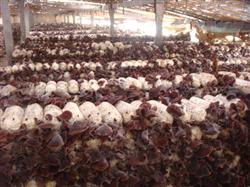
What are the methods for preventing and controlling pests and diseases in wood ear mushrooms?
Symptoms of green mold disease in wood ear mushrooms: After the spawn bags, spawn bottles, the area around the inoculation holes in log wood, and the fruiting bodies are infected by green mold, white slender hyphae first grow on the culture material, log wood, or fruiting bodies. After a few days, conidia can form. Once the conidia form in large numbers or mature, the colony turns green and powdery....
-
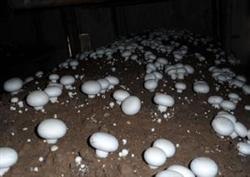
What are the methods for preventing and controlling the degeneration of Agaricus bisporus (button mushroom) spawn
Preventing spawn degeneration can increase yield, reduce the occurrence and development of pests and diseases, and cut down the amount of pesticides used, which is the foundation for producing organic button mushrooms. 1. The ambient temperature for culturing spawn must not exceed 28°C, and properly cultured spawn should not be stored at room temperature for more than half a month. 2. Properly master the time for mycelium to emerge from the substrate...
条件筛选