-
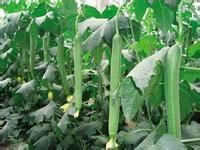
What to Do About Headless Loofah in Deep Winter? Detailed Prevention and Treatment Methods
Growers who cultivate loofah all know that in deep winter, loofah generally grows weakly, and once the headless condition appears, that vine is as good as wasted. Why does a headless vine appear? Because during the process of changing the head of the loofah, all the branches below the growing point are removed, making it very difficult for new ones to appear. If we accidentally damage the upper growing point...
-
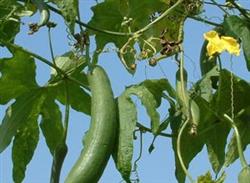
Early prevention of vine break and plant decline during the peak fruiting period of loofah
In deep winter, when managing loofah, do not overly promote flowers and fruit. If you force flower and fruit promotion in pursuit of yield, it will inevitably cause an imbalance in nutrient distribution. The stems and vines will become thin and weak and grow slowly due to insufficient nutrients, leading to premature aging of the plant and reduced yield. Therefore, in deep winter loofah management, attention must be paid to properly regulating nutrition...
-
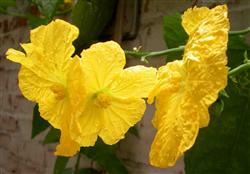
What are the causes of loofah flower rot? Detailed explanation of prevention and control methods
Preparation ratio of flower-dipping solution: The flower-dipping agent generally uses zuogualing, naphthaleneacetic acid (NAA) and 2,4-D as the main agents, plus an appropriate amount of nutrient solution and a fungicide for controlling gray mold for flower dipping, and the effect is very ideal. Smoke fumigation method for controlling flower rot: Smoke fumigation is one method for controlling loofah flower rot. Usually 3-4 days after flower dipping is the...
-
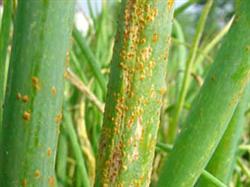
How to prevent and control rust disease in Welsh onions during continuous rainy weather
In summer and autumn, with high temperatures and abundant rain, Welsh onions are prone to rust disease if continuous rainy weather occurs. Farmers should promptly take effective measures and strengthen prevention and control. Apply timely medication for prevention and control. In summer and autumn, especially after 2-3 days of continuous rainy weather, promptly check the occurrence of rust disease in Welsh onions. If brown-green...
-
Clever Use of Welsh Onions in Greenhouses to Sterilize and Prevent Vegetable Diseases
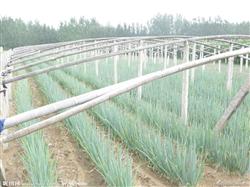
Welsh onion (Allium fistulosum) is a biennial vegetable of the Liliaceae family, cold-tolerant and highly adaptable. Its leaves release propyl sulfide with a pungent odor, and its root system secretes bactericidal substances; together they can effectively suppress the spread of various pathogens in the air and soil, prevent infection, or kill pathogens, significantly reducing the disease rate of vegetable plants...
-
How to prevent and control watermelon seedling diseases? A detailed guide to integrated control techniques
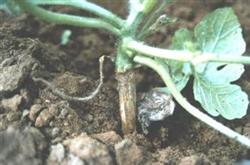
I. Symptoms of the main diseases 1. Damping-off. In the early stage, the root collar of the seedling (the junction of root and stem) develops lesions that look as if scalded by boiling water and become rotten, after which the diseased part turns yellowish-brown, dries out and shrinks; the cotyledons have not yet wilted, but the seedling topples over. Damping-off mostly occurs from the emergence of the cotyledons to the stage when 2 true leaves have flattened out. The disease spreads very quickly; a few days after the appearance of the first diseased plants, seedlings topple over in patches. Under conditions of high temperature and high humidity, the diseased parts of the seedlings and the ground nearby,
-
How to prevent and control spring rot in spring garlic? These key points you need to master
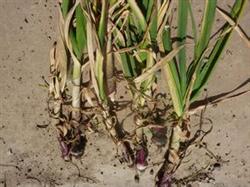
Spring rot of garlic can last until mid-June, and in years with low temperatures and high humidity, it even continues until the harvest period. It mainly affects the base of the leaf blade of the lower leaves. Water-soaked softened lesions appear, and after expanding upward and downward, they become light brown rot. In the middle and late growth stages, the central leaves are affected, and the soft rot spreads to below the flower stalk. Sometimes it can cause new...
-
Key Technical Points for Green Prevention and Control of Garlic Pests and Diseases
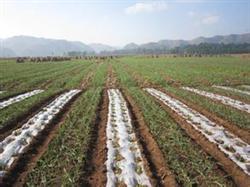
Green prevention and control of crops means using agricultural control, physical control, biological control, precision pesticide application and other techniques during agricultural production to control pests and diseases, with the aim of reducing pesticide use, lowering pesticide residues in agricultural products, and comprehensively improving the quality and safety level of agricultural products. This year, the garlic planting area in our town...
-
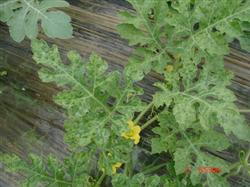
Be Alert to the Harm of a New Watermelon Virus, Growers Should Pay Attention to Early Prevention and Control
A quarantine viral disease, Cucumber green mottle mosaic virus, has been detected. Taking precautions is warranted, but pulling up plants and replanting without any reason is unnecessary. Here, we introduce this newly emerging viral disease. Cucumber green mottle mosaic virus has a relatively narrow host range, occurring mainly on cucurbits...
-
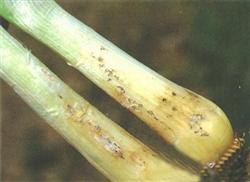
How to prevent and control garlic soft rot? The key is to act early
Garlic soft rot is a bacterial infection disease, and the pathogen is Erwinia carotovora, which mainly reinfects through the pathogen on diseased residues in the soil. Autumn-sown garlic begins to develop the disease from November. The disease is severe in fields with low-lying terrain, heavy rainfall and watering, poor drainage, and high field humidity, and in cultivation using the shaded ditch and sunny bed method...
条件筛选