What to Do About Headless Loofah in Deep Winter? Detailed Prevention and Treatment Methods
Growers who cultivate loofah all know that in deep winter, loofah generally grows weakly, and once the headless condition appears, that vine is as good as wasted. Why does a headless vine appear? Because during the process of changing the head of the loofah, all the branches below the growing point are removed, making it very difficult for new ones to appear. If we accidentally damage the upper growing point...
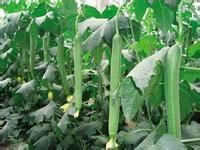
Growers who cultivate loofah all know that in deep winter, loofah generally grows weakly, and once the headless condition appears, that vine is as good as wasted. Why does a headless vine appear? Because during the process of changing the head of the loofah, all the branches below the growing point are removed, making it very difficult for new ones to appear. If we accidentally damage the upper growing point, it will be very difficult for a new head to grow below. When this happens, many growers simply pull out this loofah plant and let the neighboring loofah produce two heads to fill the empty spot. But with a little trick for grafting loofah heads, you can change the situation where a headless vine can only be pulled out.
First, select a strong "head." Usually, after the loofah is dipped for fruit setting, the head is removed. From these, choose a thick, well-growing growing point, generally about 10 cm in length, and use a blade to cut its base into a flat shape. After that, use the blade to cut off 1-2 cm from the headless vine, then split it open about 2 cm from the middle, and insert the trimmed head into the split opening. Finally, wrap the joint with plastic film to help the wound heal.
It should be noted that the plastic film used for wrapping should preferably be new and clean, and must not touch the soil, so as to avoid infection by pathogens. After grafting the head, the plant can be lowered a bit and properly shaded by the neighboring plants to reduce water evaporation and increase the survival rate.