-
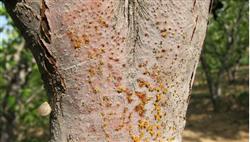
How to prevent and control pear tree canker? Mastering these methods is enough
1. Strengthen the tree to prevent disease: (1) Reasonable load: According to the tree's growth condition and fertilization level, determine an appropriate fruit load. Do not let the tree bear too heavy a load, and even less should you adopt excessive measures such as branch bending and girdling to increase fruit production for short-term gain. Properly thin flowers and fruits so that both fruiting and tree growth are achieved. (2...
-
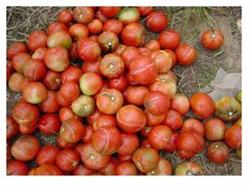
What to Do About Tomato Fruit Cracking? A Detailed Guide to Prevention and Control Techniques
1. Strengthen water and fertilizer management. Deeply plow the soil and apply more organic fertilizer so the plant's root system grows well. For late-autumn tomatoes, when temperatures drop sharply, pay even more attention to soil moisture management and avoid overly rapid moisture changes. In open-field cultivation, water more regularly to avoid drastic soil moisture changes when rain suddenly falls, and drain promptly after rain...
-
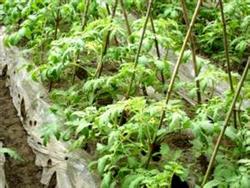
Key Technical Points for Preventing Spindly Growth in Greenhouse Tomatoes
The main causes of spindly seedlings and stunted seedlings in greenhouse tomato cultivation are insufficient light, excessively high temperatures and excessive moisture. Once spindly or stunted seedlings appear, the harm is considerable. Spindly seedlings differentiate flower buds late, drop many flowers, have a low survival rate, and suffer large yield reductions, while also failing to achieve early maturity. The measures to prevent spindly seedlings mainly...
-
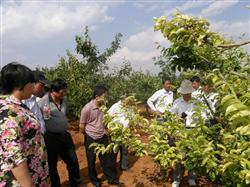
How to prevent and treat pear tree chlorosis? Reasonable fertilization is key
Iron deficiency symptoms in pear trees start from the new shoots, with leaf color changing from pale green to yellow, only the leaf veins remaining green. In severe cases, the entire leaf turns yellow-white, with scorched necrotic spots forming along the leaf margins. Affected new shoots are thin and weak, with elongated internodes and underdeveloped axillary buds. Pear trees can develop this at any stage from seedling to mature tree. The cause of this...
-

The grass you can grow on your roof insulates against sound and prevents leaks, is free of pests and diseases, and is highly effective for treating bites, burns and scalds
Imagine: in the countryside, how beautiful it would be if your roof were completely covered with grass! Some farmers would start to worry about the roof leaking. If you plant Sedum lineare, there is no need to worry at all. Sedum lineare is a succulent...
-
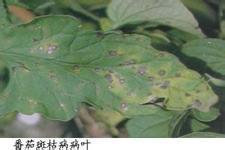
Early prevention and control of autumn tomato leaf spot disease works well
Leaf spot disease: In the early stage of the disease, spray with a 500-fold dilution of 70% mancozeb wettable powder, or a 500-fold dilution of 50% carbendazim wettable powder, once every 7 days, for 3~4 consecutive sprays.
-
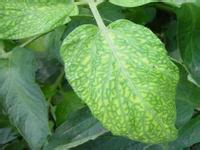
Early prevention and control of autumn tomato virus disease gives good results
Virus disease: In the early stage of the disease, spray with a 500-fold dilution of 20% Virus A wettable powder, or a 1000-fold dilution of potassium permanganate, once every 7 days, for 2 to 3 consecutive sprays.
-
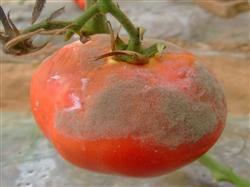
Early prevention and control of gray mold in autumn tomatoes gives good results
Gray mold: During the flowering period, 0.1% of 50% procymidone wettable powder or 50% iprodione wettable powder can be added to the flower-dipping medicinal solution, with very good results. Spraying the fruit is also possible, but care should be taken to rotate the medications to prevent the pathogen from developing resistance. 50% duoke dust formulation can also be used, applying 1 kg of dust per mu.
-
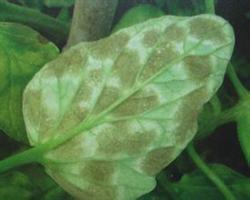
Early prevention and control of leaf mold in autumn tomatoes gives good results
Early blight: after the disease develops, concentric ring-patterned lesions appear on the leaf surface, dark brown and water-soaked. Before and after the disease appears, spray with a 500-fold dilution of 70% mancozeb wettable powder, or a 400-fold dilution of 75% chlorothalonil wettable powder, once every 7 days, for 3~4 consecutive sprays.
-
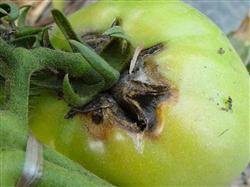
Key Technical Points for Preventing Physiological Diseases of Autumn Tomatoes
Early blight: After onset, concentric ring-patterned lesions appear on the leaf surface, dark brown, water-soaked. Before and after onset, spray with a 500-fold dilution of 70% mancozeb wettable powder, or a 400-fold dilution of 75% chlorothalonil wettable powder, once every 7 days, for 3 to 4 consecutive sprays.
条件筛选