Key Technical Points for Polyculture of Grass Carp and River Snails: Fat Fish, Abundant Snails, and No Pollution
In polyculture of grass carp and river snails, feeding only fresh grass without any other feed can ensure the normal growth of both grass carp and river snails, making the grass carp fat and the river snails abundant. Because grass carp eat fresh grass, their feces are high in protein, organic matter, cellulose, and vitamins, making excellent feed for river snails. With this farming method, the water quality is pollution-free and stays clear year-round. The fish and snails produced are clean, with good meat quality, crisp texture, and a rich meaty flavor. This is a genuine ecological farming method. Techniques for polyculture of grass carp and river snails:
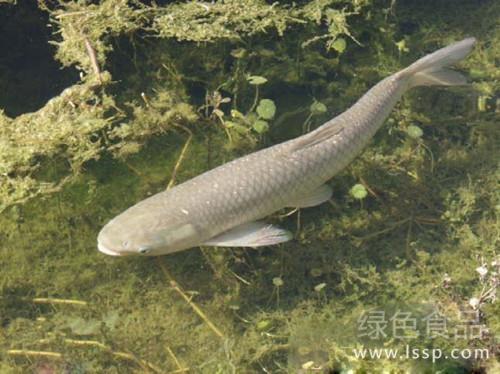
Grass Carp Farming
1. Pond construction. For polyculture of grass carp and river snails, maintain a water depth of 1—1.5 m and supply uncontaminated constant flowing water, preferably mountain stream water or spring water emerging from the ground. Do not let the water flow through fields growing rice, corn, or other crops where molluscicides and herbicides have been used. It is best to build the pond in mountain valley fields. In late winter and early spring, build the pond well. The pond bank should be about 1.5 m high, and the pond bottom should be flat with a layer of loose, fertile mud about 8—10 cm deep on the surface, so that river snails can move and forage in the mud.
2. Water filling. The period from “Qingming—Guyu” is the most suitable time to stock river snails and grass carp. One month before stocking, fill the pond completely with mountain stream water or spring water; filling it full is sufficient. After filling, frequently check the pond bank and pond water. If there is seepage or the water level drops, repair and seal the leak promptly. When the pond water decreases, replenish it in time to maintain a water depth of 1~1.5 m. During this period, also spread dry, clean plant ash once, 30~50 kg per mu, evenly broadcast on the water surface. This can both disinfect and fertilize the pond.
3. Stocking grass carp and river snails. During the period from “Qingming—Guyu,” stock grass carp and river snails. Stock 500—600 robust, uninjured grass carp weighing 30—50 g each per mu, and stock 100~150 kg of healthy, disease-free river snail seed weighing about 15—20 g each. The first batch of small snails can be produced in mid-May. Before the grass carp and river snails enter the pond, first soak the river snails in a 0.1% baking soda aqueous solution or 0.1% vitamin C aqueous solution for 8—10 minutes, and let the grass carp swim freely in it for 3—5 minutes for disinfection and sterilization. This kills pathogens adhering to the grass carp and river snails, prevents disease after stocking, and can significantly increase the survival rate.
4. Grass feeding. Two to three days after the grass carp enter the pond, begin feeding grass, twice a day, once in the morning and once in the evening. Each time, put 150—200 kg of fresh green grass per mu, evenly placed in the water area where the grass carp are active, allowing them to feed freely. As the grass carp continue to grow, continuously increase the amount of green grass. In the second half of the year, increase it to about 350~400 kg per mu to meet the needs of grass carp growth and development. The green grass put in must be fresh, clean, and uncontaminated. Grass cut on the same day should be put in on the same day, not left overnight.
5. Cleaning and removing debris. During the growth of grass carp and river snails, maintain the pond water depth and cleanliness. Pay attention to introducing constant flowing water into the pond to replenish it. It is best to have water continuously flowing out from the outlet and in from the inlet, day and night without interruption. At the same time, promptly remove leftover grass not eaten by the grass carp and debris floating in the pond to prevent pond water contamination and avoid water quality deterioration. When affected by heavy rain or rainstorms, pay attention to flood drainage to prevent floodwater from breaching the pond bank and bringing in sewage and various pathogens.
6. Preventing escape and rats. Rainy days can easily cause grass carp and river snails to escape. Therefore, on rainy days, install escape-prevention nets at places prone to escape, such as the outlet and inlet, to stop grass carp and river snails from escaping. Rats are the natural enemies of river snails. When the weather is cool, or at night, or on rainy days, river snails crawl to the pond edge to breathe and are then preyed upon by rats. Therefore, pay attention to rat control. Electric cat traps can be used for electrocution, mousetraps for trapping, and rat poison for poisoning. Also, surround the pond edge on the pond bank with plastic film or asbestos tiles, about 50~60 cm high, which works very well against rats.
7. Disease prevention. In polyculture of grass carp and river snails, feeding only green grass without feed and with a constant flowing water supply makes this a clean farming method, so disease is rare, but prevention is still necessary. Generally, once a month, splash a 1000-fold baking soda aqueous solution, a 1000-fold vitamin C aqueous solution, or a 25~30-fold extract of dry, clean plant ash on the water surface, 500~600 kg per mu each time, evenly splashed on the water surface.
8. Harvest. In polyculture of grass carp and river snails, after about 6~8 months, when grass carp grow to 2.5~3 kg each, or even heavier, and river snails grow to 25~30 g each, they can be harvested. With this farming method, generally 1500~2000 kg of grass carp and 4000~5000 kg of river snails are harvested per mu, and the first and second batches of small snails in the same year can both reach harvest standard. When harvesting river snails, in addition to leaving the small river snails, also leave 150~200 kg of large river snails per mu as seed, so that more small river snails can be bred earlier next year.