Key Technical Points for Pollution-Free Pest and Disease Control in Strawberries
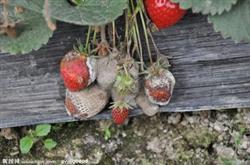
Symptoms: Strawberry black mold mainly affects nearly ripe fruit. If harvested fruit is not promptly handled and packaged, it is even more susceptible to infection, causing large-scale fruit rot. When the disease first appears, the fruit surface shows light brown water-soaked lesions, which then rapidly soften and rot, producing a gray cotton-like growth, on which granular black mold develops, namely the mycelium and conidia...
 Characteristics of pollution-free pest and disease control. Strawberry is a perennial herbaceous crop with relatively high economic value. China has a vast territory with complex and changeable climatic conditions, and the species of pests and diseases and the degree of damage vary considerably. Timely control is the key to achieving high and stable strawberry yields.
Pollution-free pest and disease control should implement a prevention-first approach with integrated agricultural, biological, physical and chemical control measures. Integrated control was proposed in response to the emergence of pest and disease resistance after long-term extensive use of organic pesticides, which led to outbreaks of some secondary pests and environmental pollution. The aim is to coordinate pesticide application with biological control, resolve the contradiction between chemical and biological control, and use all appropriate techniques to comprehensively manage harmful organisms.
Integrated control considers ecology, controlling pest populations to low levels and maintaining them at low levels, using pests to support natural enemies and natural enemies to control pests, and employing multiple methods for control.
Starting from the overall ecosystem centered on pest populations and plants, with prevention as the priority, and following the principles of safety, effectiveness, economy and simplicity, all control measures are organically coordinated and used together to keep the occurrence of pests and diseases below the economically permissible level, achieving the goals of high yield, high quality, low cost and pollution-free production.
Strawberry plants are short, with stems, leaves and fruit close to the ground, providing favorable ecological conditions for infection by various pests and diseases. This is especially true under protected cultivation with high temperature and high humidity, which is even more suitable for the breeding and damage of pathogens. To ensure normal strawberry growth and achieve high quality and high yield, integrated control measures with agricultural control as the mainstay should be particularly emphasized.
(1) Selecting disease-resistant varieties
Different varieties have different disease resistance and resistance to different disease types. For example, in areas with severe powdery mildew, varieties with strong resistance to powdery mildew such as Baojiao Zaosheng, Induka and Xinmingxing can be selected; Xinmingxing and Induka are resistant to snake-eye disease; Baojiao Zaosheng and Sijichun strawberry are relatively resistant to Verticillium wilt; Baojiao Zaosheng, Induka, Xinmingxing and Gorella are relatively resistant to red stele root rot; Xinmingxing, Fengxiang and Chunxiang are relatively resistant to Fusarium wilt; Xinmingxing, Mingbao and Spike are resistant to gray mold. Therefore, when cultivating, varieties with strong resistance to one or several diseases should be selected according to the conditions of different regions.
(2) Cultivating healthy virus-free seedlings
Strawberry pests and diseases can easily occur starting from the seedling stage. Generally, healthy seedlings have strong disease resistance, so cultivating healthy virus-free seedlings is very important. Healthy seedlings meeting the requirements should be cultivated according to the seedling standards required for various cultivation types.
(3) Reducing the spread of pests and diseases
Viral diseases, red spider mites, bud nematodes and root nematodes can all be spread through seedlings. Therefore, strict quarantine must be implemented for strawberry seedlings. Seedlings with quarantine objects are strictly prohibited from being transported outward or introduced. Controlling the spread through seedlings is a very important pest and disease control measure. Strict disinfection of seedlings and soil is one of the important measures for eliminating pests and diseases on site. Before and after dividing seedlings, disinfect with 50% thiophanate-methyl or 25% carbendazim at 1000-2000 times dilution; disinfect the soil with solar energy. Cultivating virus-free seedlings is an important measure for preventing the transmission of pests and diseases through seedlings.
(4) Strengthening cultivation management
Strengthening strawberry cultivation management can effectively suppress the occurrence of pests and diseases. Before planting, apply sufficient basal fertilizer to promote healthy strawberry growth; adopt high-ridge planting, avoid overly dense planting, and improve ventilation and light conditions; appropriately control nitrogen fertilizer application and excessive irrigation to prevent excessive vegetative growth; use plastic film mulching to prevent fruit from contacting the soil and avoid contaminating fruit and fruit rot; prevent high temperature and high humidity and create a good growing environment; avoid continuous cropping and repeated planting in the same field to improve plant disease resistance; promptly remove diseased leaves and old leaves, clear weeds in the garden, keep the garden clean, and eliminate sources of pathogen infection.
(5) Adopting biological and physical control
Using natural enemy insects, insect pathogenic bacteria, agricultural antibiotics, insect sex pheromones and some physical methods to control strawberry pests and diseases has few side effects and causes no pollution.
1. Using natural enemies of pests to control pests
First, natural enemies should be protected, the use of broad-spectrum insecticides should be reduced, or pesticides should be applied in ways that do not affect natural enemy activity; second, natural enemies can be artificially released, for example, in protected cultivation, pupae and adults of the seven-spotted ladybug can be released at appropriate times to control aphids and other pests.
2. Applying insect sex pheromones
A certain number of sex pheromone traps can be set up in strawberry gardens to trap large numbers of adults, reducing the probability of natural mating between males and females, or interfering with mating opportunities, thereby reducing the number of pests in the strawberry garden and achieving control.
3. Trapping and killing based on the taxis and gregariousness of certain pests
Light and color can be used to trap and kill pests or repel them, for example, using yellow sticky boards to trap and kill aphids and whiteflies.
(6) Rational application of chemical pesticides for timely control
Pollution-free strawberry cultivation does not mean chemical pesticides cannot be used, but they must comply with the national pesticide use standards for pollution-free food production. Chemical control of pests and diseases should be based on forecast and prediction work, grasp the degree, scope and developmental progress of pest and disease occurrence, and take timely measures. Apply pesticides at the seedling stage and early stages to improve the killing power of pesticides against pests and diseases and improve control effectiveness; implement targeted treatment and reduce blanket treatment; achieve control of multiple pests with one pesticide and simultaneous control of pests and diseases. Biological-source pesticides, mineral pesticides and some high-efficiency, low-toxicity, low-residue pesticides should be selected, such as Nongkang 120, polyoxin, Beauveria bassiana, Bacillus thuringiensis, abamectin, Bordeaux mixture, Daconil M-45, duoxiaoling, Ketduo, diflubenzuron No. 3, emamectin benzoate, and pirimicarb. Some permitted organic chemical pesticides should be used in limited amounts, with each pesticide used no more than once per year, and pesticide safety use standards must be strictly followed. Pesticide varieties that have been officially banned by the state are strictly prohibited. The timing of pesticide application should avoid the strawberry flowering period and fruit ripening period.