What are the production standards for pollution-free strawberries?
As a fruit that is slightly expensive and popular with many people, strawberries are grown on a very large area in our country. There are now many strawberry cultivation models, and one that is currently quite popular is pollution-free production, compared with traditional cultivation models. Pollution-free strawberries have particularly strict standards with regard to the environment, fertilizers, and pesticides. So what are the standards for pollution-free strawberry production? Let us take a look together below!
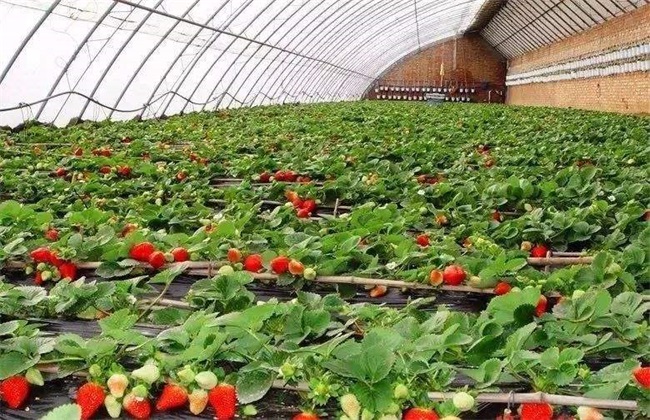
1. Environmental standards
When producing pollution-free strawberries, the production base should be located upwind and upstream of the water area to ensure it will not be harmed by pollution. The surroundings must also be guaranteed to have no pollution sources such as factories, and it must be far away from urban areas and main traffic roads. In addition, pollution-free strawberries also require records to be kept for various suspended particulates, fluorides, heavy metals, and other harmful substances. Moreover, whether it is traditional cultivation or pollution-free cultivation, the previous crop in the soil must be guaranteed not to share the same pests and diseases as strawberries. For example, crops such as tomatoes and eggplants share common pests and diseases with strawberries, so these crops are not suitable as the previous crop in the soil.
And when we produce pollution-free strawberries, shelterbelts are the thing most easily overlooked by us. Shelterbelts are of great help to pollution-free strawberry production, not only resisting wind damage, but also increasing soil humidity and improving the climate. Although shelterbelts are not necessarily required to be built, there are very many benefits to building them. Although the investment cost of building shelterbelts is high, we can choose some pear trees, peach trees, and so on. They can not only serve as shelterbelts, but also expand sources of economic income.
2. Fertilizer standards
During the growth process, strawberries have a very large demand for fertilizer. Therefore, in order to ensure high strawberry yields, fertilization work is also essential when carrying out pollution-free strawberry production. However, this also has certain requirements for fertilizers, and before planting we must apply sufficient base fertilizer. Nitrate nitrogen fertilizers, hospital feces and garbage, and some garbage that has not undergone pollution-free treatment must not be used. Because if it has not undergone pollution-free treatment, then there are very many harmful substances in it, and applying this kind of fertilizer will also fail to meet the pollution-free requirements.
3. Disinfection standards
Finally, there are the disinfection standards for pollution-free strawberries. In traditional strawberry cultivation, the commonly used disinfection method is mainly fumigation disinfection, and the disinfectants are mainly chloropicrin, methyl bromide, and so on. In pollution-free production, however, these two fumigants are not suitable for use. Sulfur powder should be used for high-temperature disinfection. First, we should mix sulfur powder and smoke-generating agent together and wrap it in paper, keeping the weight of each packet at about 0.3 kg. Then seal the greenhouse film, raise the greenhouse temperature to about 55 degrees, then ignite the sulfur powder mixture, and the operators should immediately leave to avoid being affected. After fumigating for about 1-2 days, ventilate until the medicinal smell has completely dissipated.
The above is a brief introduction to the production standards for pollution-free strawberries. That is all for today's introduction. This article is for reference only, and we hope it can be helpful to everyone.