Detailed explanation of asexual propagation techniques for Gastrodia elata, cultivation methods for Chinese medicinal herbs
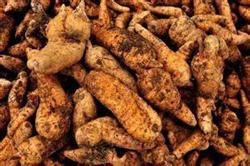
Cultivation techniques for Gastrodia elata f. glauca. Gastrodia elata f. glauca has good morphology, a high dry-to-fresh ratio (3 jin of fresh product dries into 1 jin of dried product), and excellent quality, and its price is three to four times higher than that of Gastrodia elata f. elata and Gastrodia elata f. viridis. The reason the price of Gastrodia elata f. glauca is high is also because, whether under artificial cultivation or in the wild, the regions and quantities of its distribution are very few. Therefore, artificial...
 I. Site selection and land preparation
Choose sandy loam with deep soil layers, loose soil texture, and good drainage, or humus soil rich in organic matter, as the best option. Yellow clay soil, waterlogged lowland, and gravelly soil are generally not suitable for cultivating Gastrodia elata. The air at the Gastrodia elata planting site should be fresh and cool, and humid. Generally choose land previously used for ginseng or land under trees in forests. Places where people and livestock are unlikely to trample and that are convenient for management are best. There are no strict requirements for land preparation; generally, after removing surface debris or cutting down overly dense small shrubs, beds can be built or holes dug to plant Gastrodia elata.
II. Preparation of fungal wood
1. Preparation of fungal branches. Generally select oak or birch 2-3 cm thick, and cut diagonally into 8-10 cm small sections for later use.
2. Preparation of fungal logs. Generally, the wood of broadleaf trees can all be used as material for fungal logs. Commonly used ones include oak, birch, rowan, and others. Select trunks or branches 5-10 cm thick, saw them into wooden logs 40-60 cm long, and cut a fish-scale notch every 3-5 cm on two or three sides of the log, cutting down to the xylem.
3. Treatment of fungal wood. Use 50 kg of water, 0.5 kg of ammonium nitrate, and 0.5 kg of magnesium sulfate to make a nutrient solution. Soak the fungal branches and fungal logs in the nutrient solution for one hour, take them out, and air-dry the surface moisture before use.
III. Planting Gastrodia elata
In production, Gastrodia elata is mainly propagated vegetatively (tuber propagation). This propagation method uses Gastrodia elata tubers as planting material so that they directly produce new individuals. The large ones are harvested and processed, and the small ones continue to be used as planting material.
1. Selection of seed planting material. Whether it is arrow Gastrodia, white Gastrodia, or rice Gastrodia, the tubers of Gastrodia elata can all be used as planting material. From the perspective of harvesting tubers for medicinal use, white Gastrodia is better than rice Gastrodia, and rice Gastrodia is better than arrow Gastrodia. In production, medium and small white Gastrodia (weight 2.5-20 grams) are mostly selected as planting material, because medium and small white Gastrodia grow quickly and have strong reproductive capacity, making them the best planting material. Regardless of the type of Gastrodia seed, individuals with complete development, normal color, no damage, and no disease should be selected as planting material.
2. Planting time for Gastrodia elata. Gastrodia elata can be planted in spring or autumn. Spring planting is generally around May 1, and autumn planting is after October.
3. Planting method for Gastrodia elata. First place a thin layer of leaves at the bottom of the bed (hole), arrange the prepared fungal logs along the bed (hole), with a spacing of about 3-5 cm between fungal logs, fill with original soil so that the fungal wood is half exposed, then place fungal branches between the fungal logs in a figure-eight or diagonally parallel arrangement, with both ends of the fungal branches close to the fish-scale notches of the fungal logs. Evenly place egg-sized fungal spawn at the fish-scale notches of the fungal branches, place Gastrodia seed between the fungal spawn, then cover with a layer of leaves, and on the leaves arrange fungal logs, fungal branches, fungal spawn, and Gastrodia seed in the same way again. Depending on soil layer thickness, 2-3 layers can be planted. With this method, each layer uses about 6-7 bags of fungal spawn per square meter and 0.4-0.5 kg of Gastrodia seed. Finally, cover the bed (hole) with about 10 cm of humus soil.
IV. Field management
1. Drought prevention. The growth of Gastrodia elata and Armillaria mellea requires relatively high humidity. After planting Gastrodia elata, water frequently to maintain suitable humidity in the bed (hole). Generally, keep the humidity in the bed (hole) at 50-60%.
2. Waterlogging prevention. Gastrodia elata likes humid conditions but fears standing water. Pay attention to drainage when the rainy season arrives.
3. Freeze prevention. When Gastrodia elata overwinters, cover the bed (hole) with thick soil, leaves, or plastic film.
V. Pest and disease control
During the cultivation of Gastrodia elata, there are not many pests and diseases. The main problem is the relatively severe harm from miscellaneous fungi. It is necessary to create an excellent environment for the growth of Armillaria mellea and inhibit the growth of miscellaneous fungi. The following points should be achieved:
1. Choose fresh fungal logs: fresh wooden logs can reduce infection by miscellaneous fungi.
2. Proper site selection: the place for planting Gastrodia elata must be selected as ginseng-following land or forest land with good drainage and loose soil, avoiding standing water after rain.
3. The fungal spawn must be pure and sufficient: place more high-quality fungal spawn so that Armillaria mellea grows faster, using the advantage of Armillaria mellea to inhibit the growth of miscellaneous fungi.
4. Strengthen the management of moisture and temperature in the bed (hole): pay attention to changes in temperature and humidity in the bed (hole), and keep the humidity in the bed (hole) stable, so as to favor the growth of Armillaria mellea and inhibit the growth of miscellaneous fungi.
VI. Harvesting and processing of Gastrodia elata
1. Harvesting. Gastrodia elata should be harvested during the dormant period, that is, in autumn from October to November or around April in spring. When harvesting, first remove the covering soil or leaves, then take out the fungal wood, and then take out arrow Gastrodia, white Gastrodia, and rice Gastrodia. Arrow Gastrodia and large white Gastrodia are processed into commercial Gastrodia, and the remaining small white Gastrodia and rice Gastrodia are used as seed planting material.
2. Processing: 1. Washing and scraping off scales: after harvesting, wash the Gastrodia elata with water until there is no soil or dirt on the surface, and use a hard object to wipe off the outer scales. 2. Steaming and boiling: for steaming Gastrodia, place different grades separately on steamer trays and steam for 15-20 minutes, until the tubers have no white core; for boiling Gastrodia, after bringing water or rice broth to a boil, put tubers of different grades into the boiling water and boil for 5-15 minutes, until the tubers are slightly transparent, then remove them. 3. Drying or sun-drying: place the steamed or boiled Gastrodia elata in a drying room to dry, or on sunny days place it outdoors to dry in the sun.