Detailed Explanation of Honeysuckle Propagation Methods and Technical Key Points
I. Cutting Propagation Honeysuckle cutting propagation can be carried out in spring, summer, and autumn. In autumn, it is suitable to do so from early September to mid-October. The nursery plot should be a sandy loam or loam soil with flat terrain, deep soil, and convenient drainage and irrigation. Before propagation, apply 3-5 cubic meters of decomposed organic fertilizer per mu, and 50 kg of superphosphate or calcium magnesium phosphate...
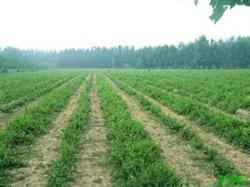
I. Cutting Propagation
Honeysuckle cutting propagation can be carried out in spring, summer, and autumn. In autumn, it is suitable to do so from early September to mid-October.
The nursery plot should be a sandy loam or loam soil with flat terrain, deep soil, and convenient drainage and irrigation. Before propagation, apply 3-5 cubic meters of decomposed organic fertilizer per mu, and 50 kg of superphosphate or calcium magnesium phosphate. After plowing, promptly harrow level and fine, and prepare the land into beds.
For cuttings, select vigorous, well-developed branches 1-2 years old. According to the length of the selected cuttings, they can be divided into short-branch cuttings and long-branch cuttings. Short-branch cuttings are commonly used for mass propagation of seedlings, while long-branch cuttings are commonly used for direct establishment of plantations or for propagating semi-finished large seedlings. The length of long-branch cuttings is 30-40 cm, and the length of short-branch cuttings is about 25 cm. The thickness of the cuttings is 0.5-1.5 cm, and each should have at least 3 nodes. Remove the lower leaves, keep 2-4 leaves at the upper part, and cut the lower end near a node into a smooth slanted surface. Tie every 50-100 cuttings into 1 small bundle, dip the lower slanted end of the honeysuckle cuttings in a 500 ppm indolebutyric acid solution for 5-10 seconds, let them dry slightly, and immediately insert them into a leveled and finely harrowed cutting bed. For long-branch cutting propagation, open furrows at a row spacing of 30 cm, with a furrow depth of 25 cm. Every 3-5 cm, use a small wooden stick or bamboo chopstick to make guide holes on the bed surface, then insert more than 2/3 of the cutting length obliquely into the holes, and press firmly. This method can propagate about 11,000 seedlings per mu. Short-branch cutting propagation is roughly the same as the above method, and the row and plant spacing can be reduced to 15-20 cm, with about 18,000 seedlings propagated per mu.
On the same day or the next day after cutting, water thoroughly once to keep the soil moist, promote rooting and sprouting, and carry out timely intertillage and weeding. Rooting and sprouting occur in about 20 days. Seedlings propagated by cutting in summer and autumn are transplanted in the following spring.
II. Layering Propagation
Layering propagation is often carried out in summer and autumn. Select 3-4-year-old honeysuckle that has already bloomed, grows vigorously, and has high yield as the mother plant. Bend 1-year-old branches near the ground and bury them in the soil. Wound the part of the branch that enters the soil, cover it with 10-15 cm of fine fertile soil, and be careful to keep the soil at the buried part moist. Then fix and press it firmly with a forked branch, leaving the branch tip exposed above the ground. If the branch is longer, it can be bent and pressed into the soil continuously. After layering, water and fertilize frequently. In the following spring, the rooted layered seedlings can be cut off from the mother plant and planted separately. Compared with traditional vine-cutting and cutting propagation, this method can not only advance flowering by 2-3 years and maintain stable yield and promote increased yield, but also has the advantages of convenient operation and a high survival rate.