Honeysuckle Cutting Propagation Methods and High-Yield Cultivation Measures
The flower buds, flowers, and leaves of honeysuckle can all be used as medicine, clearing heat and reducing inflammation; the vines are used medicinally to treat rheumatic bone pain; the flowers can be used to extract aromatic oil and to make honeysuckle distillate; it is also a tree species for landscaping and garden ornamental cultivation. 1. Honeysuckle cutting propagation. Honeysuckle can be propagated by seed, and also by cuttings and root division...
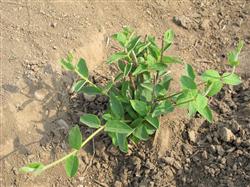
The flower buds, flowers, and leaves of honeysuckle can all be used as medicine, clearing heat and reducing inflammation; the vines are used medicinally to treat rheumatic bone pain; the flowers can be used to extract aromatic oil and to make honeysuckle distillate; it is also a tree species for landscaping and garden ornamental cultivation.
1. Honeysuckle cutting propagation. Honeysuckle can be propagated by seed, and also by cuttings and root division, but seed propagation grows slowly and returns late, while root division has a low propagation coefficient, so at present all production uses cutting propagation, which has abundant propagation material, a high survival rate, and quick returns.
The specific methods are further divided into two types: direct cutting and nursery cutting. For direct cutting, mountainous areas use the Damahua variety, which has a well-developed root system and strong shoot sprouting ability. In the rainy seasons of summer and autumn, select vigorous 1-2 year old branches free of pests and diseases and cut them into 30-35 cm lengths, remove the lower leaves to make cuttings, and insert them as they are cut, directly into gaps such as mountain slope terraces and field ridges. Dig holes 25-30 cm in diameter and 16-18 cm deep at a plant spacing of 1.3-1.7 m, insert 4-6 cuttings per hole, spread apart and inserted obliquely into the hole, with 5-10 cm exposed above ground. After inserting, fill with soil and press firm. In case of drought, water appropriately to increase the survival rate. In order to save branches and facilitate management, seedling cutting is also often used. The method is to select a plot convenient for watering, deep plow and level it, apply an appropriate amount of farmyard manure as base fertilizer, and in July-August open furrows at a row spacing of 23-26 cm and about 16 cm deep, place the cuttings obliquely upright in the furrow at a plant spacing of 2 cm, then fill and cover level and press firm. Water after planting, and afterward if the weather is dry, water once every 2-3 days to keep the soil moist. After about half a month they can take root and sprout, and in the second year in spring or autumn they are transplanted.
2. Shaping and pruning of honeysuckle is an important measure to increase yield. Naturally growing honeysuckle has very long branches and must be provided with a support frame or shaped and pruned. If left unchecked, the branches creep on the ground and overlap and twine around each other, resulting in fewer flowers and very low yield, so installing a support frame and shaping and pruning are the key to increasing honeysuckle yield.
Pruning in particular has a very significant effect on increasing honeysuckle yield. According to a 1983 experiment in Pingyi County, Shandong, after one winter pruning and 3 growing-season prunings, the average total fresh flower yield per clump was 969 grams, while the unpruned average yield was 685 grams; pruning increased fresh flowers by 284 grams per clump compared with no pruning, a yield increase of 42%. After pruning, the light energy utilization rate of each part of the flower clump was improved, ineffective branches and leaves such as weak branches and excessive vegetative branches were removed, and the consumption of nutrients and water was reduced. The branches and leaves were most rational, the growth environment was improved, and the plants were robust, which is conducive to high honeysuckle yield. The specific method is: for honeysuckle cultivated for one or two years, before the branches sprout in spring, cut off the upper part, leaving only about 33 cm as the main trunk. After several years of continuous pruning, the main trunk becomes thick and strong and can stand upright as a clump, and the side branches at all levels on the main trunk form an umbrella-shaped round top, which is both ventilated and lets in light, increases the number of flowers, and facilitates picking the flower buds. Honeysuckle has a very strong natural renewal ability, with many new branches. Although branches that have already flowered can continue to grow in the same year, they will not flower again; only new shoots sprouting from the original flowering mother plant can produce flower buds again. Honeysuckle pruning must be specifically determined according to variety, clump age, and branch type. According to experience in the Linyi region of Shandong, for the creeping Damahua, with a crown width of 120-140 cm, old flower clumps with long branches should be heavily pruned: cut long branches, thin out short branches, with cutting and thinning equally emphasized. For strong flower clumps, light pruning is mainly used, thinning little and retaining much; for young flower clumps, cutting is mainly used to promote branching and accelerate expansion of the clump crown. For the three-dimensional Jizhuahua, with an obvious main trunk and many branches that do not touch the ground, with a crown width of 80-120 cm, pruning should remove the top, clear the base clusters, open the inner canopy, and prune overly long branches, diseased and weak branches, dead branches, and downward-extending branches, so that the branches stand upright in clumps, the main trunk is thick and strong, the branches are evenly spaced, and the flower clump forms an umbrella shape with good ventilation and light transmission, so that there are many new branches and many flower buds. Pruning times: first, winter pruning, which can be carried out from December to late February of the following year. Second, growing-season pruning, which is carried out after each flower harvest, with the purpose of promoting the formation of multiple flower crops and increasing yield. After the first flower crop, the first pruning of spring shoots is carried out in early June; the second, in late July after the second flower crop, prunes summer shoots; the third, in early September after the third flower crop, prunes autumn shoots. Growing-season pruning should mainly be light pruning.
3. Common stem-boring pests of honeysuckle and their control. 1. Coffee tiger longhorn beetle. In the old honeysuckle production areas of Pingyi and Fei County in Shandong, the damage rate of flower clumps over ten years old reaches 80%. After damage, vigor weakens, and if damaged for several consecutive years, the entire plant dies.
In Shandong it has one generation a year. Newly hatched larvae first feed on the surface of the xylem like ants; when the larvae reach 3 mm they bore longitudinally into the xylem, forming winding and turning galleries. The bore holes are filled with wood chips and insect feces, very hard, and there are no frass expulsion holes on the surface of the branches, so it is difficult to detect, and at this time chemical control is also ineffective. Control methods: (1) From April to May, during the adult emergence period and the early larval hatching period, spray with 80% dichlorvos emulsifiable concentrate at 1000 times dilution to control adults and newly hatched larvae, with a certain effect. (2) In July-August, on sunny days when the temperature is above 25°C, release longhorn beetle swollen-legged wasps in the field, which has a good control effect.
2. Leopard moth. In Shandong it has one generation a year. After hatching, the larvae bore in from branch forks or new shoots. After 3-5 days the damaged new shoots wither. When the larvae grow to 3-5 mm they expel insect feces from the entry hole, making them easy to find, and they have the habit of moving between plants to cause damage.
The larvae gnaw a ring between the xylem and phloem, making the branches easy to break in wind. On one side of the damaged branch there are often several frass expulsion holes; the insect feces are long cylindrical and pale yellow. In September-October dead branches appear on the flower clumps. Control methods: (1) Timely clean up the flower clumps. After harvesting the second flower crop, be sure in late July to early August, combined with pruning, to cut off infested branches. If pruning is too late, cutting branches again after the larvae have bored into the lower thick branches will affect the growth vigor of the flower clump. (2) Mid-to-late July is the peak hatching period of the larvae and is the suitable time for chemical control. Use 40% omethoate emulsifiable concentrate at 1500 times dilution, adding 0.3%-0.5% kerosene to promote penetration of the pesticide liquid into the stems, which can achieve a good control effect.
3. Willow carpenter moth. In the main production areas of Shandong it has one generation every two years, spanning three years.