-
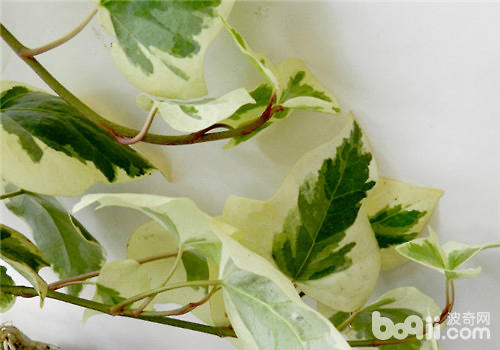
How to grow variegated ivy? Care methods and points to note
Variegated ivy is a cultivated variety of ivy. This new variegated cultivar likes a humid, semi-shaded environment. It has low fertilizer requirements; even without fertilizing for a long time it still grows well. But if too much fertilizer is applied, it will grow rapidly and become over-luxuriant, causing the elegant variegation to disappear and plain wild-type green leaves to appear
-

Control methods for corm rot in gladiolus
[Distribution and damage] Corm rot is an important disease of gladiolus, occurring to varying degrees in all regions. It is reported to be fairly common in gladiolus at flower nurseries and among flower growers in the suburbs of Guangzhou, where affected corms, leaves and leaf sheaths rot and die. [Symptoms] The disease mainly occurs in the lower tissues of the plant
-
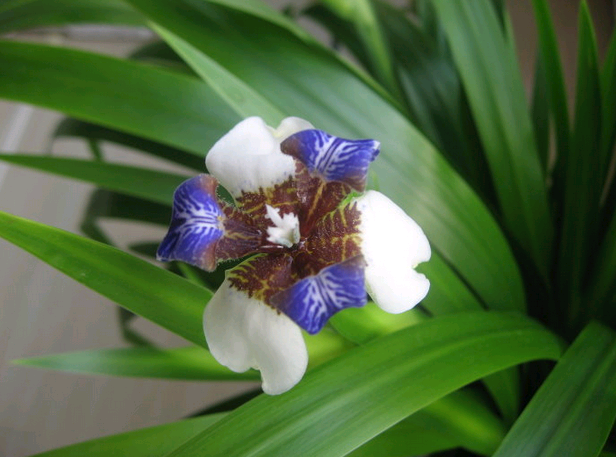
Gladiolus got leaf spot disease? Detailed control methods
Symptoms: Leaf spots are reddish-brown, with darker edges and lighter centers, nearly round, 1-5 mm; the spots may merge into large patches, and in severe cases the spots cover the entire leaf, causing the leaves to wither early. Pathogen: Cercospora sp., a Cercospora fungus. Conidiophores are light brown, nearly colorless at the tip, septate
-
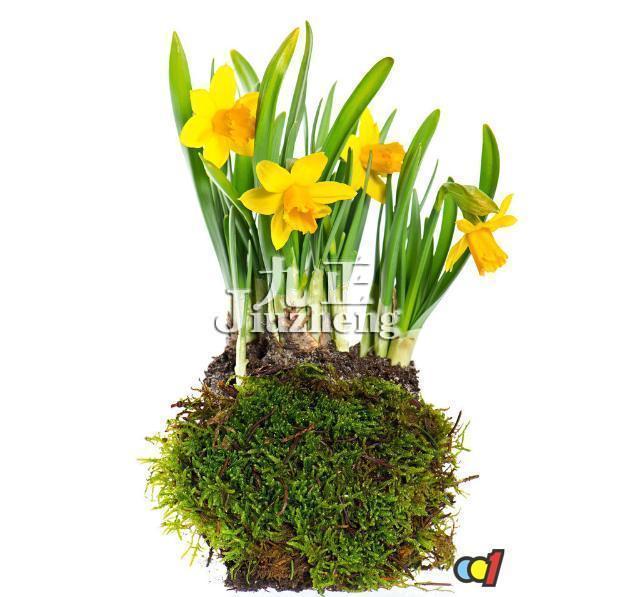
How Do Narcissus Propagate? A Detailed Guide to Common Propagation Methods
Narcissus is mainly propagated by lateral buds, lateral bulbs, twin-scaling, and tissue culture seedling production. (1) Lateral bud propagation (bulbil propagation): when scooping out the growing point of a seed bulb, dig out the lateral buds wrapped inside and use them as propagation material; in autumn, scatter them fairly evenly over a prepared raised bed and cover with a thin layer of soil. However, the bed surface should be watered thoroughly before scattering.
-
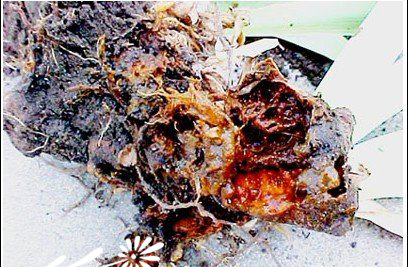
What are the control methods for hyacinth root rot?
It occurs from time to time in hyacinth growing areas, harming hyacinths and other flowers and causing root rot. Symptoms: after the plants are affected, they grow weakly and become stunted, and cannot bloom normally; when the soil is dug open, most or all of the roots on the bulbs can be seen to be rotten. Disease pattern: the pathogen is Fusarium, a fungus. The pathogen overwinters in the residues of diseased plants
-
What to Do When Hyacinth Gets Mosaic Virus? Detailed Control Methods
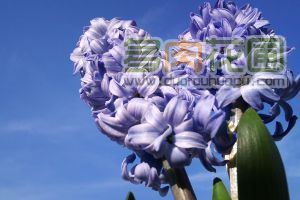
[Symptoms] The leaves are affected, showing a yellow-green mosaic pattern that gradually develops into streaks and blotches; in severe cases the leaves turn yellow and become distorted; the bulbs grow poorly and become smaller; the flowers are broken in color, shrunken and dull; the plants appear stunted. [Pathogen and disease pattern] This is a viral disease, and the pathogen is hyacinth mosaic virus (HMV)
-

What are the control methods for sclerotium disease in hyacinths?
[Symptoms] It affects leaves and bulbs and is a common disease of hyacinths. Infected plants are stunted and slow to develop. The leaves of diseased plants are grayish yellow; as the disease progresses, the leaves gradually wither and detach very easily from the bulb; the interior of affected bulbs becomes discolored and rots to varying degrees, with white mycelium forming inside
-

What to Do When the Tips of Podocarpus Branches Die Back? Causes and Control Methods
Podocarpus (Podocarpus macrophyllus) is a high-quality ornamental plant that most families are very fond of. However, some podocarpus develop the following symptom during cultivation: the color of the tips of young leaves begins to change from red to light brown and then grayish white, eventually causing all the leaves at the entire branch tip to die. Causes of leaf tip dieback in podocarpus
-
What are the control methods for Podocarpus leaf blight?
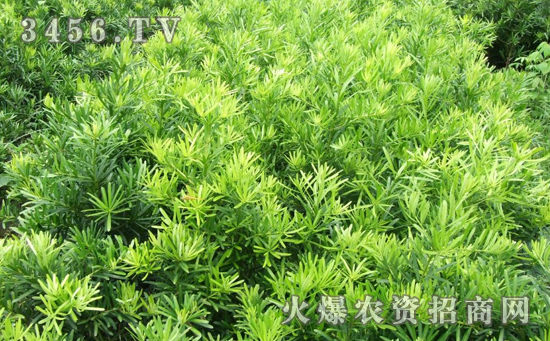
[Distribution]South China, Southwest China, Central China, East China, greenhouses in the north. [Symptoms]Occurs on Podocarpus leaves. In the early stage, the lesions mostly appear at the leaf tip, as yellow withered spots with a clear boundary between diseased and healthy tissue; in the later stage, the lesions turn grayish-yellow, dry up, and bear black granular bodies. [Occurrence pattern]The pathogen is a weak parasite
-

How to make a Podocarpus bonsai? Detailed explanation of production methods and techniques
Podocarpus (Podocarpus macrophyllus) is evergreen all year round, relatively shade-tolerant, and prefers well-drained yet moist sandy soil. Its posture is graceful and dancing, deep green and richly fragrant; the seeds resemble a monk's head, and the seed receptacle looks like a monk's robe, so the whole form is like an arhat, hence the name. Varieties include: small-leaf Podocarpus, short-leaf Podocarpus, narrow-leaf Podocarpus, etc. These dwarf small-leaf Podocarpus are most suitable for making bonsai
条件筛选