-
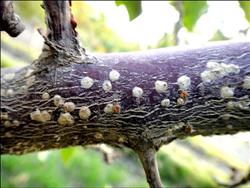
What are the control methods for scale insects on apricot trees?
How do you control scale insects on apricot trees? When do scale insects on apricot trees appear? What methods can be used for control? Please explain. As the apricot tree area expands year by year, the number of scale insect pest species on apricot trees increases and the affected area expands, and the damage is becoming increasingly serious. At present, scale insects have become one of the main factors affecting apricot production in our county...
-
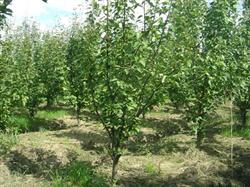
What are the post-harvest management methods for apricot trees?
What management methods are there for apricot trees after fruiting? Please introduce some methods. Pest and disease control for apricot trees after fruiting. After harvest, apricot trees are often harmed by pests and diseases, so pesticides should be sprayed in a timely manner according to the situation to protect the leaves and increase nutrient accumulation. Spraying growth regulators. After harvest, apricots can be sprayed 1-2 times with a 500ppm paclobutrazol solution, mixed with a 0.5% urea solution or potassium dihydrogen phosphate solution.
-
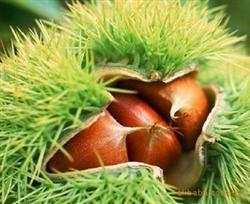
What are the methods to prevent empty burrs in chestnuts?
How do you prevent empty burrs in chestnuts? Please explain the methods. Apart from varietal characteristics, the main causes of empty burrs in chestnuts are nutritional deficiency or boron deficiency. The comprehensive control measures are as follows: 1. Improve varieties: For inferior seedling trees of mountain chestnuts with a high rate of empty burrs and low yields, top-graft them to change the variety. ...
-
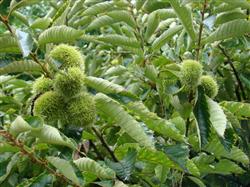
What methods can promote chestnut fruiting?
What methods can promote chestnut fruiting? Here is an introduction. To promote chestnut fruiting, you can refer to the following methods: 1. Increase boron fertilizer application, with remarkable results. Through experiments, combined with chemical fertilizer application, use 100-150 grams of borax per tree evenly mixed into urea, dig a ring-shaped ditch about 1 m from the trunk with a depth and width of 15-20 cm each...
-
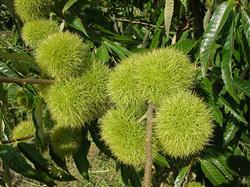
What are the scientific fertilization methods for chestnut trees?
How do you fertilize chestnut trees scientifically? Please give a detailed introduction. Chestnut, like other fruit trees, has the same fertilizer requirements, except that in addition to the three major elements of nitrogen, phosphorus and potassium, it is especially sensitive to the secondary element magnesium and the trace elements manganese and boron. If these are lacking or insufficient, serious physiological disorders occur that affect growth and development. According to measurements...
-
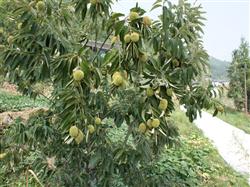
Chestnut Tree Summer Fertilization Methods and Technical Key Points
How should chestnut trees be fertilized in summer? Please provide guidance methods. For growing chestnut trees in summer, the following two fertilization methods can be used as reference: Soil fertilization method: For chestnut orchards with thin, poor soil and severe fertilizer deficiency, the soil fertilization method produces better results. Dig a circular ring trench within the drip line of the chestnut tree canopy for fertilization, with a trench width of 2...
-
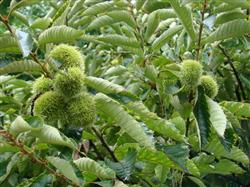
How to fertilize chestnut trees in summer? A detailed guide to practical methods
How to fertilize chestnut trees in summer? Please give an introduction. Summer is a vigorous period for chestnut flowering, fruiting and shoot growth, and it is also the first peak period of root growth for chestnut trees. Nutrient consumption within the tree is high, and it is especially sensitive to boron fertilizer. Nutrient deficiency will affect the normal growth of chestnut trees, leading to an increase in the number of empty burs in that year's chestnut crop...
-
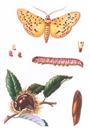
What are the control methods for the peach pyralid moth on Chinese chestnut?
How do you control the peach pyralid moth on Chinese chestnut? Please give guidance. The peach pyralid moth belongs to the order Lepidoptera, family Pyralidae. The larvae bore into and feed on the chestnut kernels, filling the seeds with frass and making them unfit to eat, and causing fruit drop, greatly affecting yield and quality. Its hosts also include peach, plum, and pear fruits, sunflower heads, corn stalks, and so on. Morphology...
-
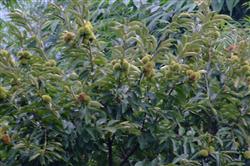
Correct Methods and Technical Key Points for Applying Biogas Fertilizer to Chestnut Trees
How should biogas fertilizer be applied to chestnut trees? Please provide an introduction. Chestnut growth requires nutrient elements such as nitrogen, phosphorus, potassium, calcium, iron and boron, and the soil must be permeable and well aerated, with good water and fertilizer retention. Using biogas fertilizer to grow chestnuts can meet most of the nutrients needed for their growth. Biogas fertilizer is rich in elements such as nitrogen, phosphorus, potassium, calcium, magnesium and iron...
-
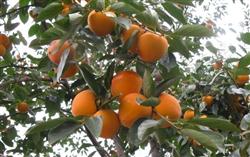
How to Fertilize a Persimmon Tree Well? A Detailed Guide to Scientific Fertilization Methods
How to fertilize a persimmon tree well? Please give guidance. The persimmon tree is a fruit tree that is widely cultivated, easy to manage, long-lived and high-yielding. It originated in our country, and is also cultivated in Japan, Korea and other countries. The persimmon tree is a deciduous tree, with a tree height of more than 10 m, a crown spread of about 16 m, and a lifespan of several hundred years. I. Root nutrition of the persimmon tree...
条件筛选