-
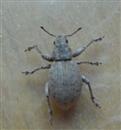
What are the control methods for mango weevil disease?
How to best control mango weevil disease? Please introduce. Mango weevil disease can be controlled by referring to the following methods: 1. The mango leaf-cutting weevil is widely distributed; adults feed on young mango leaves, causing the leaves to dry up; or females lay eggs on young leaves and bite the young leaves off from the base, affecting plant growth. Control methods: (1) During...
-
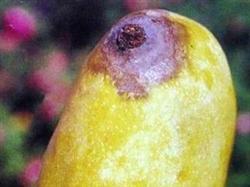
What are the control methods for mango stem-end rot?
How to control mango stem-end rot? Please introduce mango stem-end rot, which is a fungal disease. It damages fruit during storage, causing fruit rot; when it damages branches it is called gummosis. Harvesting fruit after rain or when it is humid, and not leaving a fruit stalk, favors the occurrence of this disease. Control methods: 1) Clean the orchard in winter, and usually apply more lime...
-
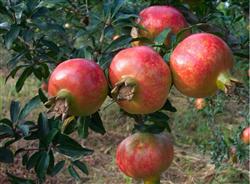
What are the common methods for controlling pests on pomegranate trees?
Which method is commonly used to control pests on pomegranate trees? The main pests of pomegranate trees are aphids, peach fruit borers, red spider mites and fruit borers. The following methods can be used for pest control: 1. Chemical pest control: according to the pest situation in the field, when the larvae and eggs of peach fruit borers and fruit borers appear, promptly spray 30% Taoxiaoling emulsifiable concentrate at 2000 times dilution...
-
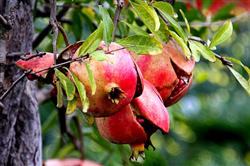
How to prevent and treat pomegranate fruit cracking? A detailed guide to practical methods
How to prevent and treat pomegranate fruit cracking? Please explain the methods. When pomegranates crack, they are not only more susceptible to pests, diseases and chemical contamination, but their commercial value is also affected. To prevent and treat pomegranate cracking, you can refer to the following three measures: ① Timely irrigation management. For pomegranates, follow the principle of "two waterings and two no-waterings." The two waterings are: in winter or...
-
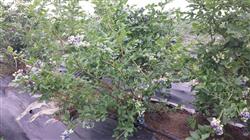
How to prune mature blueberry trees? Pruning methods and technical key points
How to prune mature blueberry trees? Please give an introduction. After strawberry plants reach maturity, the inner canopy tends to become congested and the crown is relatively tall, so pruning at this time is mainly to control tree height and improve light conditions; pruning is mainly thinning out branches, removing overly dense branches, thin and weak branches, diseased and pest-infested branches, and suckers produced by the root system. For trees with a more spreading growth habit, when thinning branches remove weak branches and keep strong ones; for upright varieties, remove the central leader and open up the top, and keep moderate branches. The best fruiting age for large branches is 5 to 6 years, and beyond that they should be renewed by cutting back. Weak small branches can be pruned by the method of removing flower buds to make them grow stronger.
-
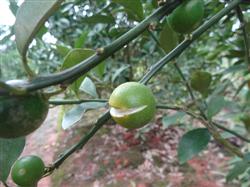
What to Do About Citrus Fruit Cracking? Cause Analysis and Prevention Methods
What to do about citrus fruit cracking? Here is an introduction. Citrus fruits are highly prone to cracking from July to September, before they ripen and are harvested. The main reason is that as the fruit develops and swells, gradually entering the ripening stage, the rind stops growing or thickens, while the juice sacs inside the fruit rapidly elongate and expand, pressing against the outer rind and causing it to thin rapidly. If the ripening period continues...
-
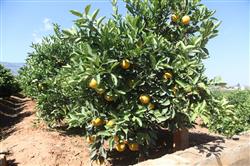
What are the summer and autumn management methods for citrus?
How to manage citrus well in summer and autumn? Please give an introduction. Summer and autumn are exactly when citrus is in the fruit expansion stage, with relatively large fertilizer and water needs, and at the same time it is a hot, sweltering, rain-scarce and drought-prone season, and it is the peak period for citrus pests and diseases. Therefore, attention should be paid to strengthening the management of citrus orchards in summer and autumn. The specific measures are as follows:...
-
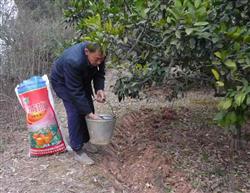
What are the citrus fertilization methods? A must-read for growers
What fertilization methods are there for growing citrus? Please explain. You can refer to the following fertilization methods for growing citrus: (1) Root application: Most citrus roots are distributed in the soil layer at the drip line along the outer edge of the canopy. When applying fertilizer to the roots, the fertilizer should be placed in the soil within the drip line around the outer edge of the canopy. The fertilization depth is generally best at 20-40 cm...
-
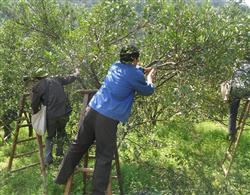
Citrus Summer Pruning and Pest and Disease Control Methods
How should citrus be pruned in summer and how are pests and diseases controlled? Please give a detailed introduction. For summer pruning and pest and disease control of citrus, you can refer to the following methods: The main summer pruning methods are: first, for branches extending beyond the canopy, cut them back to 2-year-old branches 0.5 cm--1 cm from the branch group; second, for vigorous upright spring shoots, leave...
-
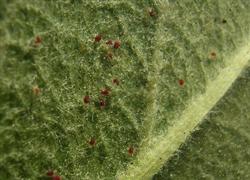
What are the methods for controlling summer mites on apple trees?
How to control mites on apple trees in summer? Please learn about the damage caused by summer mites on apple trees: I. Damage symptoms 1. Hawthorn spider mite. Also known as the hawthorn red spider, it mainly damages the leaves, tender buds and young fruit of apple trees. When leaves are damaged, the red spiders gather on the underside of the leaves, spin silk and form webs, with fine soil particles and eggs sticking to the webs, and many pale white spots appear on the upper surface of the leaves. When the damage is severe, rust-colored symptoms appear on the underside of the leaves, followed by dehydration and hardening, and the whole leaf turns yellow-brown and scorched, resembling being burned by fire. In severely affected orchards, most leaves may drop between June and July, causing a second round of flowering and budding, and severely damaged buds cannot continue to grow and die.
条件筛选