What are the methods for safely overwintering young persimmon trees?
Young persimmon trees have poor cold resistance and often suffer from winter dieback of shoots, so effective measures must be taken to ensure their safe overwintering. 1. Water early with frozen water. In mid-to-late October before the persimmon trees shed their leaves, irrigate fully with frozen water; a few days later, plow, turn and harrow the soil, which can reduce the frozen layer and ensure the roots' water needs. 2. Mound soil for cold protection. Before the freeze...
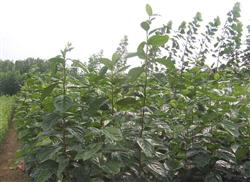
Young persimmon trees have poor cold resistance and often suffer from winter dieback of shoots, so effective measures must be taken to ensure their safe overwintering.
1. Water early with frozen water. In mid-to-late October before the persimmon trees shed their leaves, irrigate fully with frozen water; a few days later, plow, turn and harrow the soil, which can reduce the frozen layer and ensure the roots' water needs.
2. Mound soil for cold protection. Before the freeze, gently bend down 1-2 year old young trees that can be pulled down toward the windward side and mound them into earth piles, following the principle of not exposing branches and not letting wind through, then pat them firm gently with a shovel.
3. Mulch with grass and apply fertilizer. Young trees that cannot be bent down can have 10-15 cm thick wheat straw, fallen leaves, green manure, etc. spread under the tree, with 20 kg of organic manure scattered on top, then pressed firm with soil.
4. Cover with film and wrap with film. Before overwintering, cover the tree with plastic mulch to raise the soil temperature. At the same time, use plastic film to tightly wrap the trunk and side branches of the tree body to inhibit evaporation of water from the tree.
5. Wrap with grass and earth up. Before winter begins, bind the branches and trunk with wheat straw or straw (split lengthwise), or make grass bundles from wheat straw, green manure, etc. and tightly wrap the trunk and large side branches; after wrapping, earth up the base of the trunk, but in spring the soil should be removed promptly to raise the soil temperature, promote early root activity and timely water uptake, and meet the evaporation needs of the aboveground parts.
6. Build a ridge to block wind. On the northwest side of small young trees, 40-50 cm from the roots, pile up a semicircular wind-blocking earth ridge about 50 cm high, mainly to protect the root crown from freezing.
7. Spray protective agents. For young trees not wrapped with grass or film, spray 5 times diluted paraffin emulsion, 150-200 times diluted carboxymethyl cellulose and other protective antifreeze agents 2-3 times before winter and in early spring during February-March, to seal the stomata of branches and trunk and reduce water loss.