-
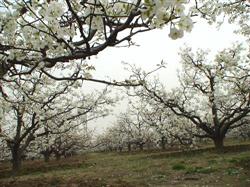
Detailed Explanation of Key Techniques for Spring Management in Pear Tree Cultivation
How should pear tree cultivation be managed in spring? Please provide guidance. For spring management of pear tree cultivation, you can refer to the following methods: I. Strengthen fertilizer management 1. Apply sprouting fertilizer well: It is required that after the Spring Festival, for each mature pear tree, supplement 1.5 kg of special fruit tree fertilizer per tree, and for young trees planted in the 2003 ecological construction along the mountains, supplement...
-
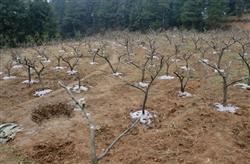
How to Fertilize and Water Pear Trees? Key Points of Water and Fertilizer Management Techniques
How do you fertilize and water pear trees? Here is an introduction. For fertilizing and watering pear trees, you can refer to the following methods: 1. Fertilization techniques. 1. Fertilizer amount. Generally speaking, producing 100 kg of pear fruit requires 0.47 kg of pure nitrogen, 0.23 kg of pure phosphorus, and 0.48 kg of pure potassium. The ratio of nitrogen, phosphorus, and potassium is 1:0.5:1. If calculated at a yield of 2,500 kg of pears per mu, then each mu requires 11.75 kg of nitrogen, 5.75 kg of phosphorus, and 12 kg of potassium. In actual production, the fertilizer amount can be calculated according to the content of effective ingredients in various fertilizers.
-
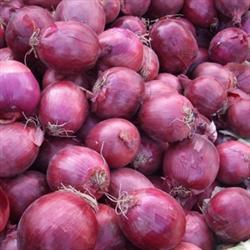
Detailed Explanation of Key Technical Points for High-Yield Onion Cultivation and Management
How should onions be managed for high yield? Please provide guidance. For high-yield onion growing, you can refer to the following cultivation methods: 1. Grow strong seedlings. Sowing and raising seedlings is generally best from the end of September to mid-October. For the seedling bed, choose loose, fertile sandy loam or new land with convenient drainage and irrigation that has not previously grown onions or garlic. Before sowing, prepare the soil finely...
-
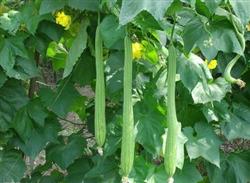
Key Technical Points for Greenhouse Luffa Cultivation and Management
How should luffa be managed when grown in a greenhouse? Please help advise. For greenhouse luffa management, you can refer to the following: Adjust temperature and light well. Luffa requires relatively high temperatures throughout its entire growth period. The suitable temperature for growth is 20°C-24°C, and the suitable temperature for fruit development is 24°C-28°C. At around 15°C, luffa grows slowly, and below 10...
-
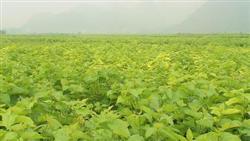
Key Points of Mulberry Cultivation Techniques and Planting Management Methods
Mulberry is a perennial woody plant and a tree species with a relatively long lifespan. Naturally grown mulberry trees can live for more than a thousand years at most. Cultivated mulberry trees, affected by artificial pruning and long-term leaf harvesting, have a much shorter lifespan, but their peak production period still lasts more than 10 years. I. Establishment of a New Mulberry Plantation (1) Site Selection: Choose...
-
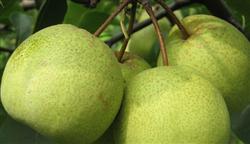
What are the key technical points for high-yield management of Xuehua pear?
How should Xuehua pear be managed to achieve high yield? Please provide guidance. To grow Xuehua pear for high yield, the management methods can refer to the following: 1. Strengthen soil, fertilizer and water management. Before planting, deep plow the whole area to 60cm. At planting, apply 80kg of barnyard manure per tree. From the year of planting to the 3rd year, apply 0.2kg of special fruit tree fertilizer per tree every June, and spray urea (0.3%) on the leaves 4 times along with orchard pesticide spraying. Irrigate 2 times. Due to sufficient nutrition, the canopy expands rapidly, is robust and uniform. At 4 years old, the number of branches and buds per 666.7 sq m reaches about 10,000, laying a solid foundation for early fruiting and early high yield.
-
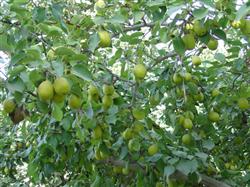
What are the management methods after the Ya pear fruits set?
How should Ya pear be managed after the fruits set? Please give some guidance. After the Ya pear fruits set, you can refer to the following methods for management: 1. Fertilizer and water management. This period is the stage of complete flower bud differentiation, and the demand for fertilizer is relatively urgent, so promptly apply a topdressing of quick-acting fertilizer. According to the size of the tree and the number of fruits set, apply per tree a high-nitrogen, low-phosphorus...
-
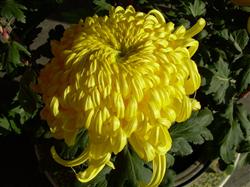
Cultivation Techniques and Management Methods for Yellow Chrysanthemum Greens
"Yellow chrysanthemum" is called chrysanthemum greens. The chrysanthemum greens plant has round leaves, with short compressed petioles arranged in multiple whorls forming a chrysanthemum-like shape, green petioles, glossy leaf blades, and entire leaf margins. A single plant can weigh up to 150 grams, with excellent quality, and the flavor is even better after frost. Chrysanthemum greens have the effects of clearing heat, dispelling wind, detoxifying, and improving eyesight. Many friends have asked about related...
-
What are the key technical points for loofah cultivation and management?
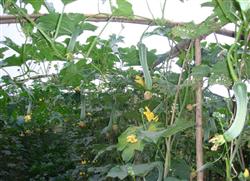
How should loofah be managed when grown? Please help guide. Loofah has strong heat and moisture tolerance, but poor cold resistance, so loofah is often planted in spring and summer and harvested in summer and autumn. Loofah can flower and bear fruit continuously, so in most regions it is arranged for one crop per year within the frost-free period. 1. Variety selection for spring sowing...
-
How to grow loofah? Key technical points from sowing to management
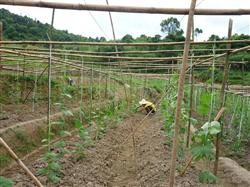
How to grow loofah? For detailed information on how to grow loofah, you can refer to the following methods: 1. Select good varieties. Choose varieties suitable for summer cultivation, that is, varieties that are not sensitive to short-day conditions: such as Xiayou loofah, Xinxiatang loofah, Fengkang loofah, Yalu No. 1, Xiuyu loofah, etc. 2. Raise seedlings and transplant. Summer loofah...
条件筛选