Cultivation Techniques and Management Methods for Yellow Chrysanthemum Greens
"Yellow chrysanthemum" is called chrysanthemum greens. The chrysanthemum greens plant has round leaves, with short compressed petioles arranged in multiple whorls forming a chrysanthemum-like shape, green petioles, glossy leaf blades, and entire leaf margins. A single plant can weigh up to 150 grams, with excellent quality, and the flavor is even better after frost. Chrysanthemum greens have the effects of clearing heat, dispelling wind, detoxifying, and improving eyesight. Many friends have asked about related...
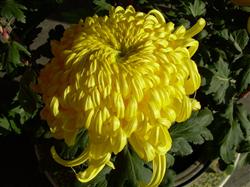
"Yellow chrysanthemum" is called chrysanthemum greens. The chrysanthemum greens plant has round leaves, with short compressed petioles arranged in multiple whorls forming a chrysanthemum-like shape, green petioles, glossy leaf blades, and entire leaf margins. A single plant can weigh up to 150 grams, with excellent quality, and the flavor is even better after frost. Chrysanthemum greens have the effects of clearing heat, dispelling wind, detoxifying, and improving eyesight. Many friends have asked about knowledge related to chrysanthemum greens cultivation, so in order to help friends better cultivate chrysanthemum greens, here we will learn about the planting and cultivation techniques of chrysanthemum greens.
(1) Cultivation Season and Cultivation Methods of Chrysanthemum Greens
Chrysanthemum greens can be planted once and harvested multiple times over many years, but changing the planting location each year can improve yield and quality. It is usually cultivated in open fields using field edges and odd corners, and can be planted on a large scale through direct seeding or transplanting. In South China, seeds are generally sown and seedlings raised from early February to early March; late-sown seeds easily lose their germination capacity. Transplanting is done in early April, and tender stems and leaves can be harvested and marketed in May. With careful management, continuous harvesting can be maintained for about 3 years.
(2) Variety Selection of Chrysanthemum Greens
Chrysanthemum greens can be divided by leaf size into large-leaf types and small-leaf types.
1. Small-leaf type: The leaves are relatively small, with deep incisions on the leaf margins; the petioles often have a pale purple tint; the leaves are thin and the branches slender; the yield is relatively low and the quality relatively poor.
2. Large-leaf type: Also called broad-leaf chrysanthemum greens, with ovate leaves, relatively blunt tips, and fine, shallow notches on the leaf margins. It has relatively good quality and relatively high yield, and is currently the variety more widely cultivated in production.
(3) Propagation Methods of Chrysanthemum Greens
1. Seed propagation: Before sowing, apply sufficient decomposed organic fertilizer as base fertilizer, then deep-plow and harrow finely to make flat beds. Mix seeds evenly with fine sand and broadcast, then cover with fine soil about 0.5 cm thick. After sowing, cover with a shade net and water thoroughly. During the cold, rainy early spring, cover with plastic film to maintain soil moisture and temperature. Watering should be done with a fine spray to prevent the soil surface from crusting. After about 10 days, the seedlings emerge; remove the shade net or plastic film, and when the seedlings have 2-3 leaves, they can be transplanted to the field. Chrysanthemum greens can be direct-seeded; in southern China, sowing can be done in February, while in cold northern regions sowing can only be done in early April. The seeding rate is about 0.2 kg per mu.
2. Division propagation: In mid-to-late March, dig out old chrysanthemum greens plants, expose the root crown, cut off side shoots that already have roots together with old roots, and transplant them to the field. Division propagation is more suitable when new shoots are sprouting.
3. Cutting propagation: Cutting propagation can be carried out throughout the growing season, with the highest survival rate for cuttings taken from April to June. The seedbed is best made with new soil mixed with composted, decomposed organic fertilizer. Cut branches with 3-5 nodes and a length of 8-10 cm, remove the basal leaves, and insert them to a depth of 1/3 to 1/2 of the cutting length. After cutting, keep the seedbed moist, avoid waterlogging; shading is needed in high-temperature seasons, while in cooler temperatures a plastic-film arched shed can be built to retain heat and moisture. Generally, they can be transplanted to the field after 15 days.
(4) Field Planting of Chrysanthemum Greens
Seedlings with 2-3 true leaves or cutting seedlings that have already sprouted new shoots and have vigorous roots should be planted in the field in a timely manner. Chrysanthemum greens are afraid of waterlogging and intolerant of standing water, so deep furrows and raised ridges should be made to facilitate drainage during the rainy season. As a perennial herbaceous plant, it requires long-lasting soil nutrient supply, so sandy loam soil that is fertile, convenient for irrigation and drainage, loose, and well aerated should be selected. Before field planting, apply sufficient base fertilizer at 2000-2500 kg per mu, deep-plow and harrow the soil, and prepare the beds. Select robust plants free of pests and diseases and plant them on cloudy days or in the afternoon on sunny days, with a spacing of 12 cm x 15 cm and 2 plants per hole. After planting, water thoroughly.
(5) Field Management of Chrysanthemum Greens
1. Fertilizer and water management: Five days after field planting, apply a topdressing once to promote plant establishment, then apply topdressing once every 7-10 days, using farmyard manure combined with urea and compound fertilizer. During high-temperature and drought periods in summer, pay attention to watering, but avoid standing water in the field. In rainy seasons, pay attention to waterlogging prevention and drainage to prevent root rot. Chrysanthemum greens have strong branching ability and side branches sprout quickly, so they have a relatively high fertilizer demand. When cultivated in poor soil, the frequency of topdressing should be increased.
2. Cultivation and weeding: Before the plants close their rows, cultivate and weed to prevent the soil surface from crusting, which is beneficial to root growth. Before winter, after harvesting the old stems, it is advisable to loosen the soil, earth up the plants, apply fertilizer, and cover. Usually about 1500 kg of organic fertilizer is applied per mu to help the plants overwinter smoothly and sprout new shoots early.
3. Plant regulation: Chrysanthemum greens grow vigorously and have strong branching ability, so necessary pruning must be carried out to control plant growth, promote side-branch development, facilitate field management, and enhance ventilation and light penetration. Usually, before the chrysanthemum greens plants close their rows, harvest and pinch the tops to promote the sprouting of side branches. After the plants develop to a certain extent, their height should be controlled at about 30 cm, and vigorous branches, pest-damaged branches, and dead branches should be pruned off to improve yield and quality. After the seeds mature in December, cut off the flower heads and dry them, rub out the seeds, and cut away the old stubble, then press in fertilizer and cover with soil.