How to Fertilize and Water Pear Trees? Key Points of Water and Fertilizer Management Techniques
How do you fertilize and water pear trees? Here is an introduction. For fertilizing and watering pear trees, you can refer to the following methods: 1. Fertilization techniques. 1. Fertilizer amount. Generally speaking, producing 100 kg of pear fruit requires 0.47 kg of pure nitrogen, 0.23 kg of pure phosphorus, and 0.48 kg of pure potassium. The ratio of nitrogen, phosphorus, and potassium is 1:0.5:1. If calculated at a yield of 2,500 kg of pears per mu, then each mu requires 11.75 kg of nitrogen, 5.75 kg of phosphorus, and 12 kg of potassium. In actual production, the fertilizer amount can be calculated according to the content of effective ingredients in various fertilizers.
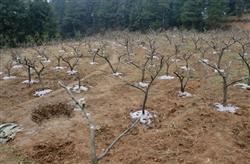
How do you fertilize and water pear trees? Here is an introduction.
For fertilizing and watering pear trees, you can refer to the following methods:
I. Fertilization techniques
1. Fertilizer amount. Generally speaking, producing 100 kg of pear fruit requires 0.47 kg of pure nitrogen, 0.23 kg of pure phosphorus, and 0.48 kg of pure potassium. The ratio of nitrogen, phosphorus, and potassium is 1:0.5:1. If calculated at a yield of 2,500 kg of pears per mu, then each mu requires 11.75 kg of nitrogen, 5.75 kg of phosphorus, and 12 kg of potassium. In actual production, the fertilizer amount can be calculated according to the content of effective ingredients in various fertilizers.
2. Fertilization time. (1) Apply within 7-10 days after harvest to help restore tree vigor, promote photosynthesis, increase nutrients, and encourage autumn root development, mainly with quick-acting fertilizers. (2) Apply base fertilizer from October to December, mainly with organic fertilizer, accounting for 40-50% of the annual fertilizer amount. Applying base fertilizer in autumn is very important. Taking nitrogen fertilizer as an example, in the mid-to-late stage of pear fruit expansion, if too much nitrogen fertilizer is applied, the fruit shape will be larger, but the sugar content of the fruit will decrease, the flavor will become bland, and diseases will be more severe, which does not meet the requirements of high-quality cultivation. Early June is the main period when new pear leaves begin to synthesize carbohydrates. The tree does not need too much nitrogen, but too little nitrogen is not conducive to flower bud differentiation and will affect flowering and fruiting the following year. The best way to resolve this contradiction is to apply more organic fertilizer in autumn and winter. (3) Topdressing before and after flowering promotes flowering, fruiting, and the growth of branches and leaves. Topdressing before flowering is mainly with quick-acting nitrogen fertilizer, and topdressing after flowering is mainly with phosphorus and potassium fertilizers. (4) During the fruit expansion period, apply during the fruit expansion period of each variety, using nitrogen, phosphorus, and potassium together.
3. Use of trace elements. A deficiency of trace elements easily leads to deficiency symptoms, which should be corrected in time. For example, iron deficiency easily causes chlorosis, and 0.5% ferrous sulfate solution can be sprayed 1-2 times per month during the growing season. After multiple sprays, yellow leaves can turn green again. A certain amount of ferrous sulfate can also be applied to the soil in spring. Zinc deficiency easily causes little leaf disease. Before germination, 4-5% zinc sulfate solution can be sprayed, and after germination, 0.3-0.5% zinc sulfate solution can be sprayed. In addition, spraying 0.2-0.5% boric acid solution at flowering or after flowering can not only treat boron deficiency but also increase the fruit-setting rate. For young pear trees, because the root system of young trees is not well developed, fertilization should follow the principle of light fertilizer applied frequently to avoid burning the seedlings. At the same time, increase phosphorus and potassium fertilizer to strengthen tree vigor.
II. Water management
Water management should determine irrigation time and irrigation amount based on soil moisture conditions and the water requirement of pear trees. Pear trees have relatively high water demand from before and after germination to before flowering, during the young fruit expansion period after flowering, during the mid-to-late fruit growth period, and from after fruit harvest to before leaf fall. Among these, the young fruit expansion period after flowering is the critical water requirement period for pear trees and is the most important. Timely irrigation can promote the growth of new shoots and leaves, expand the assimilation area, enhance photosynthesis, increase the fruit-setting rate and enlarge the fruit, and also has a good effect on later flower bud differentiation. For young pear trees, because they are relatively sensitive to changes in the natural environment and prone to drought and waterlogging disasters, the soil should be loosened frequently, and watering should be done during drought to preserve soil moisture.
Click to get more pear tree planting techniques
Click to get more fruit planting techniques