Key Points of Mulberry Cultivation Techniques and Planting Management Methods
Mulberry is a perennial woody plant and a tree species with a relatively long lifespan. Naturally grown mulberry trees can live for more than a thousand years at most. Cultivated mulberry trees, affected by artificial pruning and long-term leaf harvesting, have a much shorter lifespan, but their peak production period still lasts more than 10 years. I. Establishment of a New Mulberry Plantation (1) Site Selection: Choose...
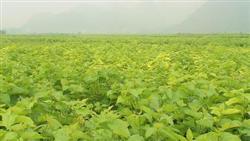
Mulberry is a perennial woody plant and a tree species with a relatively long lifespan. Naturally grown mulberry trees can live for more than a thousand years at most. Cultivated mulberry trees, affected by artificial pruning and long-term leaf harvesting, have a much shorter lifespan, but their peak production period still lasts more than 10 years.
I. Establishment of a New Mulberry Plantation
(1) Site Selection
Choose soil that is deep, loose and fertile, far from polluted areas, and capable of both irrigation and drainage. Paddy fields are best; in addition, scattered mountain land, sloping land, riverbank land and so on can all be used to plant mulberry.
(2) Preparation Before Transplanting
1. Deep ploughing of the soil to promote oxidation of the subsoil and enhance aeration and water permeability.
2. Apply sufficient base fertilizer. 20-30 dan of fully decomposed pig and cattle manure and farmyard manure are required as base fertilizer. Combine with deep ploughing to bury the organic fertilizer deep in the soil.
3. Level the land and dig irrigation and drainage ditches. Level the land carefully, with no weeds and a level bed surface. The bed width is 1.3-1.6 m, and the ditch depth is 20-30 cm. Dig irrigation and drainage ditches around the field and a cross-shaped ditch in the middle of the field, 10 cm deeper than the bed ditches.
(3) Planting
1. Planting time. Generally, planting in winter and early spring is better, and the soil temperature should be kept stable at around 10-12°C.
2. Selection and treatment of seedlings. Vigorous seedlings of improved mulberry varieties should be selected, free of pests and diseases. When planting mulberry in summer and autumn, try not to damage the roots when lifting the seedlings, and preserve the root system of the mulberry seedlings as much as possible. When planting mulberry in winter and spring, the excessively long main roots should be lightly pruned to encourage the development of more lateral roots. Before planting, dip the roots in mud mixed with phosphate fertilizer to promote rooting and survival.
3. Planting density. Mulberry plantations in Guangxi are suitable for close planting and rapid establishment. For improved hybrid mulberry, 5000-7000 plants per mu is appropriate, generally with a row spacing of 65-80 cm and a plant spacing of 12-18 cm.
4. Planting method. Bury the roots of the mulberry seedlings in the soil along the mulberry row line, cover with soil and lift gently so that the roots spread out, tread firmly, then add a layer of loose soil, requiring 3 cm of soil above the root crown. Water thoroughly to settle the roots. Within 2 days after planting, prune the plants, leaving a plant height of 10-20 cm, cutting off the shoot tips to achieve a uniform height.
(4) Management After Planting
1. Mulching. Cover the ground or mulberry rows with rice straw or weeds to retain water and prevent drought, reduce plant water loss, suppress weed growth, prevent soil crusting, and improve soil fertility.
2. Water in time to prevent drought and drain excess water. Maintaining suitable soil moisture is the key to the survival and growth of new mulberry. Water in time when the soil is dry, and drain in time during rainy periods.
3. Loosen the soil and remove weeds. After a certain period, especially after rain, the soil tends to crust easily. Loosen the soil while weeding to benefit mulberry root growth.
4. Fertilization. After the new mulberry sprouts and opens its leaves, apply manure water or urea water fertilizer once. Afterwards, according to the growth of the new mulberry, apply additional fertilizer 1-2 times. The application rate is 5-10 kg of urea or 10-15 kg of compound fertilizer per mu. At the young tree stage, the amount of fertilizer applied each time should not be too much; it is better to feed small amounts frequently.
5. Replanting missing plants. Missing plants in a mulberry plantation will affect yield, so missing plants should be replanted in time when found. When planting mulberry, some spare plants should be kept, or some plants should be thinned out from densely planted areas to fill the gaps. At the same time, strengthen management to promote their growth to keep up.
II. Mulberry Plantation Management and Mulberry Leaf Harvesting
(1) Fertilization of the Mulberry Plantation
Fertilizing a mulberry plantation can not only make mulberry leaves high-yielding, but is also an important measure for improving mulberry leaf quality, ensuring a good silkworm cocoon harvest and obtaining high-quality silkworm eggs. In mulberry plantations with low soil fertility, producing every 100 kg of mulberry leaves requires 1.9-2.0 kg of pure nitrogen, 0.75-1.0 kg of pure phosphorus, and 1.0-1.13 kg of pure potassium.
1. Types of fertilizer: mainly organic fertilizers such as manure, cake fertilizer, farmyard manure, compost, pond silt and green manure; inorganic fertilizers such as compound fertilizer, urea, superphosphate, potassium chloride, potassium sulfate, plant ash and lime; and trace element fertilizers, etc.
2. Fertilization methods
(1) Organic fertilizer. Manure, cake fertilizer and the like generally need to be decomposed before being applied to the mulberry plantation. They are generally applied after winter pruning, and can also be used after summer pruning and at other times, applied in furrows. If there is a large amount of farmyard manure or green manure, it can also be spread between the rows. Applying manure water at the sprouting stage has a relatively quick fertilizer effect.
(2) Compound fertilizer, urea, superphosphate, organic compound fertilizer and so on can also be used as base fertilizer, and should generally be applied in furrows.
(3) Fertilization method of applying fertilizer for each crop of leaves: when the mulberry sprouts, apply a bud-promoting fertilizer, 15 kg of urea per mu; afterwards, within 3 days after each crop of leaves is picked, apply chemical fertilizer once more, each time 15 kg of urea and 10 kg of superphosphate per mu, or 25 kg of compound fertilizer, or 10 kg of urea plus 12 kg of compound fertilizer, or 30-40 dan of manure water.
(4) Two-application fertilization method for the whole year. Combine the whole year's fertilizer amount and apply it in two deep furrows in spring and summer, with 60% of the amount in the first half of the year and 40% in the second half. After covering with soil and pressing firm, cover with weeds or green manure.
(5) Foliar fertilization. Foliar fertilizers such as monopotassium phosphate, Yemianbao and Penshibao have a certain effect on increasing mulberry leaf yield or improving leaf quality. Foliar fertilizer is generally used more than 15 days before leaf harvesting for silkworm rearing during the mulberry production stage.
(2) Ploughing and Weeding of the Mulberry Plantation
Plough the mulberry plantation once in mid-December for winter exposure. Weed once each in spring, summer and autumn, and cultivate between the rows while weeding.
(3) Irrigation and Drainage
The water content of mulberry leaves is generally 70-80%. Below 70-80%, mulberry leaves are affected; below 50%, irrigation should be carried out in time. Irrigation can be done by methods such as flood irrigation, furrow irrigation, sprinkler irrigation and watering. Soil moisture should not be excessive either. In the rainy season, when the land is low-lying and the groundwater level is relatively high, excess water should be drained.
(4) Pruning Forms of Mulberry Trees
Reasonable pruning can reduce flowers and fruits, promote vegetative growth, renew branches, adjust the ventilation and light transmission environment, promote vigorous growth of new shoots, and reduce pests and diseases, thereby increasing leaf yield and leaf quality.
1. Summer pruning. Summer pruning generally adopts the method of cutting at the base. That is, cut off the aboveground part at ground level. This pruning method is suitable for harvesting leaves and is also convenient for management. However, the first crop has more sandy leaves.
2. Winter pruning. Generally, the method of cutting level with the fist is adopted (leaving the main trunk 30-50 cm high). Because each pruning is done at the same position, a fist-shaped branch fork forms. Cutting level with the fist means cutting the branches flat at the base of the branches at the fist-shaped fork. This method results in a larger number of branches and relatively stable yield.
III. Current Leading Varieties in Guangxi
(1) Guisangyou 62
It is a mulberry hybrid combination (variety) bred by the Guangxi Sericulture Extension General Station. Characteristics: early sprouting, late leaf fall and dormancy in late autumn, long growth period, many effective branches, fast growth of branches and leaves, relatively large leaves, high leaf yield, with the highest mulberry leaf yield per mu reaching 4000 kg.
(2) Guisangyou 12
This variety is also a new hybrid variety bred by the Guangxi Sericulture Extension General Station. Characteristics: uniform population, vigorous growth, fast leaf growth, dense internodes, early sprouting, late leaf fall, relatively strong drought resistance, strong regeneration ability, can be pruned multiple times a year, relatively large and thick leaves, dark green leaf color, with mulberry leaf yield per mu reaching as high as 3927 kg.