Detailed Explanation of Key Techniques for Spring Management in Pear Tree Cultivation
How should pear tree cultivation be managed in spring? Please provide guidance. For spring management of pear tree cultivation, you can refer to the following methods: I. Strengthen fertilizer management 1. Apply sprouting fertilizer well: It is required that after the Spring Festival, for each mature pear tree, supplement 1.5 kg of special fruit tree fertilizer per tree, and for young trees planted in the 2003 ecological construction along the mountains, supplement...
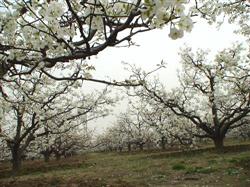
How should pear tree cultivation be managed in spring? Please provide guidance.
For spring management of pear tree cultivation, you can refer to the following methods:
I. Strengthen fertilizer management 1. Apply sprouting fertilizer well: It is required that after the Spring Festival, for each mature pear tree, supplement 1.5 kg of special fruit tree fertilizer per tree, and for young trees planted in the 2003 ecological construction along the mountains, supplement 0.3 kg of special fruit tree fertilizer per tree. For orchards where base fertilizer was poorly applied, appropriately increase the amount of fertilizer. 2. Apply foliar fertilizer well: After the leaf color turns green, spray with 0.3% urea plus 0.2% potassium dihydrogen phosphate or 2500 times liquid of Shengchan Donglisu.
II. Strengthen pest and disease control 1. Apply orchard-opening spray well: When the flower bud scales loosen to just opening, apply the first spray, and after 80% of the flowers have fallen, apply the second spray. Spray with 3-degree Baume lime sulfur mixture or 2500 times liquid of 2.5% green Kung Fu or 3000 times liquid of 2.5% Decis emulsifiable concentrate. If chemical pesticides are used, disease-prevention pesticides should be added. Fruit growers should note: no pesticide can be sprayed during the pear tree flowering period to avoid phytotoxicity. 2. Control pear scab: Spray the first time when the pear tree flowers have fallen and leaves are unfolding, and spray the second time 15 days later. Uniformly spray with 8000-10000 times liquid of DuPont Fuxing or 2500 times liquid of Shigao or 2500 times liquid of diniconazole.
III. Do a good job in flower and fruit preservation 1. Chemical fruit preservation: Starting from the initial flowering stage, spray with 0.2% borax white sugar liquid, plus 1 g of 2,4-D diluted in 200 kg of water or 15 ppm naphthalene acetic acid, spraying 2-3 times in total. 2. Hang bottles with pollinated flower branches: If there are insufficient pollinator trees in the orchard or the flowering periods do not coincide. Use bottles filled with water, insert pollinated flower branches into the bottles, and hang them on the upper middle part of the pear trees, with 4 bottles hung per branch. 3. Artificial supplementary pollination: First collect bell-shaped flower buds from pollinator pear trees, remove petals and impurities, place the anthers in white paper, then place them at 20-25 degrees C or wrap the anthers in white paper and put them in a close-fitting underwear pocket for incubation. After the anthers crack (about 20 hours needed), put them in a small wide-mouth bottle and shake until yellow powder (that is, pollination pollen) appears on the inner wall. Then use a writing brush or rubber tip or feather to dip a small amount of pollen and apply it to the stigma of the flowers to be pollinated. 4. Place bees in the pear orchard: This can greatly increase the pollination rate and is an effective measure against low temperature and rain in spring.
IV. Strengthen the management of pear tree variety renewal and replacement, and restore the canopy and yield as soon as possible In spring, promptly check the grafting survival rate, use a pin to pick open part of the buds covered by film, and for those that do not survive, cut off a section and regraft. After survival, do not first remove the sprouts far from the grafted buds, so as to increase the green leaf area and raise water content. However, before they lignify, in mid-to-late May, they must be completely removed. When the new shoots from grafted buds grow to 30-40 cm, tie them to bamboo sticks or similar supports to prevent wind damage. When they reach 50-60 cm, promptly pinch the tips to promote branching. In May-June, loosen the film before it grows into the branches. For pear orchards undergoing top grafting for variety replacement, strengthen the control of pear aphids and pear scab, strengthen fertilizer and water management, promote tree growth and development, expand the canopy as soon as possible, and restore yield.
Click to get more pear tree cultivation techniques
Click to get more fruit cultivation techniques