Detailed Explanation of Key Technical Points for High-Yield Onion Cultivation and Management
How should onions be managed for high yield? Please provide guidance. For high-yield onion growing, you can refer to the following cultivation methods: 1. Grow strong seedlings. Sowing and raising seedlings is generally best from the end of September to mid-October. For the seedling bed, choose loose, fertile sandy loam or new land with convenient drainage and irrigation that has not previously grown onions or garlic. Before sowing, prepare the soil finely...
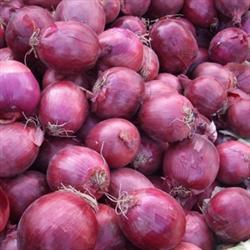
How should onions be managed for high yield? Please provide guidance.
For high-yield onion growing, you can refer to the following cultivation methods:
1. Grow strong seedlings
Sowing and raising seedlings is generally best from the end of September to mid-October. For the seedling bed, choose loose, fertile sandy loam or new land with convenient drainage and irrigation that has not previously grown onions or garlic. Before sowing, prepare the soil finely, apply sufficient base fertilizer, and form flat beds for sowing. Before sowing, soak the seeds in warm water for 24 hours, then dry them and mix them evenly with dry, finely crushed soil for even broadcasting. Each mu requires 70-75 g of seed sown in the seedling bed. After sowing, cover the surface with fine soil, then cover with weeds to prevent rain erosion and direct sunlight. After covering with grass, pour diluted manure water, and scatter insect-prevention chemicals around the beds. Once the seedlings emerge, remove the weed cover. During seedling raising, pour diluted decomposed manure water once every 5-6 days. After about 40 days in the seedling stage, they can be transplanted.
2. Land selection and fertilization
Onions should not be continuously cropped. For the planting site, choose land previously planted with solanaceous fruits, melons and beans, or late-season rice, especially loose, relatively fertile sandy loam or newly reclaimed land.
Before planting, disinfect the soil with 25 kg of lime per mu, and use 1500-2000 kg of high-quality decomposed farmyard manure as base fertilizer. Form beds for planting, with a bed surface width of 80-100 cm and a bed height of 25-30 cm. The soil layer on the bed surface should be loose, finely crumbled, and level.
3. Scientific planting
Planting is generally done from mid-November to early December, so that the seedlings grow rapidly before "Great Cold" and are not damaged by freezing.
The planting spacing is: plant spacing 10-12 cm, row spacing 14-16 cm, planting depth 2-3 cm, with about 8000 plants per mu. After planting, pour enough water to settle the roots and help survival.
4. Timely topdressing
Seven days after transplanting, apply a light application of diluted human and livestock manure water. After another 7-8 days, apply burned soil or high-quality farmyard manure once to promote rooting and enhance cold resistance.
In the severe cold season, onion seedlings grow slowly, so topdressing can be paused. By late February of the following year, when the bulbs enter the expansion stage, apply heavy fertilizer 1-2 times, with 10-12 kg of urea plus 5-6 kg of potassium sulfate per mu.
In late March, the bulbs expand rapidly. Apply another 1250 kg of decomposed human manure and urine per mu, and stop fertilizing 25 days before harvest.
5. Reasonable watering
Onions like moisture but are intolerant of waterlogging. In the early stage, the seedlings are small and the temperature is relatively low, so water demand is low; keeping the bed soil moist is sufficient.
After spring warms up, the temperature gradually rises, onions grow faster, and the bulbs form in large numbers and enter the expansion stage, so water demand is higher and sufficient watering is needed. However, when there is more rain in spring, drain the ditches promptly to prevent water accumulation in the field.
Stop watering 10 days before harvest to facilitate harvesting and avoid high water content in the bulbs, which reduces storage tolerance.
6. Disease control
The diseases that commonly occur in onions include soft rot and stem rot.
(1) Apply decomposed fertilizer to prevent fertilizer-borne pathogens. During the growing period, control the amount of nitrogen fertilizer applied, and apply fertilizer with a combination of nitrogen, phosphorus, and potassium. (2) During bulb formation, pay attention to timely drainage to avoid long-term water accumulation. (3) Before disease onset, use the following agents: 72% agricultural streptomycin 4000-fold solution and 405 Fuxing emulsifiable concentrate 8000-fold solution, applied alternately.
7. Timely harvest
When the plant leaves gradually turn yellow and the basal leaves begin to dry up, the onion bulbs have stopped growing and expanding, so they should be harvested promptly. At harvest, cut off the onion seedlings and try not to damage the bulbs, to facilitate storage and transport.
Click to get more onion cultivation techniques
Click to get more vegetable cultivation techniques