Detailed Explanation of Hericium erinaceus Cultivation Techniques and Management Key Points
Hericium erinaceus, also known as monkey head mushroom, hedgehog mushroom, cauliflower mushroom or Yamabushi mushroom, was originally a precious edible fungus hidden deep in dense forests. The fruiting body is round and thick, often hanging from tree trunks, covered with needle-like spines, and its shape closely resembles a monkey's head, hence the name. Hericium erinaceus has tender flesh and a fragrant aroma, delicious and tasty, with color, flavor and fragrance all of superior quality...
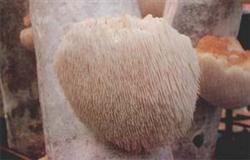
Hericium erinaceus, also known as monkey head mushroom, hedgehog mushroom, cauliflower mushroom or Yamabushi mushroom, was originally a precious edible fungus hidden deep in dense forests. The fruiting body is round and thick, often hanging from tree trunks, covered with needle-like spines, and its shape closely resembles a monkey's head, hence the name. Hericium erinaceus has tender flesh and a fragrant aroma, delicious and tasty, with color, flavor and fragrance all of superior quality.
Hericium erinaceus is rich in nutrients, containing abundant polypeptides and various vitamins. Medical science has confirmed that Hericium erinaceus has medicinal functions such as tissue repair, enhancing cell vitality, anti-cancer, prolonging life and beauty care. Hericium erinaceus has tender, fragrant and delicious flesh, and is known as the "meat among vegetables." It can be prepared in many ways, including vegetarian stir-fry, meat stir-fry, stewing, braising, steaming and boiling, and is an extremely rare delicacy. Stewing Hericium erinaceus together with white fungus makes an excellent health-promoting dessert. After steaming or boiling, the juice becomes viscous and pale pink in color, fragrant, smooth and refreshing. Eaten before sleep at night, it can calm the mind and relieve asthma, enhance cell vitality and boost the body's resistance.
Hericium erinaceus cultivation. As a type of macrofungus, Hericium erinaceus has long been known as a "mountain delicacy." It contains 16 amino acids as well as various vitamins and minerals, and its growth cycle is generally best suited to production from September to November. It offers advantages such as simple cultivation methods, high economic returns and good market prospects, making it very suitable for individual households to cultivate under simple conditions.
1. Reasonable material selection and scientific formula. The raw materials for cultivating Hericium erinaceus are extremely wide-ranging, such as cottonseed hulls, sawdust, corn cobs, bean stalks, wild grass, distiller's grains, etc. Adding appropriate amounts of auxiliary materials such as wheat bran and corn flour, mixed in proper proportions, allows Hericium erinaceus to grow well. If a small amount of minerals such as phosphorus, potassium and magnesium is added to these culture substrates, growth will be even better. Each region can choose economical formulas based on local material advantages: (1) Sawdust 78%, rice bran or wheat bran 20%, white sugar and gypsum 1% each. (2) Cottonseed hulls 90%, gypsum and white sugar 1% each. (3) Corn cob or bean stalk powder 80%, wheat bran 18% and white sugar 1% each.
Choose any one of the above formulas, mix thoroughly, and bring the water content to 60%. The pH value is 4-6. Note: the selected materials must be fresh, free from mold and free from insect damage; the materials must be mixed evenly; and the filling must be done quickly, entering the sterilization stage in the shortest possible time.
2. Choose a suitable cultivation season. According to the biological characteristics of Hericium erinaceus, the optimum temperature for mycelial growth is around 25°C, and the mycelium incubation time is 30-40 days. The suitable growth temperature for the fruiting body is 16-20°C. One cultivation can yield 3 flushes and takes about 2 months. Each region can reasonably arrange production time according to local climatic conditions.
3. Fruiting management. When the mycelium has grown to more than half, fruiting bodies begin to appear successively, and fruiting management should be carried out promptly at this time. During the fruiting period, the focus should be on creating conditions suitable for the growth and development of the fruiting bodies, and on coordinating the relationships among temperature, humidity, light and air.
1. Opening: During fruiting body cultivation, there must be an opening for mushrooms to emerge. For bottle-cultivated Hericium erinaceus, pull out the cotton plug or remove the kraft paper and cut a round hole 2 cm in diameter in the center of the sealing plastic film. For bag-cultivated Hericium erinaceus, remove the cotton plug inside the neck ring or peel off the adhesive tape over the inoculation hole, cover the bag with plastic film, and lift the film once every 2-3 days to promote the formation of mushroom buds. When the mushroom buds reach 2-3 cm in diameter, remove the film.
2. Temperature control and humidity regulation: The temperature of the mushroom house should be maintained between 12-20°C, with around 18°C being most suitable, and the relative air humidity should be controlled at 85-90%, spraying water into the room with a sprayer 3-4 times a day. During high temperatures, necessary cooling measures should be taken, such as covering the top, ventilation and air exchange, and increasing water spraying; during low temperatures, heating and insulation measures should be strengthened.
3. Appropriate ventilation: The growth of Hericium erinaceus fruiting bodies requires fresh air. With good ventilation, the fruiting bodies are large, firm in texture, white in color, fast-growing, high-yielding, with spines of moderate length and good marketability. Otherwise, yields are low and deformed mushrooms may even appear. Therefore, attention should be paid to ventilation and air exchange in the mushroom house, opening the ventilation ports at regular times each day. During high temperatures, ventilate mostly in the morning and evening, about 30 minutes each time; during low temperatures, ventilate at noon, always keeping the air in the mushroom house fresh.
4. Light: Although Hericium erinaceus fruiting bodies can form under dark conditions, deformed mushrooms often appear. Moreover, strong light is also unfavorable for fruiting body formation. Generally, a light intensity of 200-300 lux is suitable. Usually, a certain amount of scattered light in the mushroom house is sufficient.
4. Harvesting. Hericium erinaceus should be harvested before the fruiting body fully matures. The standard is: the fruiting body has basically reached full size, is firm, the spores have not yet been released, and the spines are 1-1.5 cm long, at which point it can be harvested. If harvested too late, the flesh becomes loose, the bitter taste is stronger, processing is unfavorable, and the formation of the next batch of mushrooms is affected. When harvesting, press down on the culture substrate with one hand, and with the other hand gently pull off the fruiting body or cut it off with a small knife. After harvesting, promptly clean the surface of the substrate and gently scratch the mycelium to allow it to rejuvenate. Under suitable conditions, the second flush of mushrooms will appear successively after 15-20 days. Generally, 2-3 harvests can be made. From inoculation to the end of harvesting takes about 3 months. After harvesting, fresh storage should not exceed 12 hours. A small amount can be sold fresh, while a large amount can be sun-dried or dried at 60°C, then sealed and stored in double-layer plastic bags.