Key points for winter management of loquat, teaching you how to strengthen care
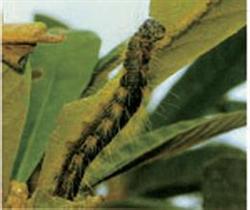
The loquat yellow hairy caterpillar Melanographia flexilineata Hampson, also known as the nodule moth, belongs to Lepidoptera, Noctuidae. In China it is distributed in production areas such as Nanjing, Anhui, Jiangxi, Hubei, Sichuan, Taiwan, China, Hainan, Guangdong, Guangxi and others. Besides damaging loquat, it also damages plants such as white fig and jackfruit. Damage characteristics...
 Loquat blooms in winter, with a flowering period lasting 3-4 months, and the tree body consumes a large amount of nutrients. To ensure a bumper loquat harvest, the following winter management measures must be strengthened:
1. Apply winter fertilizer. When flower spikes are seen emerging on the loquat in November, apply about 25 kg of decomposed manure and 3 kg of superphosphate per tree. Under the tree canopy, dig 6-8 radial trenches about 15 cm deep, 100 cm long and 20 cm wide in the ground, apply the fertilizer into the trenches, and cover with soil. This can increase the tree's nutrition, enhance cold resistance, encourage more strong flowers, raise the fruit-setting rate, and lay a good foundation for a bumper harvest the following year.
2. Thin and prune flower spikes. Loquat trees bloom the most and have a long flowering period, consuming a large amount of nutrients. Therefore, promptly thin and prune some flower spikes to reduce the tree's nutrient consumption and promote larger fruit with good quality the following year. However, note that this should be done when all the tree's flower spikes have emerged. First thin and prune the weaker flower spikes on the fruiting mother branches in the canopy, then after some time cut off the side spikes at the top and base of flower spikes with many branches, as well as diseased and pest-damaged flower spikes, but retain 3-5 robust side spikes among them.
3. Cover soil for cold protection. Before winter frost arrives, cover the root area of each tree with burnt soil or garbage fertilizer, pond mud or field mud, with a covering thickness of 10-15 cm; then cover the soil with straw to increase soil temperature, protect the root mass, increase fertilizer content, and help the tree overwinter safely.
4. Tie leaves to protect flowers. When loquat blooms, tie the leaves below the flower spikes upward to wrap around the flower spikes, or cover the flower spikes with grass, to prevent the flower spikes from being exposed to cold frost and rain, protect the flower spikes so they set more fruit, and thereby achieve a bumper harvest.