Facility eggplant cultivation management: beware of common mistakes
In winter, when cultivating eggplant in facilities, vegetable growers still make some mistakes in the management process, which should be improved. Mistake one: not planting grafted seedlings in new greenhouses. Many vegetable growers believe that in newly built greenhouses there are few root-knot nematodes and few pathogens of Verticillium wilt, Fusarium wilt and bacterial wilt, so high yields can still be obtained without planting grafted eggplant seedlings, but...
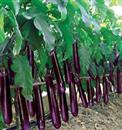
In winter, when cultivating eggplant in facilities, vegetable growers still make some mistakes in the management process, which should be improved.
Mistake one: not planting grafted seedlings in new greenhouses. Many vegetable growers believe that in newly built greenhouses there are few root-knot nematodes and few pathogens of Verticillium wilt, Fusarium wilt and bacterial wilt, so high yields can still be obtained without planting grafted eggplant seedlings, but in fact this is not the case. When ungrafted eggplant seedlings are planted in new greenhouses, after the temperature rises following the Spring Festival, it is not uncommon for large areas of eggplant plants to wither and die, or even for the entire crop to be lost, while eggplants grafted onto Santos rootstock are relatively normal and have high yields. When planting grafted seedlings, if grafting and transplanting are done too early, the plants are prone to premature aging, and the yield after the New Year is low, affecting income.
Mistake two: applying heavy chemical fertilizer while neglecting organic fertilizer. Applying heavy chemical fertilizer will cause soil compaction, severe salinization of the ground surface, the formation of green moss on the surface, and in severe cases red moss, hinder root development in high-concentration soil solution, age the leaves, impair vegetative growth, and reduce yield. Such greenhouses should be given more organic fertilizer and less or no chemical fertilizer to reduce fertilizer damage.
Mistake three: single fertilization, with excessive nitrogen fertilizer. At present, vegetable growers mainly apply nitrogen fertilizer and neglect phosphate fertilizer, potassium fertilizer and micronutrient fertilizers, resulting in excessive nitrogen fertilizer and waste, and it also easily causes salt-related obstacles in the soil and aggravates diseases. In particular, during the fruiting period, eggplant requires nitrogen, phosphorus and potassium fertilizer in a rough ratio of 3:1:4, so heavy use of nitrogen fertilizer during the fruiting period does not conform to the growth pattern of eggplant. Avoid applying a single fertilizer by irrigation; nitrogen, phosphorus and potassium fertilizers should be applied in combination.
Mistake four: improper mixing of pesticides. In facility eggplant disease control, prevention should be the main approach and treatment supplementary; applying pesticides in advance for prevention is not only lower in cost but also better in effect. Some vegetable growers, regardless of the composition of the pesticide, like to mix and use many kinds of pesticides. Using pesticides in this way, first, some pesticides react chemically with one another and reduce pesticide efficacy; second, the concentration increases, and the leaves are often soaked in high-concentration pesticide solution, which reduces leaf function, accelerates aging, and lowers photosynthesis.