Do not relax post-harvest management of cherries; grower friends should take it seriously
I. Focus on summer pruning. While removing the film, promptly cut back the canopy and carry out heavy pruning. 1. Cut back the canopy. This method can reduce the overall height of each cherry tree canopy by 50-80 cm respectively, preventing the tree from growing taller and taller and affecting the ventilation and light conditions inside. 2. Cut and thin the main branches. Heavy cutting is required...
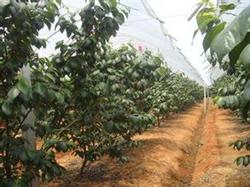 Do not relax post-harvest management of cherries. In May-June, cherry berries can mature and go on the market. Fruit harvest is a turning point in the annual growth and development cycle of fruit trees. The following five points should be grasped well in the management of cherry trees after picking. Loosen and twist shoots. Diseased and pest-infested branches, drooping branches, overly dense branches, and vigorous water shoots can be thinned from the base. For those growing vigorously, especially the vigorous shoots growing on the upper side, shoot twisting can be carried out. Fertilize and water. Apply 50 kg of decomposed human manure and urine per tree, or 3-4 kg of soybean cake water and 0.6-1 kg of urea. At a distance of 1 m from the trunk, dig 6-8 radial trenches. The trenches are 20-30 cm deep, 40-50 cm wide, and as long as reaching the outer edge of the canopy. After putting the fertilizer into the trenches, cover with soil and water. Drain promptly during the rainy season. When the soil is too wet, plow and turn it to dry, so as to enhance the soil's air permeability. Intertillage and loosening the soil. After applying the post-harvest fertilizer in June and July, and before the peak root growth period in the rainy season arrives, carry out intertillage and soil loosening to a depth of about 10 cm throughout the orchard. After leaf fall, carry out deeper plowing between rows together with the autumn application of base fertilizer. Cover the tree disk with grass. After fruit harvest, spread materials such as barnyard manure, dry grass, fallen leaves, and straw evenly in the tree disk. Prevent diseases and control pests. The tent caterpillar, peach leafminer moth, and others damage leaves, and 20% fenvalerate EC at 3000 times dilution or 25% deltamethrin at 3000 times dilution can be sprayed. Leaf shot hole disease is the most important disease of cherry trees and mostly occurs in autumn. In July and August, 0.3-0.5 degree lime sulfur mixture or double-strength 200 times Bordeaux mixture can be sprayed.