What are the key points for cotton management in July? A must-read for cotton farmers
July is the month when cotton grows fastest and puts on the most growth; it is also a month of dramatic weather changes, frequent disasters, and severe outbreaks of pests and diseases. Most cotton fields enter the flowering stage in early July, and by the end of July, 90% of the cotton plant's vegetative and reproductive organs have already formed; the cotton root network is also established in July, forming a peak period of absorption for mineral nutrients and water.
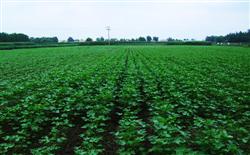
July is the month when cotton grows fastest and puts on the most growth; it is also a month of dramatic weather changes, frequent disasters, and severe outbreaks of pests and diseases. Most cotton fields enter the flowering stage in early July, and by the end of July, 90% of the cotton plant's vegetative and reproductive organs have already formed; the cotton root network is also established in July, forming a peak period of absorption for mineral nutrients and water. Mid-July marks the start of the dog days, the period when cotton transforms fastest and most extensively. From all these aspects, cotton management in July has the character of a decisive battle.
(1) Digging furrows and hilling soil. This facilitates irrigation and drainage, guarding against both drought and waterlogging, and also improves ventilation in the lower part of the cotton field, reduces humidity, and increases the day-night temperature difference, which helps improve the field microclimate and plays a role in preventing boll rot and lodging and in promoting and protecting roots. After the plastic mulch is removed from the cotton field, combined with intertillage and loosening of the soil, furrow digging and hilling should be carried out wherever conditions allow, mainly by machine and animal power, with manual assistance. Where intertillage has already been done, it can be completed in one pass, or in two passes. Low-lying plots must have their drainage ditch systems cleared.
(2) Pruning and topping. The purpose of cotton pruning is, first, to regulate nutrient distribution, and second, to improve the population structure, ultimately making full use of resources such as water, fertilizer, light, air, and heat to achieve high cotton yields. Do not go to extremes in using vegetative branches (leaf branches for short) - either leaving none at all or removing none at all. In cotton fields with high density and no missing plants, basically no leaf branches should be left, but in sparse spots, gaps, and at the ends and edges of fields, leaving 1-2 strong leaf branches per plant can increase the number of bolls per plant; keeping all leaf branches is not advisable. Leaf branches that have still not produced fruiting branches and have very small buds must be removed in early July without fail; for leaf branches that are relatively strong and have already grown fruiting branches, the growing tip of the leaf branch can be pinched off immediately, and they must no longer be allowed to grow freely. If there are too many pre-dog-days bolls, this will bring many problems to the cotton plant such as premature senescence, hard locks, and rotten bolls, so in early July all flowers that have already opened should be picked off, so that the cotton plant saves nutrients and can set more bolls when conditions are suitable. In the central-southern Hebei and northwestern Shandong regions, for cotton fields with 2500-3000 plants per mu, leave 13-14 fruiting branches per plant according to soil fertility and density and top them in good time, and by all means achieve a canopy of autumn bolls. Do not repeatedly delay topping and blindly leave too many fruiting branches for fear of shedding or out of greed for more. When planting varieties with higher boll weight, seek both a higher number of bolls per mu and a higher single boll weight. Wanting few or no early bolls and late bolls will greatly improve the uniformity of the cotton bolls.
(3) Attend promptly to chemical regulation. This year many areas in the north have had drought and little rain, and many cotton farmers have not dared to apply chemical regulation. Some cotton fields have still not had their first chemical regulation to this day, and most have the problems of chemical regulation being too late and the dosage being too small. Because temperatures in May and June this year were on the high side, this caused, to varying degrees, the problems of excessive vegetative growth and weak reproductive growth, and of aboveground plants being relatively large while the root system is relatively small. In the earlier period, some cotton fields showed cotton plants wilting after sunny days; upon inspection, some cases were neither disease nor fertilizer damage, but mainly caused by rapid aboveground growth, relatively large plants, high transpiration under high temperatures, and weak roots unable to take up water fast enough to supply the plant. In applying mepiquat chloride according to the principle of "watching the sky, watching the soil, watching the seedling condition," the main focus should be "watching the seedling condition." As long as the cotton seedlings are growing at a normal rate, chemical regulation should be carried out on schedule; this is called "proactive chemical regulation." If chemical regulation is done only after excessive growth has occurred, that is "passive chemical regulation." Based on the earlier chemical regulation situation and the current cotton growth, generally 2-3 chemical regulation applications are needed in July: the 1st at the early flowering stage, using 1-1.5 grams of mepiquat chloride per mu; the 2nd at the full flowering stage, using 1-2 grams per mu; and the 3rd after topping, using 3-5 grams per mu. Because the cotton plants are now relatively large, during chemical regulation use 20-25 kg of water per mu to spray the whole plant, making sure to spray the growing tip and the tips of the middle and upper fruiting branches.
(4) Supply fertilizer in good time. The issue of fertilizing cotton is the most complex issue in cotton management; it is by no means true that the more fertilizer applied, the higher the yield. Sometimes improper fertilization can even lead to the opposite result. According to analysis of the nutrient elements that make up the cotton plant, a yield of more than 600 jin of seed cotton per mu does not require a very large amount of nutrients, and there is a certain proportional relationship among the nutrient elements. If one element is excessive, it not only causes waste but may also affect the absorption and utilization of other elements, so the key to fertilization lies in balance, reasonableness, and science. On the basis of applying sufficient base fertilizer, cotton generally does not need quick-acting nitrogen fertilizer as a side dressing before flowering and boll setting, so as to avoid an overly large vegetative mass or excessive vegetative growth; side dressing should preferably be applied at the full flowering stage (when the 4th fruiting branch flowers), applying 10-15 kg of urea per mu according to soil fertility and cotton growth. Where potassium fertilizer was not applied as base fertilizer, or the amount of potassium fertilizer was too small, it should be side-dressed as early as possible. For side dressing in cotton fields in July, apply it in the middle of the wide rows so that the cotton plants on both sides can absorb and use it. Never drill-apply it in the narrow rows, to avoid injuring the already weakened root system again; every year there are cases of wilting caused by fertilizing too close to the cotton plants. For small seedlings that are delayed in development due to herbicide or disease damage, use 1% urea water and punch holes to irrigate the individual plants; if they still do not grow, spray gibberellin. For cotton fields where vegetative growth is too weak due to drought or excessive phosphorus application, spray urea solution so that the growing tip and the tips of the fruiting branches extend as quickly as possible. After cotton topping, nutrients are supplied preferentially to young bolls, and the upper fruiting branches are in the state most prone to fertilizer deficiency. At this time side dressing is not only difficult but also constrained by drought and dry soil, so foliar spraying of fertilizer should be used to ensure the nutrients the cotton plant needs. Foliar spraying of fertilizer not only saves fertilizer but also acts quickly. Because most cotton farmers attach importance year after year to the input of diammonium phosphate and compound fertilizer, relatively speaking, the degree of deficiency of available phosphorus in the soil is not too serious, and cotton's demand for phosphorus is relatively small, so foliar spraying should focus mainly on nitrogen and potassium. Urea and potassium sulfate are the best choices: first, their nutrient element content is high; second, their cost is low; third, they are safe to use. The spraying concentration is 2%, using more than 1 jin of fertilizer per mu each time, avoiding spraying at noon, and making sure to wet the undersides of the cotton leaves. Spray immediately after topping, once every 8-10 days, nitrogen first and then potassium, and continue spraying until August 10-15. The principle of side dressing cotton is not to apply excessively before flowering and not to let it become deficient after flowering. Once fertilizer deficiency occurs, it is very difficult to achieve a canopy of autumn bolls. Applying sufficient quick-acting potassium fertilizer twice in the later period is very important for setting more bolls and larger bolls on the upper part and for producing good lint. Potassium is indispensable for cotton fiber development, so applying potassium can increase the lint percentage. In years with heavy rainfall during the dog days, especially in cotton fields that have previously accumulated water, spraying potassium is even more necessary.