How to grow double-cropping water bamboo? A detailed explanation of planting techniques and management points
Its main cultivation techniques are as follows: 1. Select good varieties. The double-cropping wheat variety we chose is Suozi Kuan. Based on many years of introduction, comparison and observation, the Suozi Mei variety is a late-maturing variety among spring Mei and an early-maturing variety among autumn Meng. This variety has thick fleshy stems, is white and smooth, and the single weight of shelled water bamboo is 110-180g, while the single weight of peeled water bamboo...
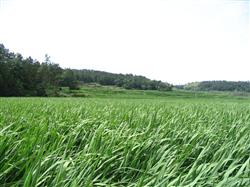 In the process of adjusting the agricultural industrial structure, farmers in various places actively expanded the planting of water bamboo to improve economic benefits. Double-cropping water bamboo has two seasons, harvested from October to November of the same autumn and from May to June of the following early summer, with a yield of about 3000 kg per mu and an income of 4000-6000 yuan per mu, with the highest reaching more than 10000 yuan. Variety selection: Among the excellent double-cropping water bamboo varieties, the new water bamboo varieties Zhejiao No. 2 and Zhejiao No. 991, bred over more than ten years by the Department of Horticulture of Zhejiang University, are especially recommended, and they won the Ministry of Agriculture Science and Technology Progress Award in 1993 and 1997 respectively. Next, local varieties such as Yuzi jiao, Zhongjie jiao, Mayi jiao and Siji jiao are recommended, requiring strong resistance, high yield, good quality and good appearance traits.
Cultivation season: Double-cropping water bamboo is divided into spring planting and summer-autumn planting. Spring planting is carried out in early April, and summer-autumn planting is planted from June to July.
Land preparation and fertilization: Water bamboo plants are tall, have a long growth period, grow vigorously and require large amounts of fertilizer, so deep ploughing of 17-20 cm is needed. For base fertilizer, apply 1000-1500 kg of organic fertilizer such as pig and cattle manure per mu, or 100 kg of cake fertilizer, or 50-60 kg of nitrogen, phosphorus and potassium compound fertilizer.
Reasonable close planting: Water bamboo seedlings should be dug, divided and planted immediately. Before planting, cut off the leaf tips first, keeping the plant height at 25-30 cm, and choose to plant in the evening or on cloudy days, which helps seedling recovery and survival. Before planting, first irrigate the water bamboo field with shallow water. The planting spacing is 60 cm x 70 cm, with about 1200 clumps planted per mu, and 1 seedling per clump (spring planting) or 2-3 seedlings per clump (summer-autumn planting).
Fertilization according to seedling condition: 7-10 days after planting water bamboo, apply a "seedling promoting fertilizer" once, with 5-10 kg of urea or compound fertilizer per mu, to promote seedling growth; at the mid-tillering stage, apply the second topdressing, with 20 kg of urea per mu, or 30 kg of compound fertilizer, or 50 kg of ammonium bicarbonate, to promote tillering growth of water bamboo seedlings; after entering the pregnancy stage, apply the third topdressing, called "pregnancy fertilizer", with 20-30 kg of urea or compound fertilizer per mu, to promote pregnancy and expansion growth of water bamboo stems and increase yield.
Ploughing the field and stripping yellow leaves: From after planting water bamboo seedlings until before row closure, plough the field 2-3 times. When ploughing, first drain the field water to a shallow level, combine it with topdressing, and apply fertilizer first before ploughing. In mid-July and mid-August, strip yellow leaves twice successively, and after stripping, tread the yellow leaves into the soil as fertilizer. After stripping yellow leaves, the water bamboo field has good ventilation and light transmission, the water bamboo grows sturdy, and there is less disease.
Prevention and control of pests and diseases: The main pests and diseases harming water bamboo are stem borers, rust and sesame leaf spot. In mid-July and mid-to-late September, control stem borers by spraying 16-20 ml of 5% fipronil suspension concentrate mixed with 50 kg of water. For rust and sesame leaf spot, spray once each in June-July and September-October for prevention and control; 35-50 g of 20% triadimefon powder mixed with 50 kg of water can be selected and has obvious control effects.
Harvest in appropriate amounts: Autumn water bamboo is harvested from October to November. In the early stage, harvest at intervals of 2-3 days, and in the later stage, harvest once every 4-5 days, with a yield of 1250-1500 kg per mu; summer water bamboo is harvested from May to June, once every 2-3 days, with a yield of 1500-1750 kg per mu.