Field management of strawberries must be strengthened after harvest
After the strawberry berries are harvested, the plants enter a stage of vigorous growth, with a large number of runners developing, new crown branches growing faster, and new young plants forming, which is the second peak period of vegetative growth for the year. Afterwards, as the temperature gradually rises, growth begins to slow down, and around the beginning of autumn, flower bud differentiation begins and then the plants shift into the reproductive growth stage...
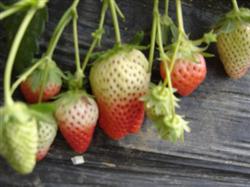
After the strawberry berries are harvested, the plants enter a stage of vigorous growth, with a large number of runners developing, new crown branches growing faster, and new young plants forming, which is the second peak period of vegetative growth for the year. Afterwards, as the temperature gradually rises, growth begins to slow down, and around the beginning of autumn, flower bud differentiation begins and then the plants shift into the reproductive growth stage. During this period, strawberry plants endure the summer and autumn of intense heat, drought, or waterlogging from heavy rain. If management is relaxed, it will have a relatively large impact on strawberry growth and development, directly affecting the yield and quality of the coming year. Therefore, after the strawberries are harvested, field management should be strengthened in a timely manner.
First, remove the runners. The growth of runners consumes a large amount of nutrients from the mother plant and reduces the necessary nutrient accumulation in the plants, which not only affects flower bud differentiation and the yield of the following year, but also lowers the overwintering ability of strawberries. Therefore, after harvest, runners should be removed at any time. In propagation nurseries, not only should the runners produced by the mother plants later be removed, but the runner plantlets formed too early and the extended runners should also be removed, so as to leave enough land space for the runners that proliferate after the beginning of autumn. At the same time, after the berries are harvested, part of the old leaves should also be cut off, leaving only 2-3 young leaves that have just emerged on the plants. This measure can also reduce the occurrence of runners and stimulate the growth of more new buds, thereby increasing the number of flower buds and laying the foundation for increased yield the following year.
Second, irrigate at the right time to prevent disasters. After strawberry harvest, the plants are in a stage of vigorous growth and have a relatively high demand for fertilizer and water, and they are also relatively sensitive to environmental conditions; intense heat, drought, and waterlogging disasters affect them even more severely. Generally speaking, when the summer temperature exceeds 30°C, strawberry growth will be inhibited, no new leaves will grow, and sometimes the old leaves will show scorch or scorched edges. Therefore, watering or shading to cool the plants should be done in a timely manner. However, strawberry roots are shallow and the plants are small, so they are sensitive to changes in soil temperature. Too much rain and poor soil aeration will not only affect the growth of the plant roots and stems and vines, but also cause root rot, increase diseases, and even suffocate and kill the entire plant. Therefore, after harvest, the drainage ditches should be cleared in a timely manner to keep the ground dry.
Third, intertillage and hilling. The parts where new strawberry roots develop have the characteristic of rising year by year as the new crowns grow. Therefore, after the strawberry berries are harvested, hilling should be carried out together with intertillage and weeding. The thickness of the hilling should be such that the crown of the plant is exposed.
Fourth, strengthen disease and pest control. After the berries are harvested, the main diseases and pests in strawberry fields include red spider mites, leaf spot, and gray mold, and they should be controlled in a timely manner by spraying 200-fold Bordeaux mixture or 800-fold carbendazim solution. Insect pests can be controlled with insecticides such as fenpropathrin.
In addition, before strawberry flower bud differentiation (about August and September), about 20 kg of compound fertilizer should be applied per mu, or 1-2 sprays of 0.2%-0.4% potassium dihydrogen phosphate aqueous solution should be applied, in order to promote flower bud differentiation. Fertilization can be carried out together with intertillage and hilling.