Detailed Explanation of Key Technical Points for Dragon Fruit Cultivation and Management
Depending on the specific variety, dragon fruit belongs to the Cactaceae family, either the genus Hylocereus (Hylocereus undatus) or the genus Selenicereus (Selenicereus megalanthus). It originated in Central and South America, including Costa Rica, Panama, Ecuador, Cuba, and Colombia, as well as Vietnam in Southeast Asia...
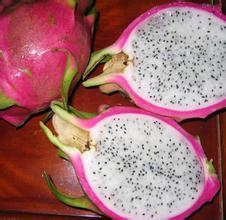 Cultivation and Management
Dragon fruit is a tropical plant that prefers light but tolerates shade, tolerates heat and drought, and likes fertilizer but tolerates poor soil. Its stems can even grow attached to rocks, and the plant has extremely strong wind resistance; as long as the trellis is sturdy, it can withstand typhoons. Plant 300-400 plants per 667 sq m, with one 20 cm square, 2 m tall concrete post buried in the middle of every 4 plants as a support.
Dragon fruit can adapt to various soils, but neutral and slightly acidic soils rich in humus with good water and fertilizer retention are best. To ensure vigorous growth after planting, plenty of disinfected, sterilized, and fermented organic fertilizer from human, poultry, and livestock manure must be applied. During the seedling stage, apply calcium magnesium phosphate fertilizer and compound fertilizer, with the amount depending on plant size.
Dragon fruit grows rapidly in a warm, humid, and well-lit environment. During open-field cultivation in spring and summer, water more to keep the root system in a vigorous growth state. During continuous rainy weather, drain promptly to avoid infection by pathogens that could cause stem and flesh rot. Dragon fruit tolerates low temperatures of 0 degrees C and high temperatures of 40 degrees C. To ensure year-round growth and multiple fruiting, aim for the suitable temperature of 20-30 degrees C. In northern regions, cultivation must be in greenhouses, with nighttime temperatures in winter not lower than 8 degrees C. In summer, the plastic film may be left on, but ventilation is essential. Dragon fruit orchards do not need plowing; simply remove weeds promptly. Dragon fruit has a thick waxy layer and a smooth appearance, so bagging is unnecessary, saving labor and time. Dragon fruit generally has no pest problems; occasionally there may be nematodes in the roots and red spider mites on stems and leaves, which can be controlled promptly. From flowering to fruit maturity, dragon fruit takes about 30 days. When the fruit gradually turns from green to red and has a slight fragrance and bright color, it can be harvested.
Field Management
After planting, dragon fruit begins to flower and fruit 12-14 months later, and can flower 12-15 times per year. The fruiting period for dragon fruit is from April to November, with fruit ripening 30-40 days after flower drop. Individual fruit weight is 500-1000 g. In the second year after planting, each post produces more than 20 fruits, and by the third year it enters the full fruiting stage. With higher management levels, yield can reach 2500 kg per 667 sq m. The key points for high-yield cultivation are as follows:
1. Apply light fertilizer frequently: Because the fruit harvest period is long, organic fertilizer must be heavily applied every year, and nitrogen, phosphorus, and potassium compound fertilizers should be applied in a balanced and long-term manner. During flowering and fruiting, supplement potassium and magnesium fertilizers to promote sugar accumulation in the fruit and improve quality. Keep the soil moist during the fruiting period, and cover the tree base with grass or mushroom residue. In dry weather, irrigate once every 3-4 days.
2. Pinching: When branches grow to 1.3-1.4 m long, pinch off the growing tips to promote branching and allow the branches to droop naturally.
3. Interplanting and artificial pollination: When planting dragon fruit, interplant about 10% white-fleshed dragon fruit varieties. Cross-pollination between varieties can significantly increase fruit set. In rainy weather, artificial pollination should be carried out. Pollination can be done in the evening when flowers open or in the early morning before flowers close, using a soft brush to directly apply pollen onto the stigma of female flowers.
4. Pruning branches: After harvesting fruit each year, prune off the branches that have already fruited to allow new shoots to grow, ensuring next year's yield.
5. Pest and disease control: Dragon fruit has few pests and diseases. During the seedling stage, it is susceptible to damage from snails and ants, which can be controlled with insecticides. In hot and humid seasons, it is prone to diseases, with partial branch necrosis and mold spots appearing, which can be controlled effectively with triadimefon, strong copper oxide, and similar treatments.