Autumn management of Welsh onions is timely, and key technical points must be mastered
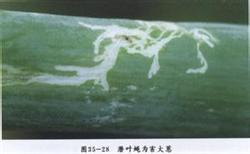
Affected plants show larvae boring into the heart leaves and leaf sheaths of the onion, feeding on the leaf mesophyll and epidermis, and forming grayish-white irregular winding mines. The larvae tunnel through the mines in various parts of the onion leaves, damaging the leaf veins, and in severe cases causing the aboveground part of the Welsh onion to dry up and die. Generally, in areas with severe leafminer damage, agricultural control requires...
 Years of field experience have proven that to achieve high yield and increased income for Welsh onions, three points must be vigorously implemented after the Start of Autumn to ensure the Welsh onions grow robustly, with thick and strong root systems, dark green leaves, and long, sturdy main stems.
1. Timely fertilization and watering
After the Start of Autumn, when plant growth accelerates, apply a "leaf-promoting fertilizer," applying 1500 kg to 2000 kg of decomposed farmyard manure and 20 kg to 25 kg of superphosphate per mu to promote leaf growth. After White Dew, the plants enter the peak period of white stalk growth, which is the critical period for Welsh onion yield formation. Combined with watering, apply a "plant-strengthening fertilizer" twice, each time applying 15 kg to 20 kg of urea and 10 kg to 15 kg of potassium sulfate per mu, scattered between the rows. After shallow cultivation, water; generally 2 to 3 times is sufficient. Water according to the principle that the soil on the ridges is dry and the soil in the furrows is moist.
2. Timely earthing up
For Welsh onions to grow quickly, timely and repeated earthing up is needed so the onions grow fast and thick. This can be done 4 to 5 times, with each earthing up height mainly ensuring the heart of the onion is not buried. Too shallow earthing up is not conducive to the rapid growth of the white stalk, while too much earthing up causes heart rot, resulting in reduced yield or yellowing leaves.
3. Timely pest and disease control
Welsh onion pests and diseases include downy mildew, black mold, purple blotch, leafminer, root maggot, and others. Per mu, use 300 g of "Xingaozhimou" emulsion, dilute with 230-250 kg of water, and spray evenly at 7-10 day intervals, for a total of 2-3 sprays, to effectively prevent downy mildew in Welsh onions. For black mold, spray with 50 kg of 0.1% copper sulfate or 1% lime water or 0.1% potassium permanganate solution. For purple blotch, spray with 0.5% aqueous solution of 80% zineb or 0.1% aqueous solution of 50% thiophanate-methyl, or spray Bordeaux mixture prepared with copper sulfate, quicklime and water at a ratio of 1:1:200, using 50 kg per mu. For root maggot damage, apply 5 kg of methamidophos powder or 3.5 kg to 4.5 kg of 2.5% trichlorfon powder per mu, or apply 2.5 kg of phoxim granules into the soil. For red spider mites, control with 3000x to 3500x of "Manguangling" or 2500x to 3000x of "Hongbaiman Jue."
After the Start of Autumn, it is an important period for vegetable growth. The focus of Welsh onion field management is promoting roots, strengthening plants, and earthing up for blanching, as well as strengthening fertilizer and water management, to create suitable environmental conditions for the formation of the white stalk, thereby improving the yield and quality of Welsh onions.